










RCBO vs RCCB: Which One for Geyser, Bathroom & DB Box? (Pakistan Guide)

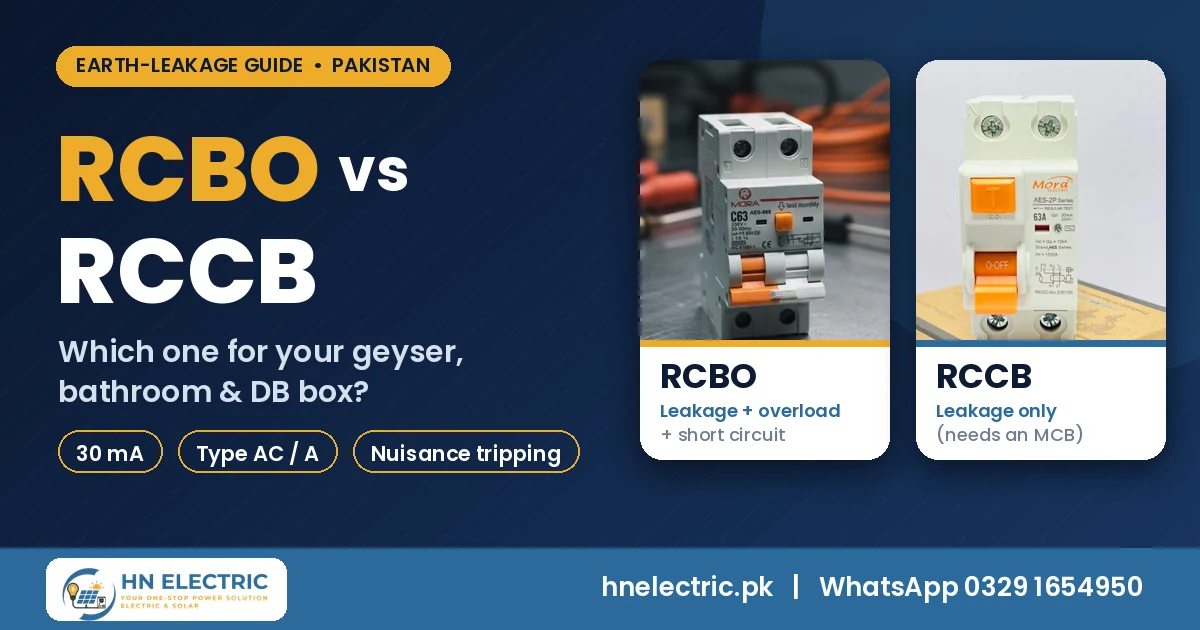
Short answer: an RCCB and an RCBO both cut the supply when current leaks to earth (for example through a person or a wet geyser element), but only the RCBO also trips on overload and short circuit. An RCCB normally guards a whole group of circuits and must sit with MCBs. An RCBO guards one circuit on its own. In a Pakistani home the best value is usually a mix: 30 mA RCBOs on the geyser, water motor, washing machine and kitchen or bathroom sockets, and a 30 mA RCCB in front of the MCBs for lights, fans and general sockets. That way one leaking appliance switches off only its own circuit, not the whole house.
If you are still learning what each breaker does, start with our broader guide on MCB vs MCCB vs RCCB vs RCBO. This article goes deeper into one decision only: RCBO vs RCCB, where each one belongs in your DB box, which mA rating and type (AC or A) to pick, and why so many houses suffer from RCCB nuisance tripping.
Difference between RCBO and RCCB at a glance
| Point | RCCB | RCBO |
|---|---|---|
| Product standard | IEC 61008 | IEC 61009 |
| Earth-leakage (shock) protection | Yes | Yes |
| Overload and short-circuit protection | No, needs an MCB or fuse | Yes, built in (B or C curve, like an MCB) |
| How many circuits it normally covers | A group (often the whole DB) | One circuit |
| What goes off when one appliance leaks | Every circuit behind it | Only that circuit |
| Finding the faulty circuit | Trial and error, one MCB at a time | The tripped RCBO tells you |
| Nuisance tripping risk | Higher, because small leakages from many circuits add up | Lower, each device sees only one circuit’s leakage |
| DB space | One RCCB plus one MCB per circuit | One device per circuit |
| Upfront cost | Lower for many circuits | Higher, one RCBO per circuit |
| Best place in a Pakistani house | Lights, fans, general sockets as a group | Geyser, water motor, washing machine, kitchen, bathroom, outdoor and critical circuits |
The UK wiring rules (BS 7671) now list RCBOs on individual home circuits as a way to limit unwanted tripping. That is the core of the RCBO vs RCCB choice: selectivity.
RCBO vs RCCB in real life: what switches off when something leaks
Imagine a 10-marla house in Lahore. At 11 pm the element of the electric geyser in the upstairs bathroom starts leaking a little current to the tank. With one RCCB for the whole house, the RCCB trips and everything behind it goes dark: lights, fans, the fridge, the router, even the circuit that charges the UPS batteries before the next load-shedding slot.
With an RCBO on the geyser circuit, only the geyser switches off. The rest of the house keeps running and the tripped RCBO points straight at the faulty appliance.

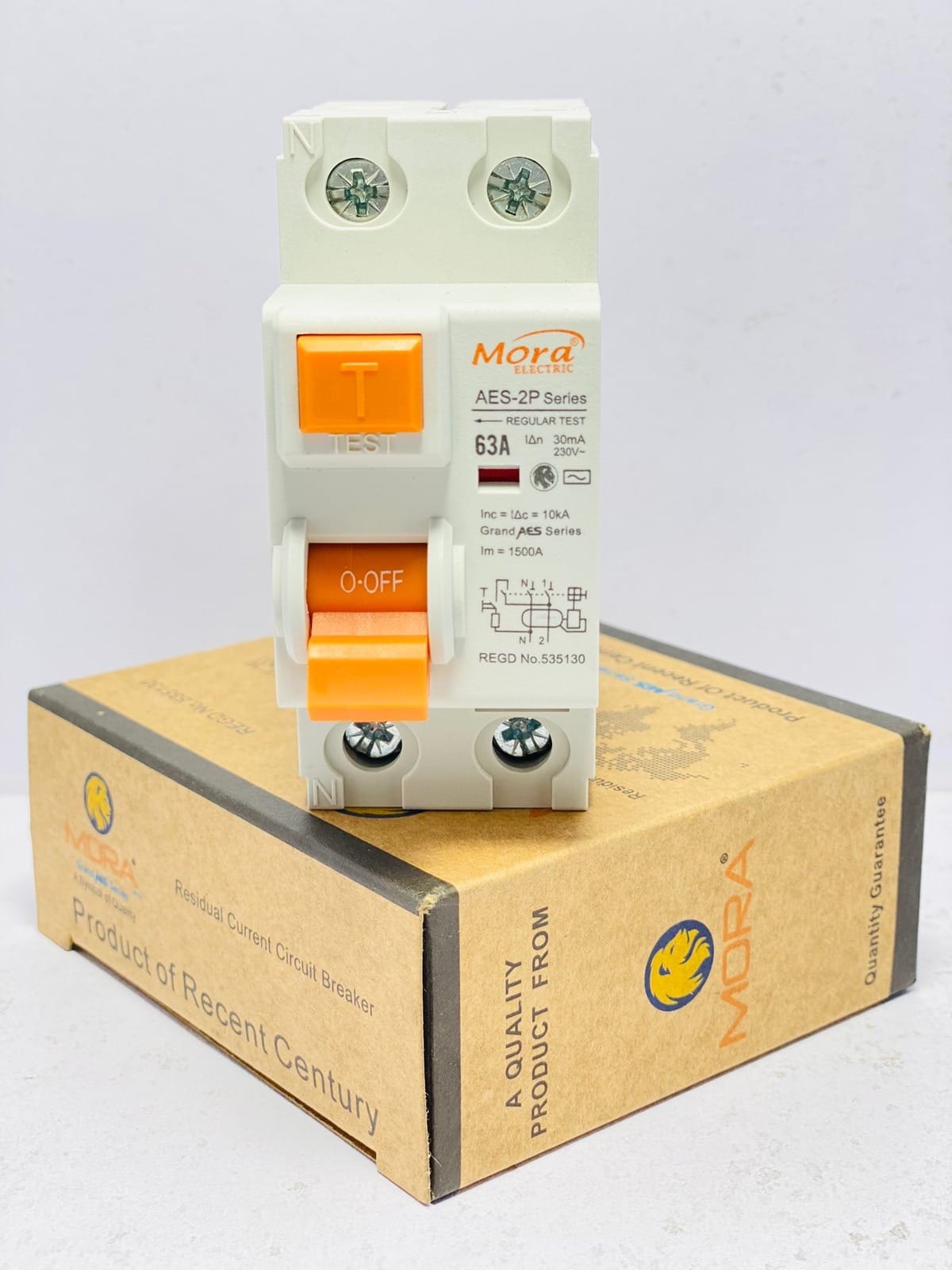
When to choose an RCCB
- Groups of low-risk circuits such as lights, ceiling fans and bedroom sockets, where a rare trip of the whole group is acceptable.
- Adding leakage protection to an old DB that already has good MCBs. One 2-pole RCCB in front of the existing MCBs is the quickest upgrade.
- Three-phase supplies in shops and small workshops, where a 4-pole RCCB protects a group of three-phase and single-phase outlets.
An RCCB cannot protect itself from overload, so its ampere rating should be at least that of the breaker in front of it, and every circuit behind it still needs an MCB.
When to choose an RCBO
- Wet and high-risk circuits: electric geyser, instant water heater, water motor or pressure pump, washing machine, kitchen sockets, bathroom exhaust and sockets, roof, lawn and car-porch outlets.
- Circuits that must not go off because of someone else’s fault: fridge and freezer, UPS or inverter charging, CCTV and router, medical equipment at home.
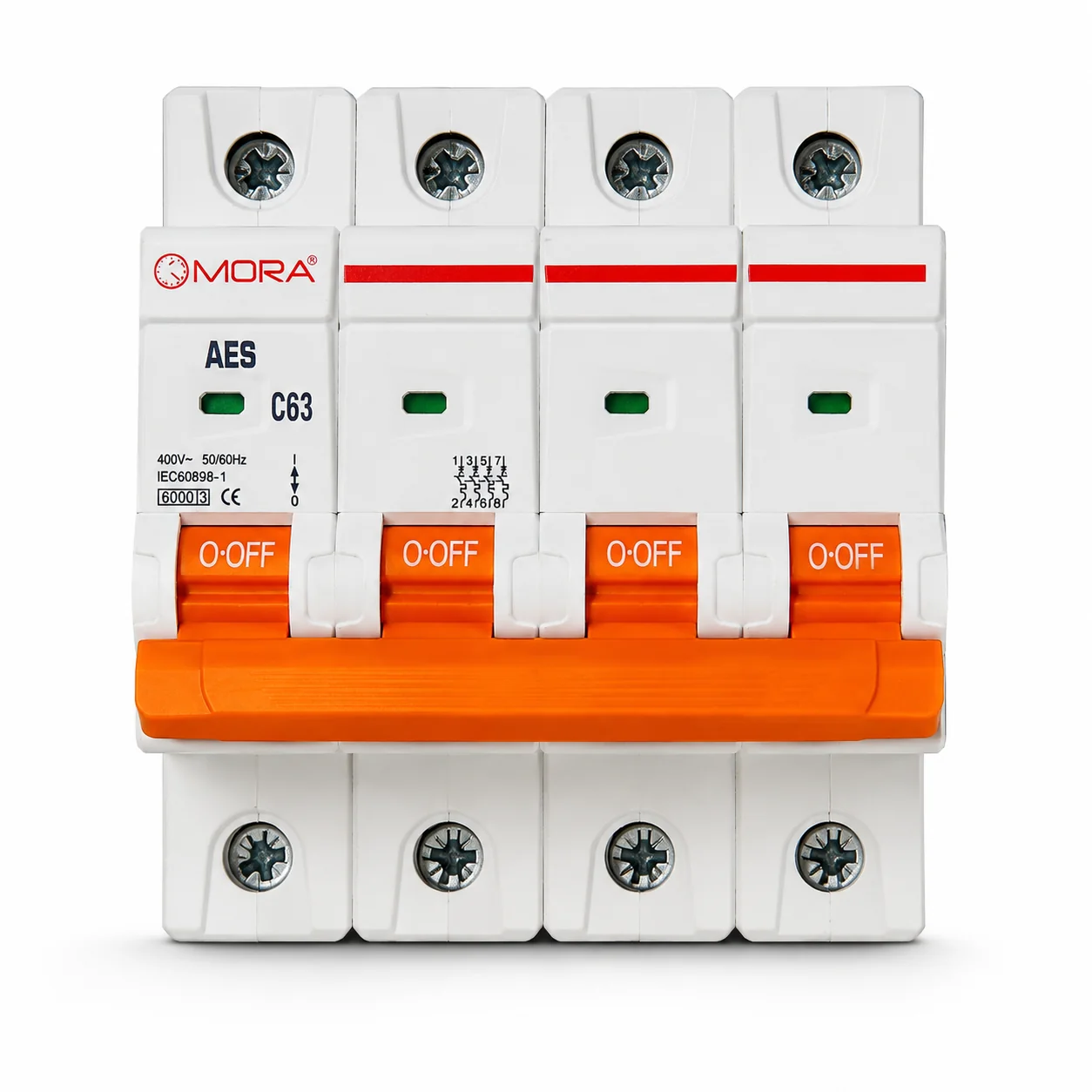
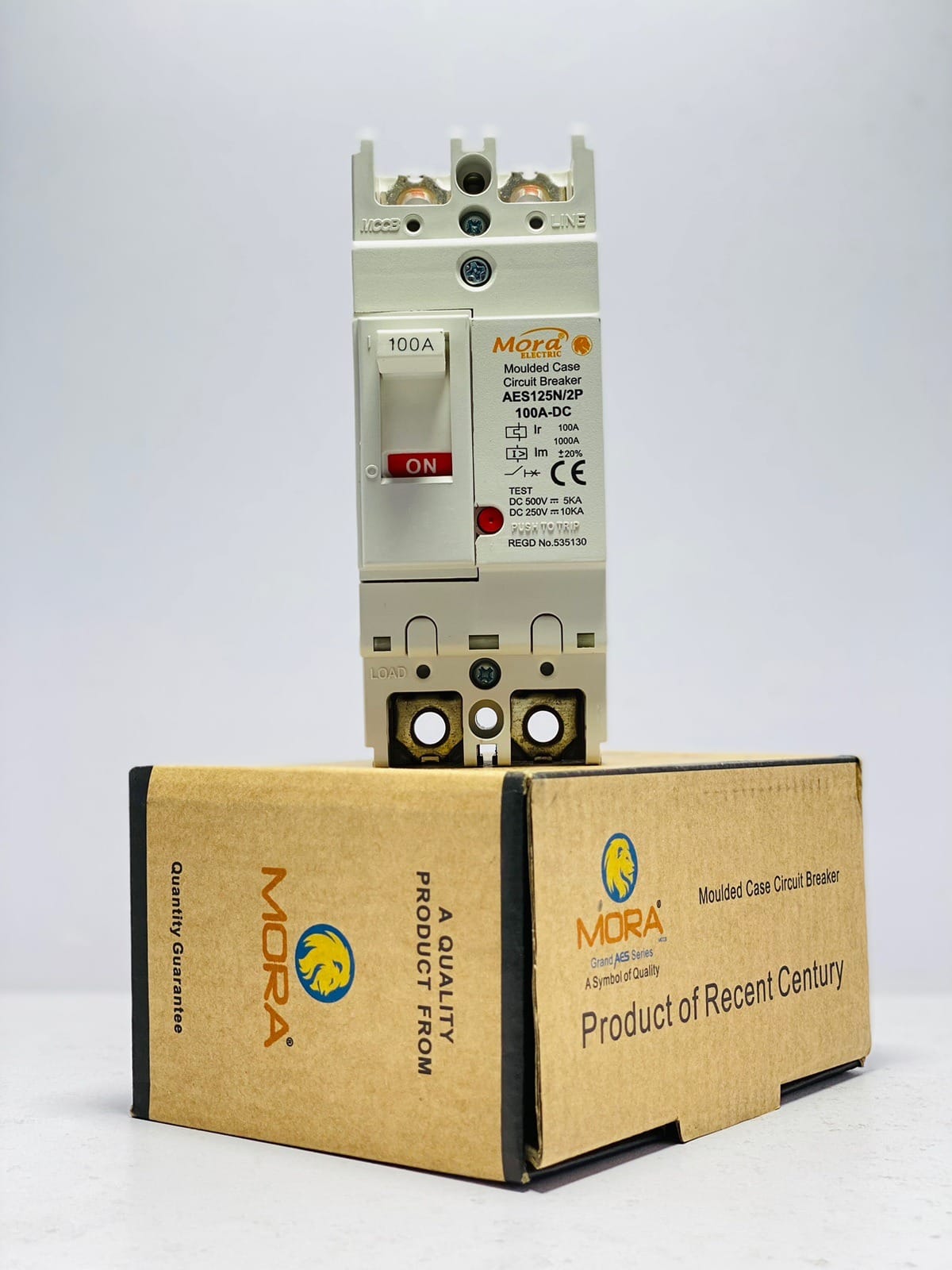
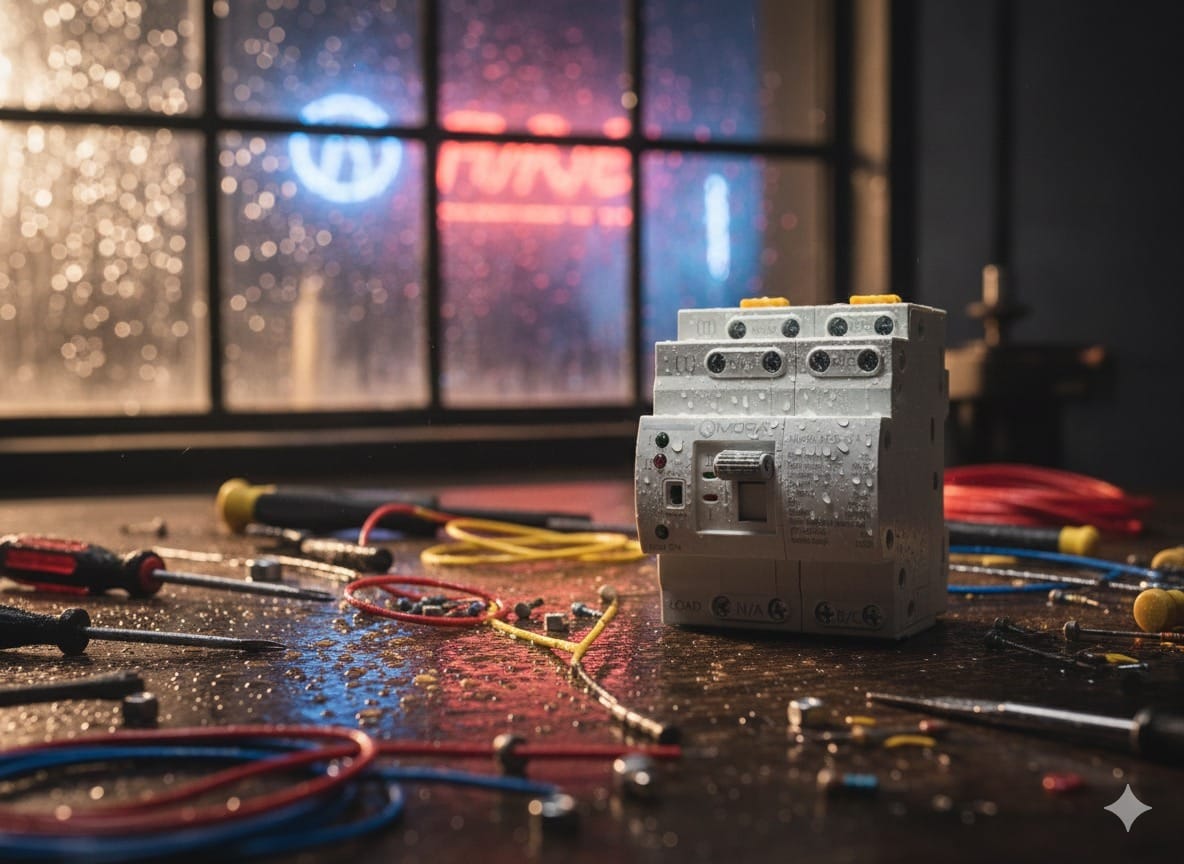
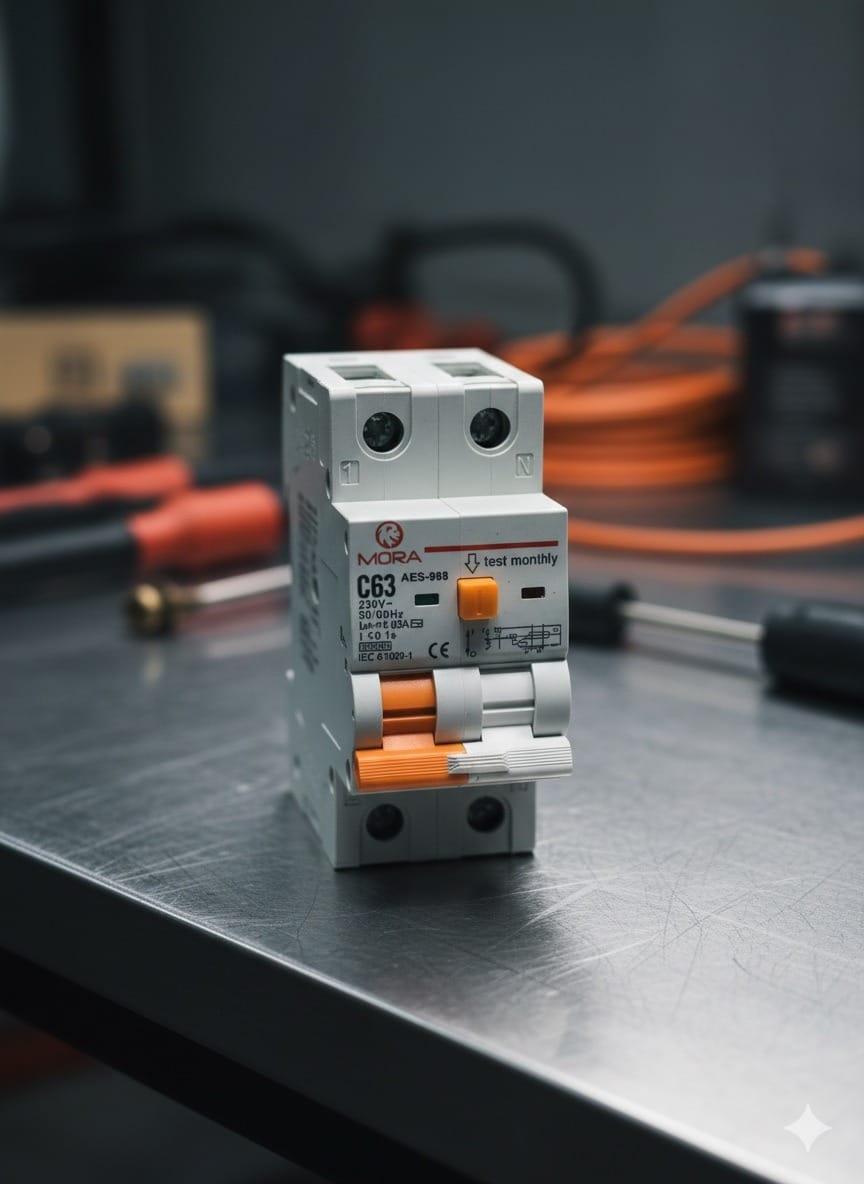
An RCBO is chosen like an MCB for its ampere rating and curve (C-curve for motors and ACs), and like an RCCB for its mA rating and type. A 2-pole model such as the Mora 2P RCBO switches both live and neutral, which is useful in older Pakistani wiring where polarity is not always correct.
RCBO for geyser, bathroom and other wet areas
Water and electricity are the main reason to fit residual current protection at all. In Pakistani homes the high-risk points are:
- Electric geyser or the electric side of a dual (gas + electric) geyser. The heating element sits in water; as it ages and scales up, its insulation can start leaking to the tank. Give it its own 30 mA RCBO, sized from the nameplate. For example, a 2,000 W element draws about 2000 ÷ 230 ≈ 8.7 A; with a 25% margin that is about 10.9 A, so a 16 A RCBO on 2.5 mm² copper is a typical choice. Always use your own geyser’s rating. For other geyser, heater and water-rod wattages, see our MCB size for geyser and electric heater chart.
- Water motor or roof pump. It lives outdoors in rain and sun. Use a 30 mA RCBO with a C-curve so the motor’s starting current does not cause overload trips.
- Washing machine. Modern machines contain electronics and motor drives, so use at least Type A (see below).
Kya aap ka geyser raat ko breaker gira deta hai? That is usually a leakage warning, not a “weak breaker”. Do not bypass the RCBO or RCCB. Get the element and wiring checked.
RCCB nuisance tripping: why it trips “for no reason”
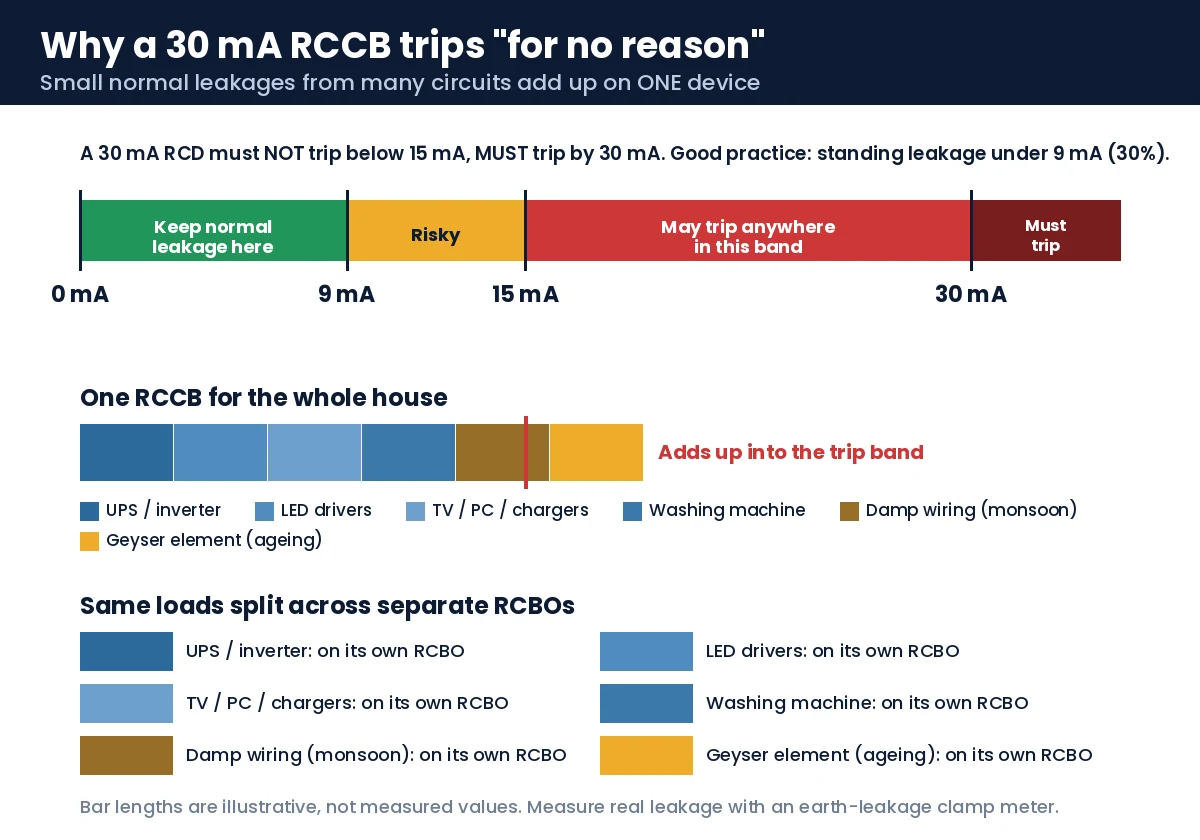
Every appliance leaks a tiny amount of current to earth during normal use: UPS and inverters, LED drivers, TVs, computers and chargers, washing machines and long cable runs all contribute. Monsoon damp adds more. On one RCCB these small leakages add up.
The product standards say a 30 mA device must not trip below 15 mA but may trip anywhere above that, and must trip by 30 mA. The IET explains that, to avoid unwanted tripping, standing leakage on a device should be kept to about 30% of its rating, which is 9 mA for a 30 mA RCD.
Other common causes in Pakistani houses:
- Shared (“borrowed”) neutrals. A neutral from an RCD-protected circuit joined to an unprotected one, or UPS wiring added later that mixes WAPDA and UPS neutrals. The RCCB sees an imbalance and trips.
- Switching surges when power returns after load-shedding.
- A genuinely faulty appliance, most often the geyser element, water motor or an old iron.
Which mA rating: 30, 100 or 300 mA?
| Rating | Main purpose | Typical place |
|---|---|---|
| 30 mA | Protection of people against electric shock | Home circuits, sockets, geyser, bathroom, kitchen, water motor, outdoor points |
| 100 mA | Fire and fault protection, not personal shock protection | Upstream of 30 mA devices, sub-main feeders (choose a time-delayed “S” type) |
| 300 mA | Fire protection | Main incomer of larger buildings, shops and factories, usually S type |
A common Pakistani setup is a 100 mA RCCB at the main and 30 mA devices below it. That only works properly if the upstream device is a selective (S type, time-delayed) RCD. As NICEIC guidance notes, selectivity needs an S-type upstream device and at least a 3:1 ratio between the upstream and downstream mA ratings. With an ordinary 100 mA RCCB upstream, a big leak can trip both devices and the whole house goes dark anyway.
Type AC vs Type A (and when you need F or B)
| Type | Detects | Use it for |
|---|---|---|
| AC | Normal AC leakage only | Simple fixed loads with no electronics, such as a plain geyser element or basic heater |
| A | AC plus pulsating DC leakage | The sensible minimum for sockets, LED lighting, washing machines and most modern homes |
| F | Type A plus mixed-frequency leakage | Single-phase inverter-driven loads, such as some inverter ACs and washing machines, when the maker recommends it |
| B | Type F plus smooth DC leakage | EV chargers, three-phase drives and some solar inverters, when the manual requires it |
Many low-cost devices sold in Pakistan are Type AC. For example, our Mora 4P RCCB listing states Type AC. That is fine for simple loads, but check the label (a plain sine-wave symbol means AC) and the appliance or inverter manual before using it on electronic loads.
Step-by-step: plan RCBOs and RCCBs for your DB box
- List every circuit and mark the wet or outdoor ones: geyser, water motor, washing machine, kitchen, bathroom, roof and lawn.
- Give each wet and critical circuit (fridge, UPS charging, CCTV) its own 30 mA RCBO, C-curve for motors and ACs.
- Group the low-risk circuits (lights, fans, bedroom sockets) behind one or two 30 mA RCCBs, keeping electronic-heavy circuits spread out so leakage stays low.
- Pick the type: Type A as the default, AC only for simple heating loads, F or B where the appliance or inverter manual asks for it.
- Check ratings and neutrals: RCCB amps at least equal to the breaker before it, cable larger than every RCBO or MCB it feeds, and each circuit’s neutral returning through its own device. No shared neutrals.
- Test and label: press the T (test) button after installation and then regularly, as the maker recommends.
Worked example: 10-marla house with UPS and solar
Single-phase WAPDA supply, two 1.5-ton ACs, an electric geyser, a roof water motor, a washing machine, a UPS and a small hybrid solar inverter.
| Circuit | Device | Why |
|---|---|---|
| Main incomer | 2-pole main MCB or isolator | No RCD here, so one fault never blacks out everything |
| Geyser | 16 A, 30 mA RCBO (check nameplate) | Wet appliance; trips alone |
| Water motor | C-curve 30 mA RCBO, sized to the motor plate | Outdoor, rain-exposed, motor inrush |
| Washing machine | 16 A, 30 mA Type A RCBO | Wet area plus electronic drive |
| Kitchen sockets | 30 mA Type A RCBO | Water and appliances together |
| AC 1 and AC 2 | Separate C-curve MCB or RCBO each (see our MCB for 1.5 ton AC guide) | Follow the AC maker’s guidance on RCD type |
| Lights, fans, bedroom sockets | 30 mA Type A RCCB feeding MCBs | Low-risk group, lower cost |
| UPS and solar outputs | As per the inverter manual | Some need a specific RCD type |
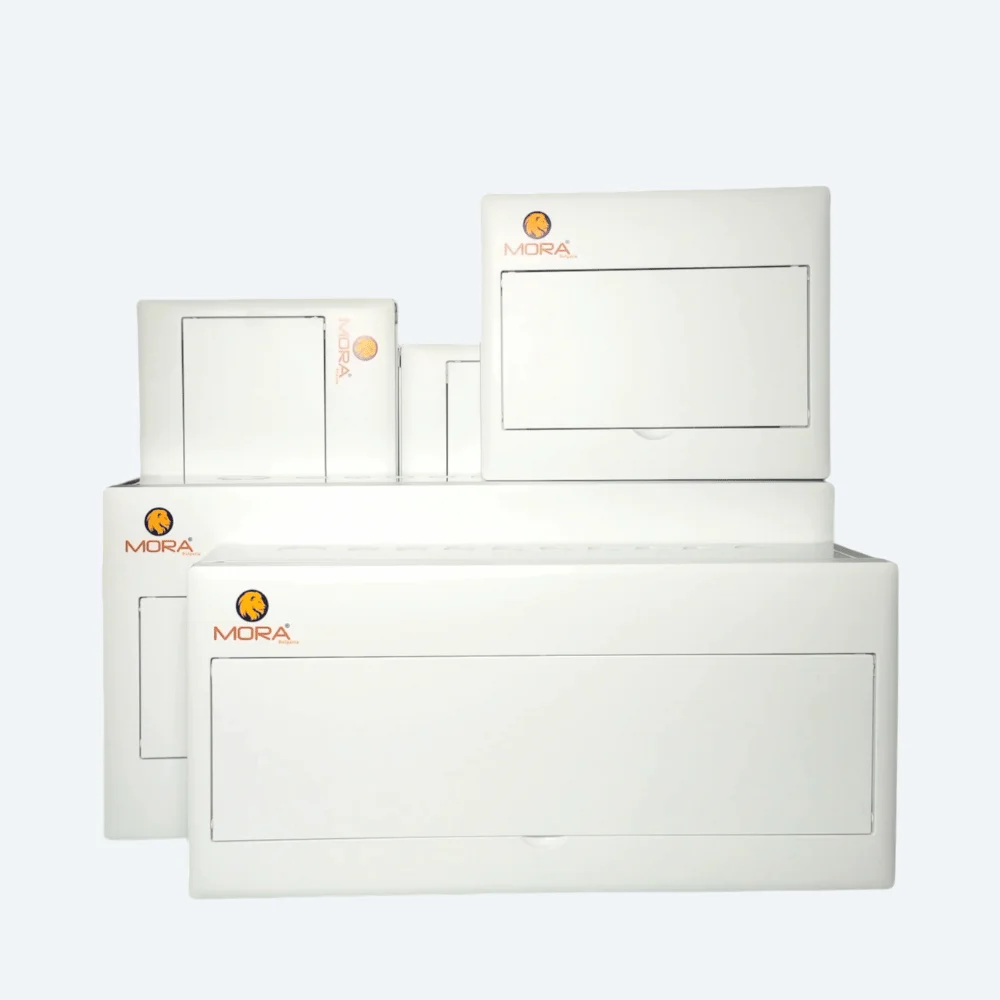
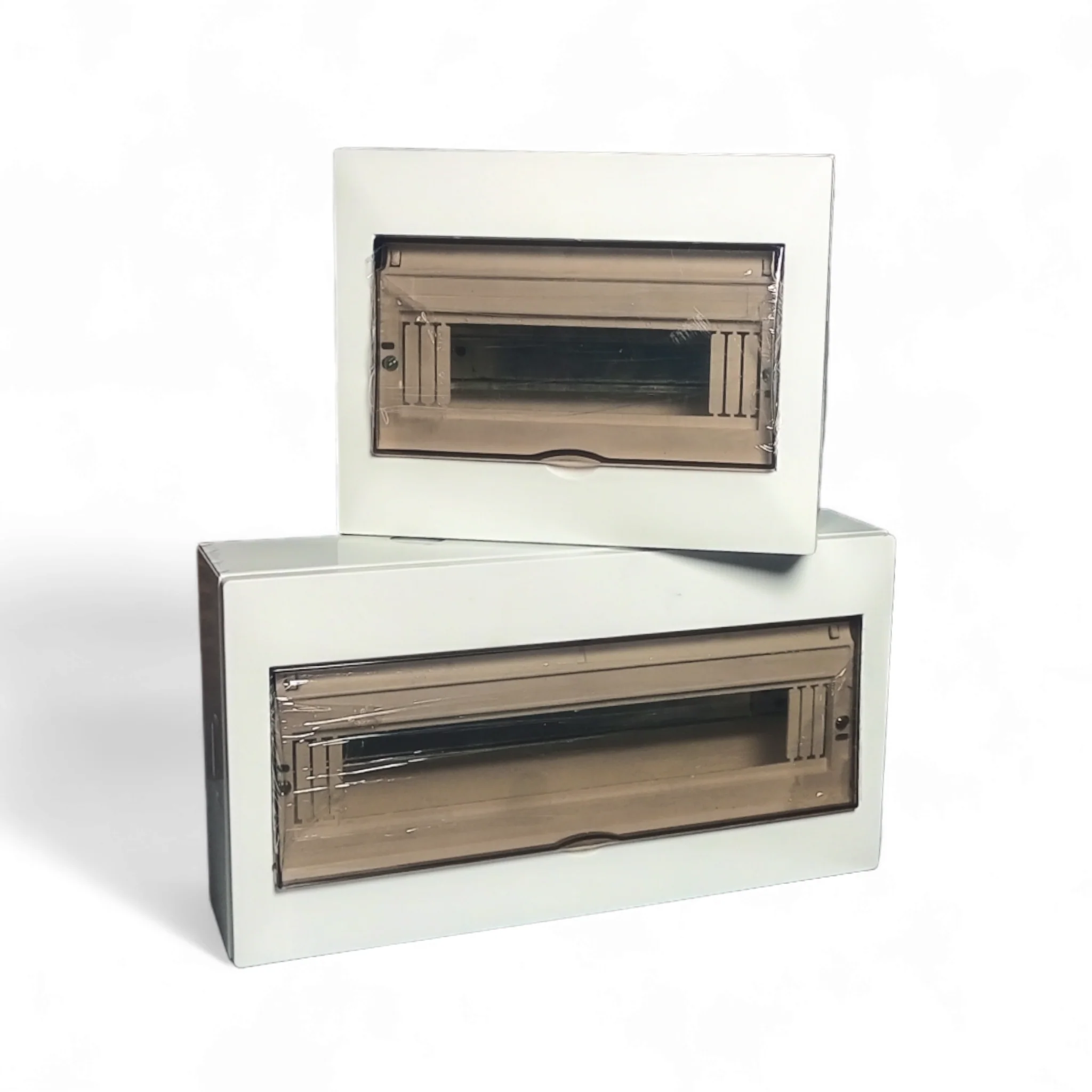
For enclosures, choose a distribution box with enough spare ways, because RCBOs take more space than a single RCCB. The full home DB layout is covered in our home DB box setup guide.
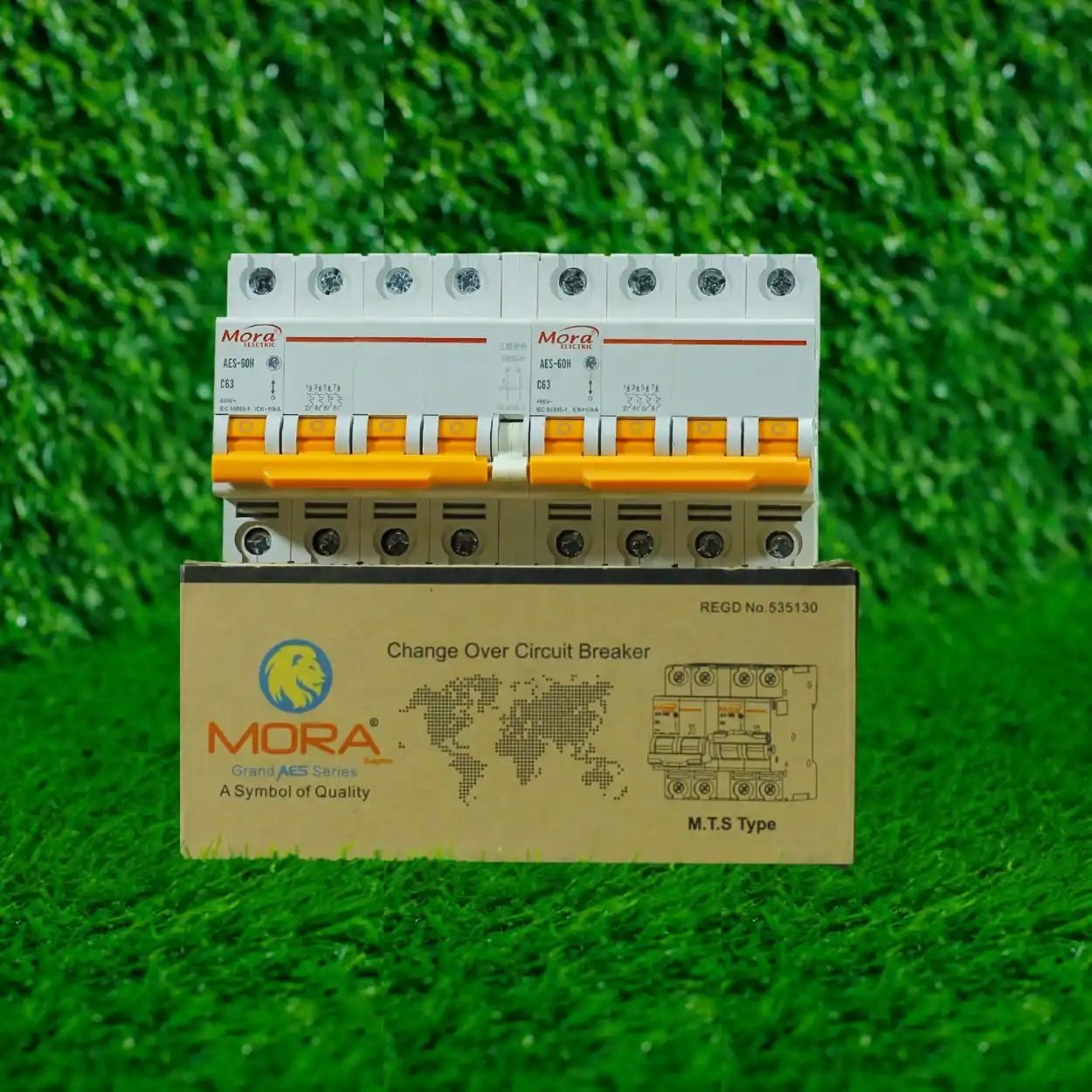
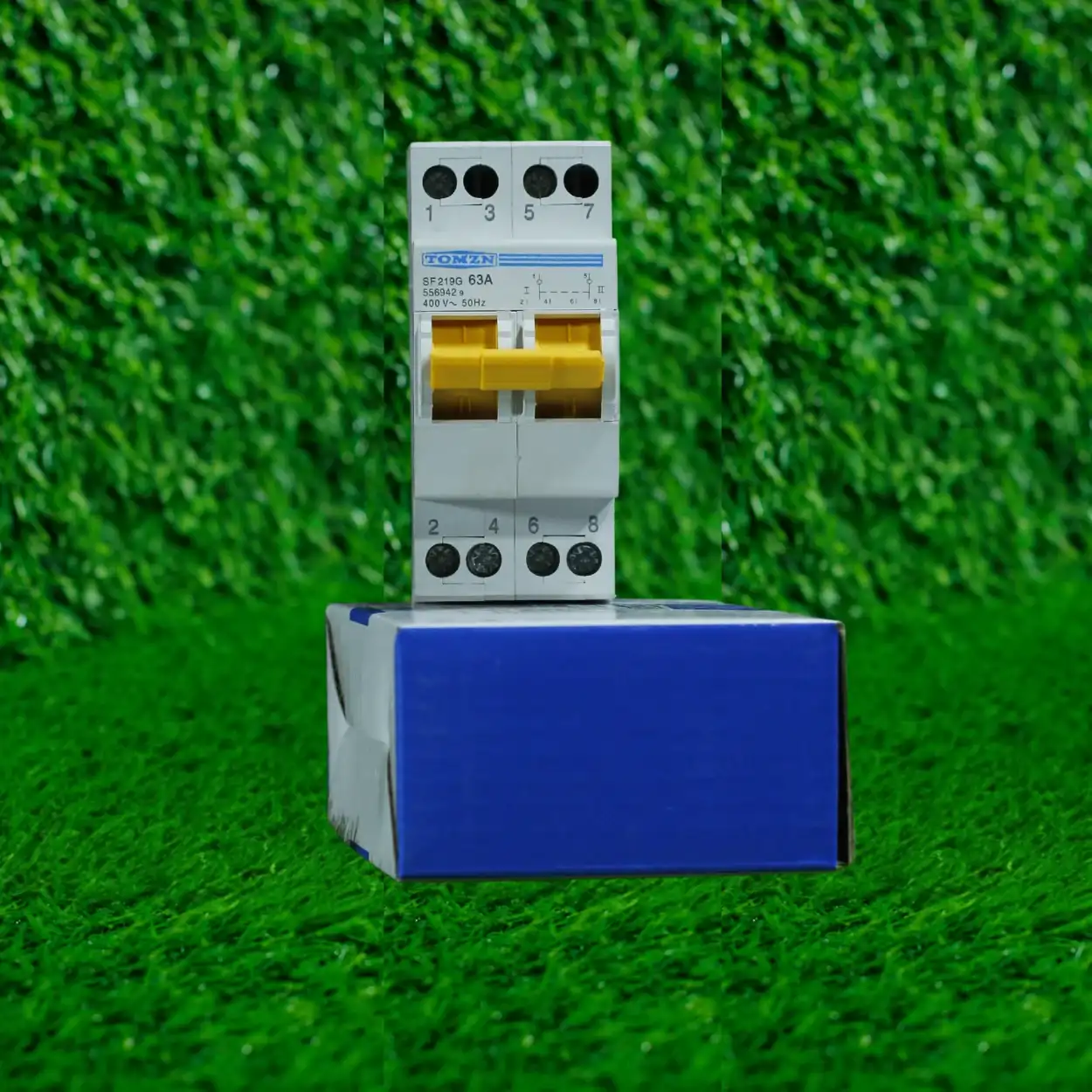
UPS and solar note: use a changeover that switches the neutral too, follow the inverter manual on RCD type and neutral-earth bonding, and remember that RCCBs and RCBOs do not protect the DC solar string side, which needs proper DC breakers and surge protection.
Safety notes
- An RCD does not replace a proper earth pit and earth wire. Earthing lets it trip as soon as a metal body becomes live, before anyone touches it.
- Never bridge or remove an RCCB or RCBO because it “trips too much”. Find the leak; if it trips with all MCBs off, suspect a neutral-to-earth fault.
- Switch off the main before opening a DB box, and use a licensed electrician.
Quick checklist: RCBO or RCCB?
- ☐ Geyser, water motor, washing machine, kitchen, bathroom and outdoor circuits on 30 mA RCBOs
- ☐ Lights, fans and general sockets grouped behind a 30 mA RCCB with MCBs
- ☐ Any 100 or 300 mA upstream device is S type
- ☐ No shared neutrals; changeover switches the neutral
Browse our earth leakage breakers to compare RCCB and RCBO options.
FAQ: RCBO vs RCCB
Which is better, RCBO or RCCB?
Neither is better everywhere. An RCBO gives leakage, overload and short-circuit protection to a single circuit, so a fault switches off only that circuit. An RCCB gives leakage protection to a group of circuits and is cheaper, but needs MCBs and switches off the whole group on a fault. Most homes need a mix.
Should an electric geyser have its own RCBO?
Yes, a dedicated 30 mA RCBO is the best choice for an electric geyser. The element sits in water and is a common source of leakage, so its own RCBO stops one ageing geyser from blacking out the whole house.
Why does my RCCB trip when it rains or when the UPS switches over?
Rain adds leakage through damp walls, switch boxes and outdoor fittings, pushing the total on one RCCB into its trip range. During changeover, mixed WAPDA and UPS neutrals or switching surges can cause an imbalance. Splitting circuits across RCBOs and keeping neutrals separate usually solves it.
Is 30 mA or 100 mA better for a house?
30 mA is the rating for protecting people against electric shock, so use it on home circuits. 100 mA is for fire and fault protection upstream, and should be a time-delayed S type if 30 mA devices are installed below it.
Can I install RCBOs after a main RCCB?
You can, but a large leak may trip both, so you lose the main benefit of RCBOs. Either use a main isolator with no RCD and RCBOs below it, or use an S-type upstream RCD with at least three times the mA rating of the devices below it.
Need help choosing RCBOs and RCCBs for your DB?
Send us a photo of your DB box and a list of your circuits on WhatsApp. Hum aap ko bata denge kahan RCBO lagana hai, kahan RCCB kaafi hai, aur kaunsi mA rating aur type sahi hai, with genuine brands and delivery across Pakistan. WhatsApp HN Electric: 0329 1654950
