










MCB vs MCCB vs RCCB vs RCBO: Difference, Uses & DB Box Layout (Pakistan Guide)


Short answer: an MCB and an MCCB both protect your wiring from overload and short circuit (MCB for individual circuits up to about 125 A, MCCB for bigger currents such as a factory or plaza main). An RCCB protects people from electric shock by tripping on earth leakage, but it gives no overload or short-circuit protection at all. An RCBO is an MCB and an RCCB combined in one device, so a single circuit gets all three protections. Most Pakistani homes need a mix: a main switch, a 30 mA RCCB or RCBOs for shock protection, and a row of MCBs.
This MCB vs MCCB vs RCCB vs RCBO guide shows where each device sits in a real DB box, how to choose ratings with a worked example, what changes for UPS/solar homes and three-phase factory or poultry-shed panels, and why an RCCB keeps tripping “for no reason”. Bilkul seedhi baat, no jargon overload.

MCB vs MCCB vs RCCB vs RCBO: the difference in one table
The single most important idea: these devices watch for different faults. An overcurrent breaker (MCB/MCCB) measures how much current flows. A residual current device (RCCB/RCBO) compares current going out on live with current coming back on neutral; if some is missing, it is leaking to earth, possibly through a person.
| Feature | MCB | MCCB | RCCB | RCBO |
|---|---|---|---|---|
| Full name | Miniature Circuit Breaker | Moulded Case Circuit Breaker | Residual Current Circuit Breaker | Residual Current Breaker with Overcurrent |
| Overload protection | Yes | Yes | No | Yes |
| Short-circuit protection | Yes | Yes | No | Yes |
| Earth leakage / shock | No | Only with add-on module or relay | Yes (10/30/100/300 mA) | Yes (usually 30 mA) |
| Typical current range | Up to about 125 A | Roughly 16 A to 1600 A and above | Commonly 25 to 100 A | Commonly 6 to 63 A |
| Trip adjustment | Fixed (B, C or D curve) | Many models adjustable | Fixed sensitivity | Fixed |
| Mounting | DIN rail | Panel / chassis | DIN rail | DIN rail |
| Typical place | Each final circuit | Main incomer, sub-main feeders | Feeds a group of MCBs | One sensitive circuit |
| Product standard | IEC 60898-1 (household) | IEC 60947-2 | IEC 61008 | IEC 61009 |
Notice that a “63 A MCB”, a “63 A RCCB” and a “63 A RCBO” all say 63 A but mean different things. On an MCB the 63 A is the trip point; on an RCCB it is only how much current the contacts can carry. The RCCB’s real trip value is the milliamp figure (IΔn), such as 30 mA.
What each breaker actually does
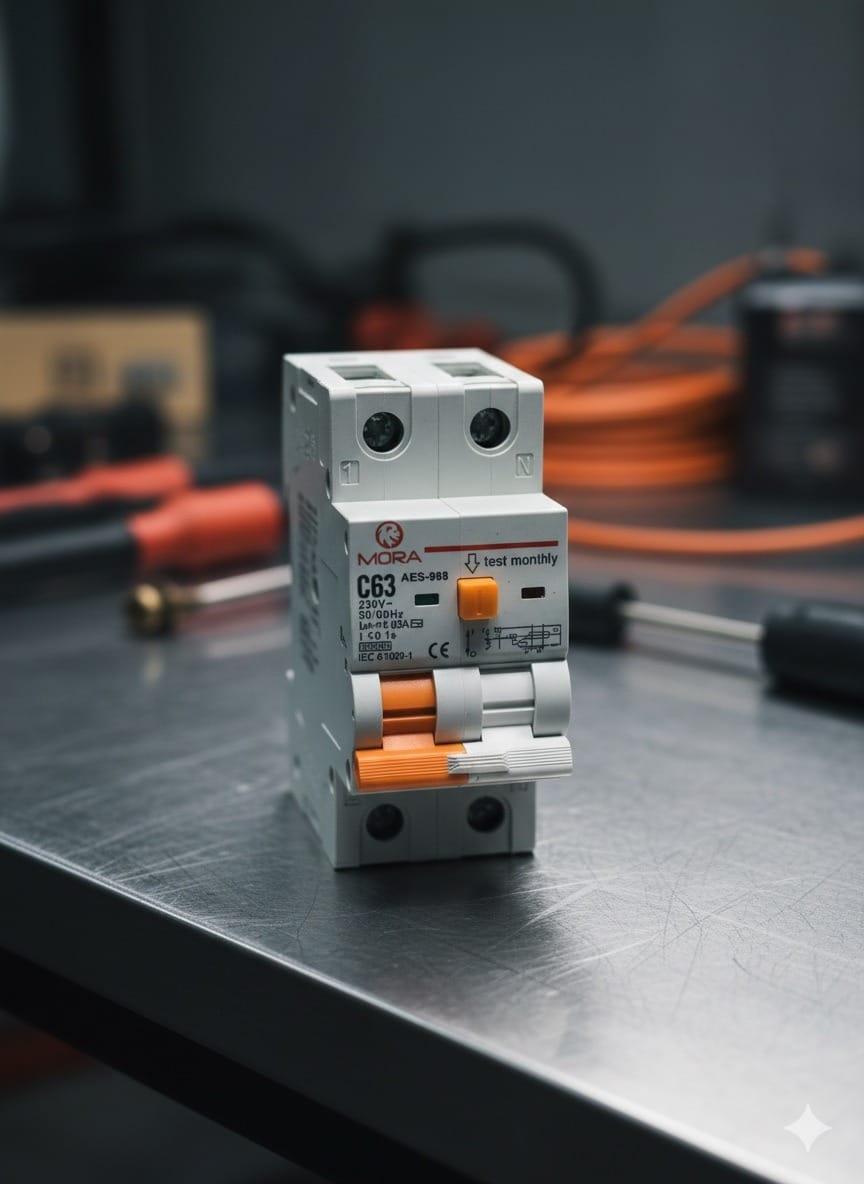
MCB (Miniature Circuit Breaker): protects the wire
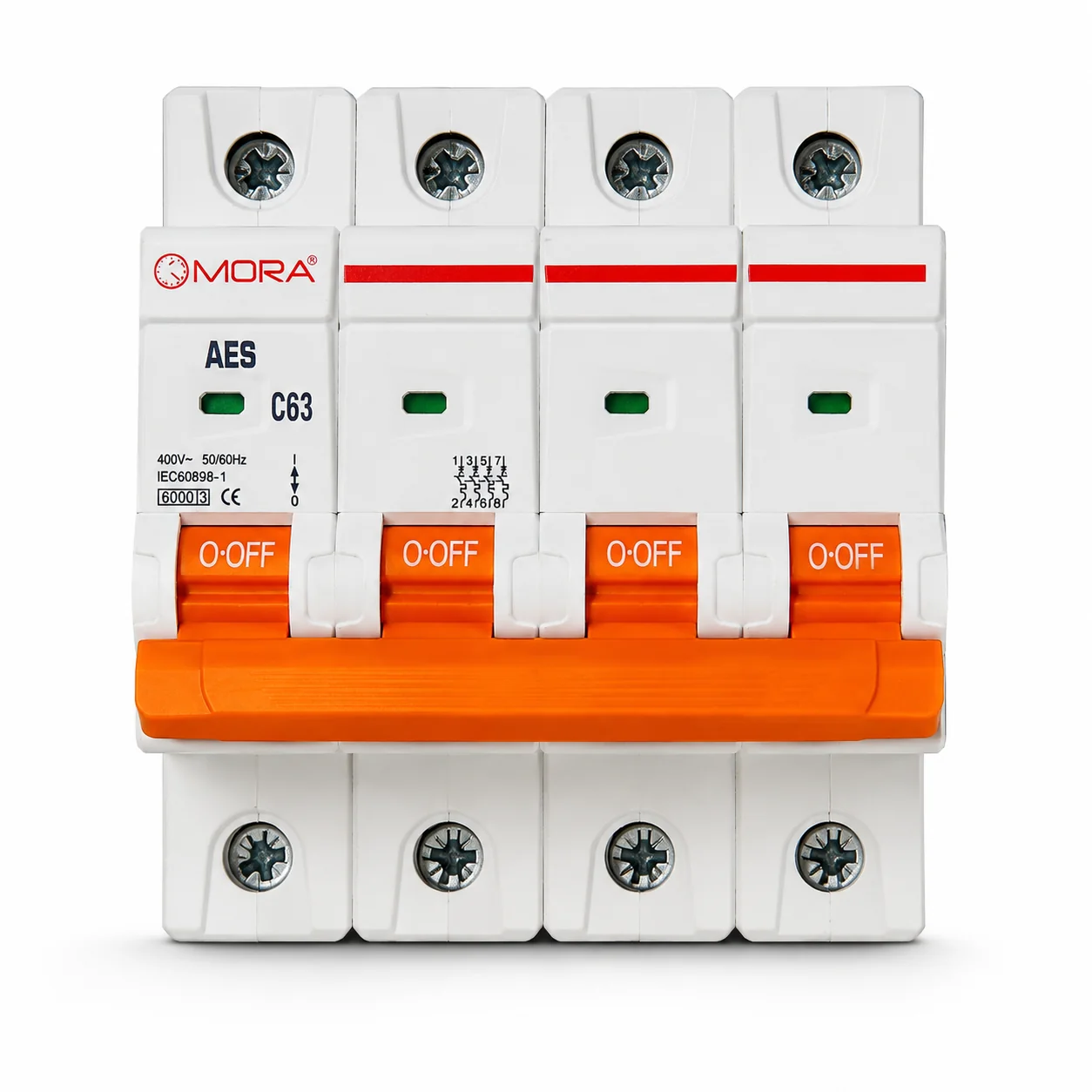
An MCB has a thermal element (bimetal) that trips on a slow overload and a magnetic coil that trips almost instantly on a short circuit. Its job is to stop the cable overheating. The trip curve decides how much starting surge it tolerates: B-curve for lights and heaters, C-curve for ACs, motors, pumps and fridges, D-curve for heavy motors and transformers with very high inrush. Check the breaking capacity too: 6 kA or 10 kA is common, and higher is better near a transformer. For AC sizing see our guide on which MCB for a 1.5 ton AC.
MCCB (Moulded Case Circuit Breaker): the big brother
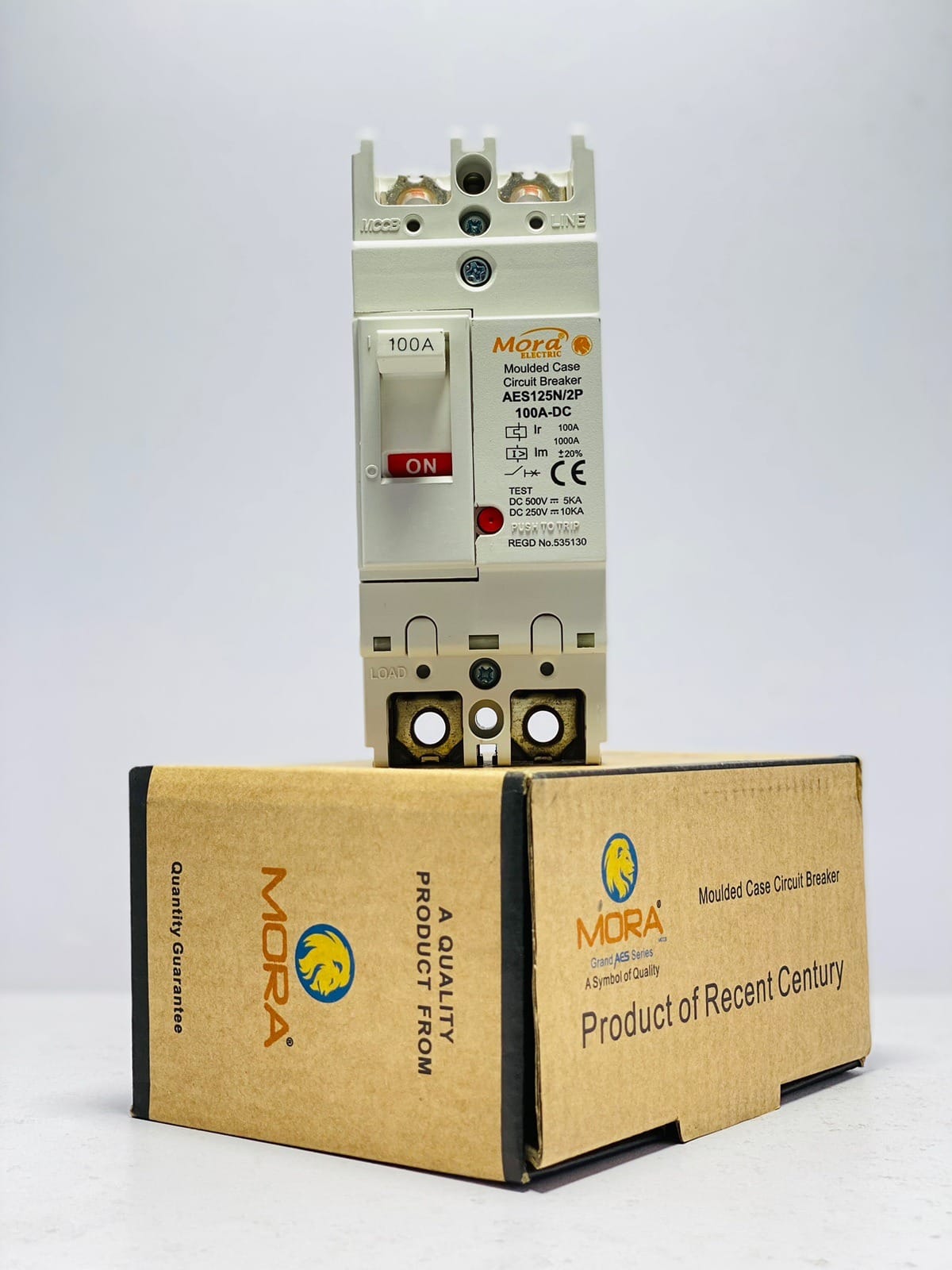
An MCCB does the same overload and short-circuit job, but for higher currents and higher fault levels. In practice that means the main incomer of a large house, plaza or factory, and feeders to motor panels. Many MCCBs let you adjust the overload setting (Ir) and sometimes the short-circuit pickup, so a 250 A frame can be set to match a 200 A cable. You will see two breaking-capacity figures: Icu (ultimate) and Ics (service). For industrial boards, aim for an Ics that matches the prospective fault current.
RCCB (Residual Current Circuit Breaker): protects people
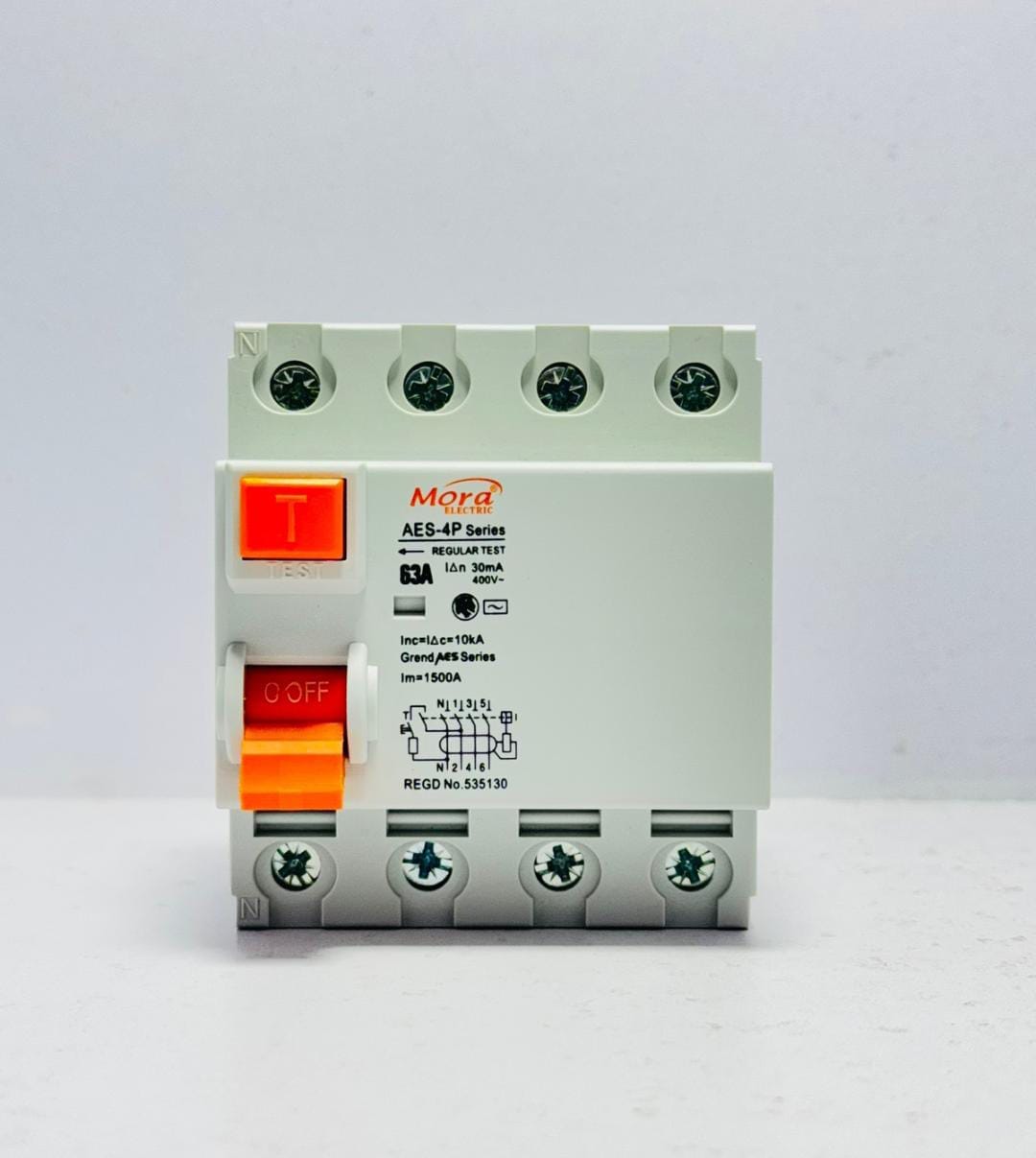
An RCCB, often still called an ELCB in Pakistani markets, trips when leakage current reaches its sensitivity. 30 mA is the standard choice for protecting people. 100 mA or 300 mA is used upstream for fire protection, for example in a shed or warehouse. It cannot tell that a circuit is overloaded. A 40 A RCCB feeding a 60 A load will just heat up until it is damaged, so it always needs an MCB or MCCB upstream of the same or lower rating.
RCBO (RCCB + MCB in one): one circuit, full protection
An RCBO watches overcurrent and leakage on a single circuit. The big advantage is selectivity. If the geyser element starts leaking, only the geyser RCBO trips. With a shared RCCB, half the house goes dark. RCBOs cost more per circuit, so most homes use them only where water and people meet: the geyser, bathrooms, the washing machine, outdoor lights and the water pump. For a deeper side-by-side, see our guide on RCBO vs RCCB for geyser, bathroom and DB box.
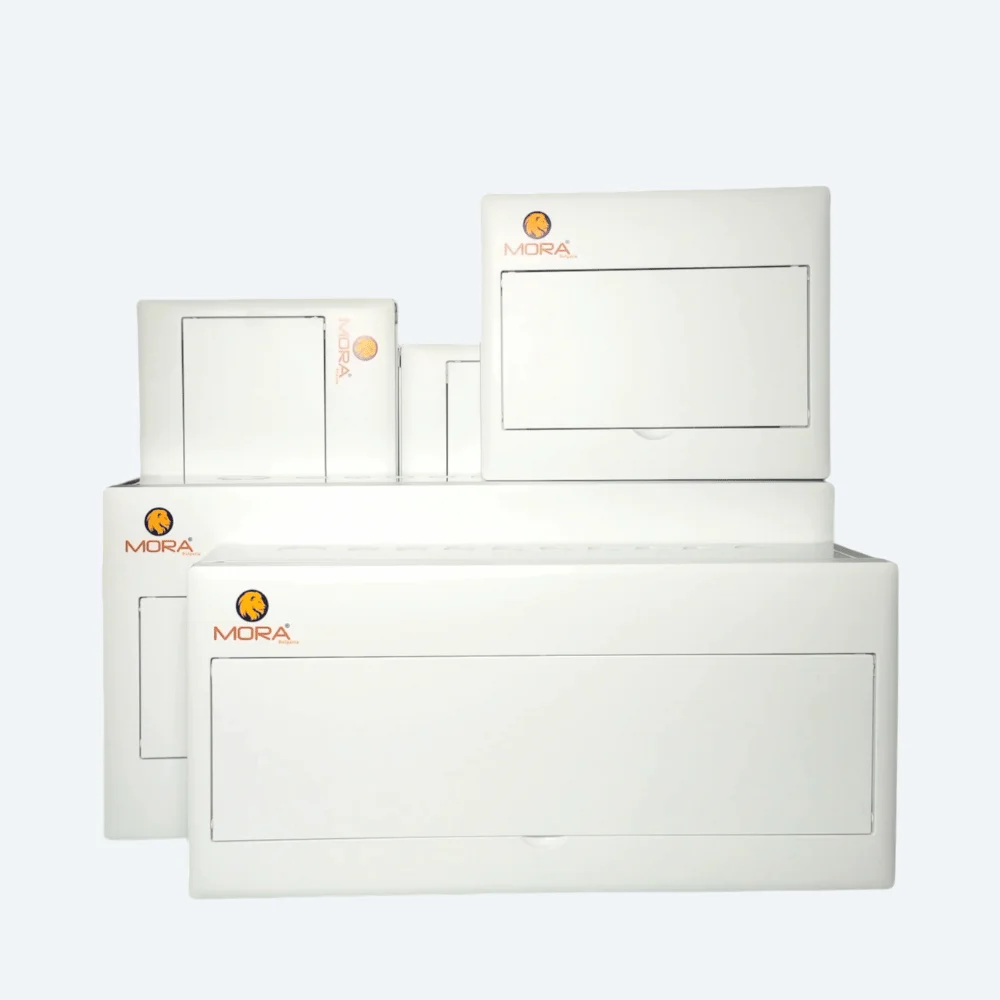
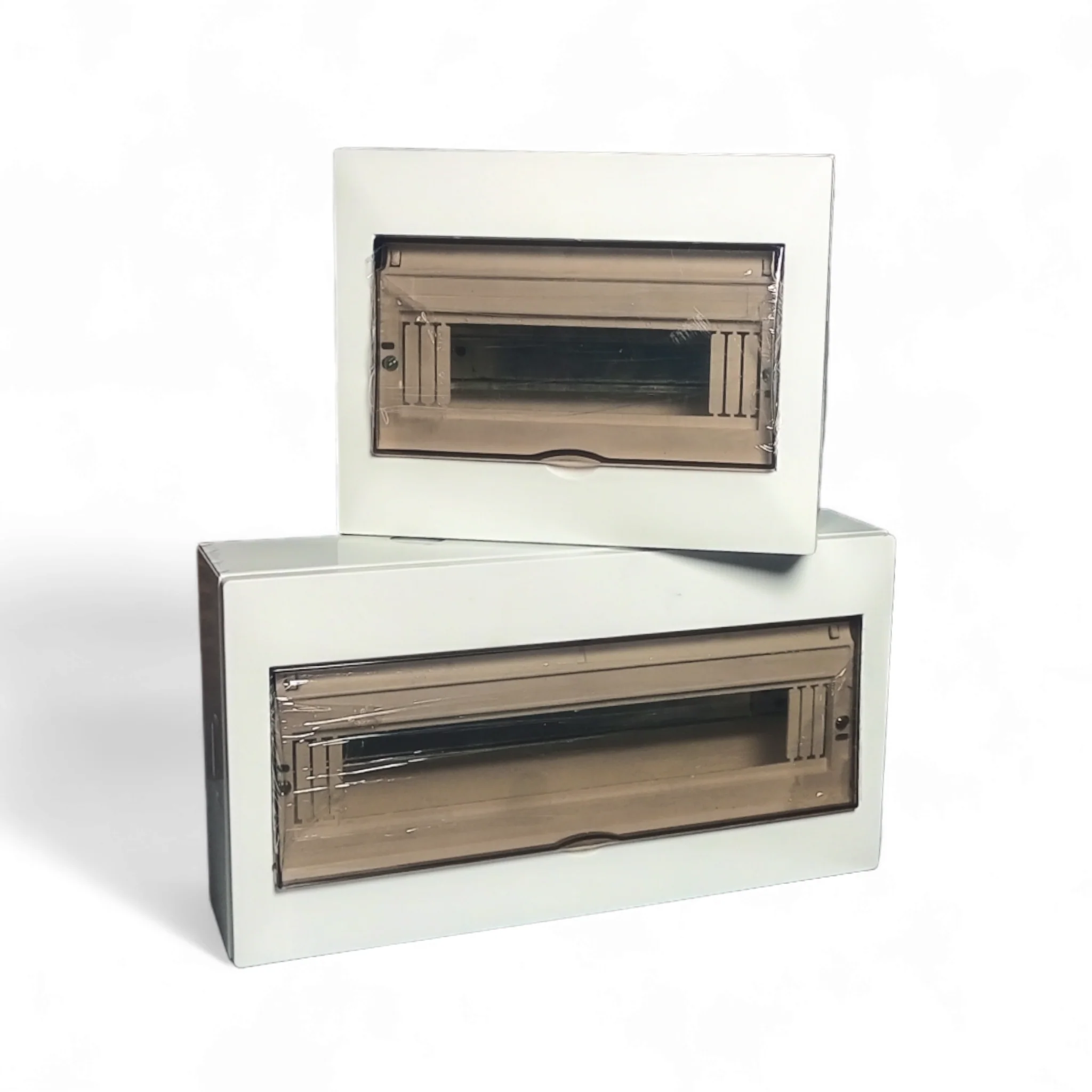
Where MCB, MCCB, RCCB and RCBO go in a DB box
The layout below is the most practical one for a typical single-phase Pakistani house. Electricians call it a split-load board.

- Main switch (2-pole MCB, or an MCCB on large loads) takes the incoming supply from the meter.
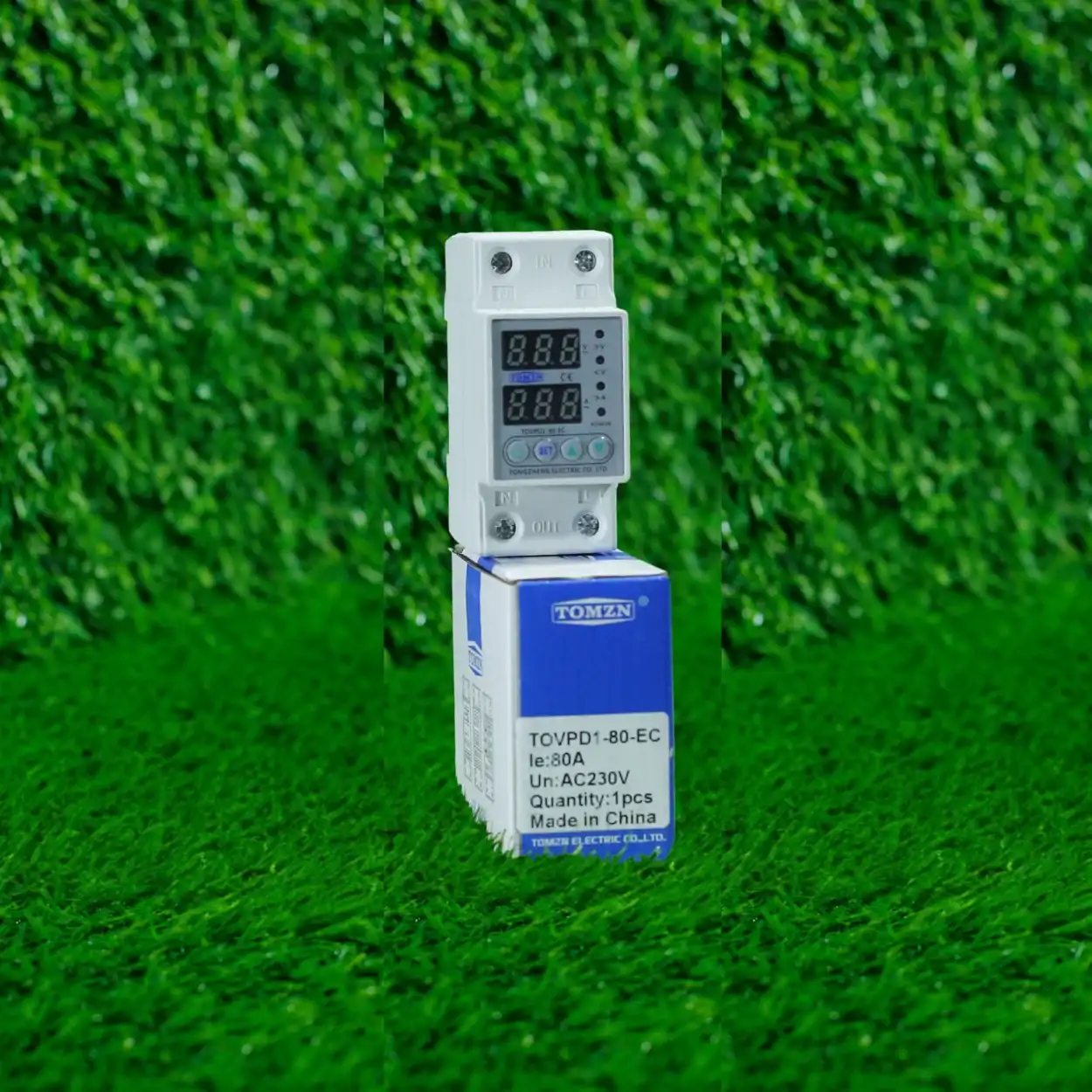
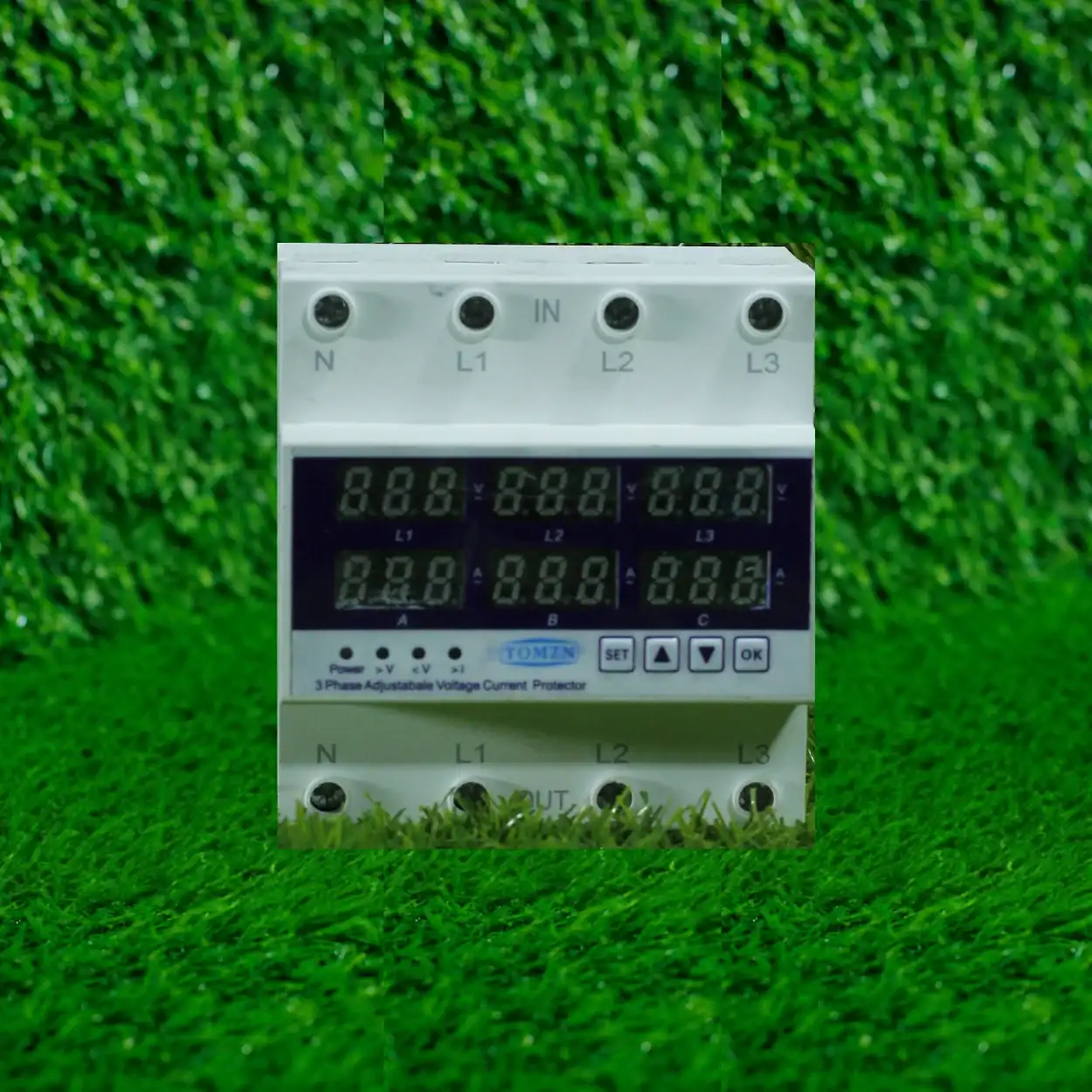
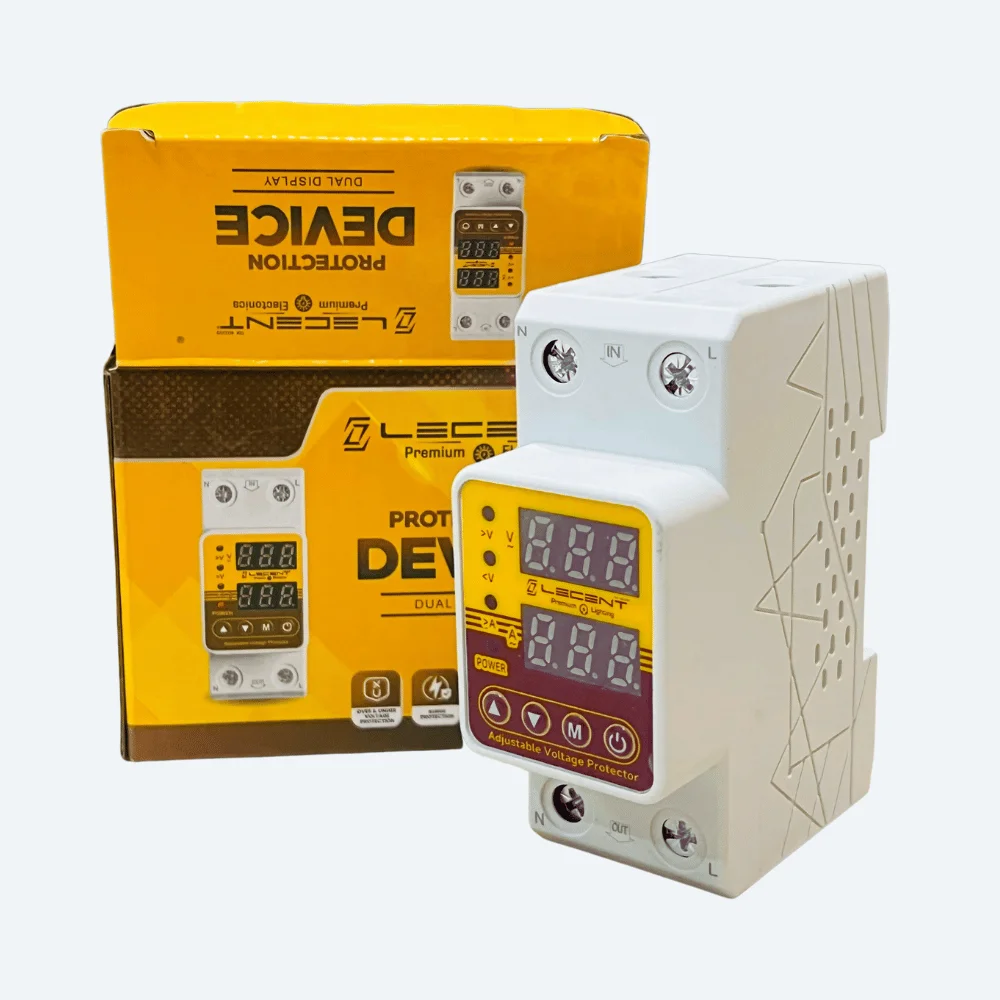
- Surge protector / voltage protector (optional but wise with our voltage swings).
- 30 mA RCCB feeds Group A: lights, fans, general and kitchen sockets.
- RCBOs for the geyser, bathroom/washer and outdoor/motor circuits, each on its own.
- Group B MCBs fed directly from the main switch: ACs and the UPS input. You can move these onto RCBOs later.
- Separate neutral bars for RCCB circuits and non-RCCB circuits, plus an earth bar connected to a proper earth pit.
For full step-by-step wiring, see how to set up a home DB box in Pakistan.
How to choose: a 5-step method (with worked example)
- Find your design current. Use the sanctioned load on your bill, or add up the appliances that actually run together. Single phase: Amps = Watts ÷ 220. Three phase: Amps = Watts ÷ (1.732 × 400 × power factor).
- Pick the main switch. Its rating must be above the design current and no higher than your incoming cable can carry. Above about 100 A, or where the fault level is high, choose an MCCB.
- Size each circuit MCB to its wire (cable rating > MCB rating > load current) and choose the curve (B for lights, C for motors and compressors).
- Add residual-current protection. Put a 30 mA RCCB over a group, or 30 mA RCBOs on wet and outdoor circuits. The RCCB’s amp rating must be at least the rating of the breaker protecting it.
- Check the extras. Breaking capacity (kA), number of poles (2P single phase, 4P three phase with neutral), RCD type (AC or A), and a test button you can reach.
Worked example: 5 kW house in Lahore with 2 ACs, geyser and UPS
Sanctioned load 5 kW → 5000 ÷ 220 ≈ 23 A. The main switch is a 2P 40 A C-curve MCB on a 10 mm² incoming cable (go to 63 A only if the cable and load justify it). Group A gets a 2P 40 A, 30 mA RCCB (rated at least as high as the 40 A main) feeding 10 A B-curve MCBs for lights and fans and 16 A MCBs on 2.5 mm² wire for sockets. The 2.5 kW geyser draws about 11.4 A, so it gets a 16 A or 20 A, 30 mA RCBO to suit its wire. The 1.5 ton and 2 ton ACs go on 16 A and 20 A C-curve MCBs in Group B, and the UPS input gets its own 16 A MCB.
Worked example: three-phase workshop or poultry shed
Suppose a 40 kW connected load at 400 V and a power factor of 0.85: 40,000 ÷ (1.732 × 400 × 0.85) ≈ 68 A. A sensible incomer is a 3P or 4P MCCB of 100 A frame with the overload set near 80 A, checked against the cable. Each exhaust fan, cooling-pad pump or motor feeder gets its own MCB, MCCB or motor protection. A 4P 100 mA or 300 mA RCCB (or an MCCB with an earth-leakage relay) guards against insulation fires in dusty, humid sheds. Keep 30 mA protection on socket circuits that people touch, and if 30 mA devices sit downstream, make the upstream one a time-delayed 300 mA S-type so both don’t trip together. Treat this as an illustration: an industrial panel must be designed by a qualified engineer. See our three-phase electrical systems page, or ask for a bulk quote on our industrial wholesale supply page.
Pakistan-specific points most guides miss
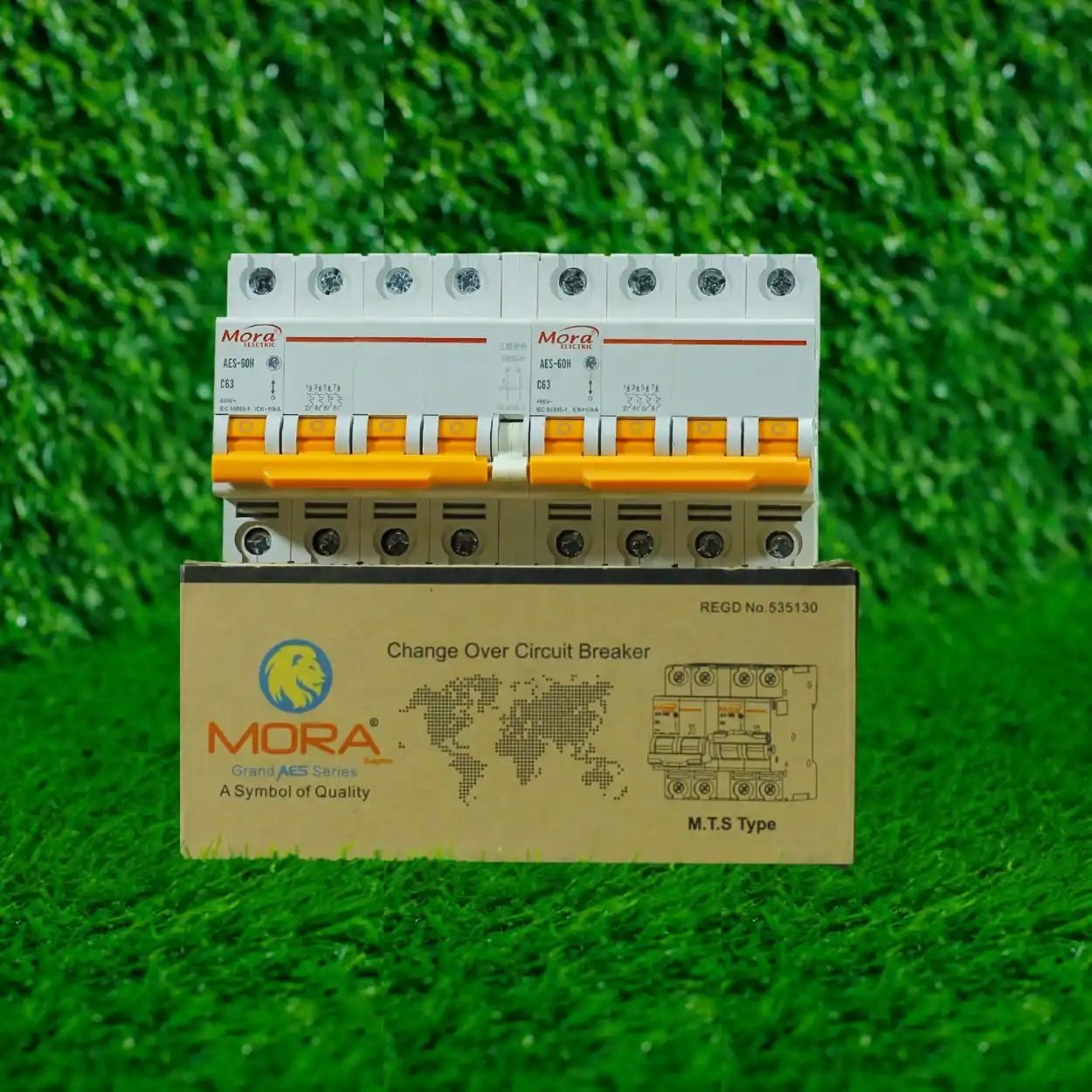
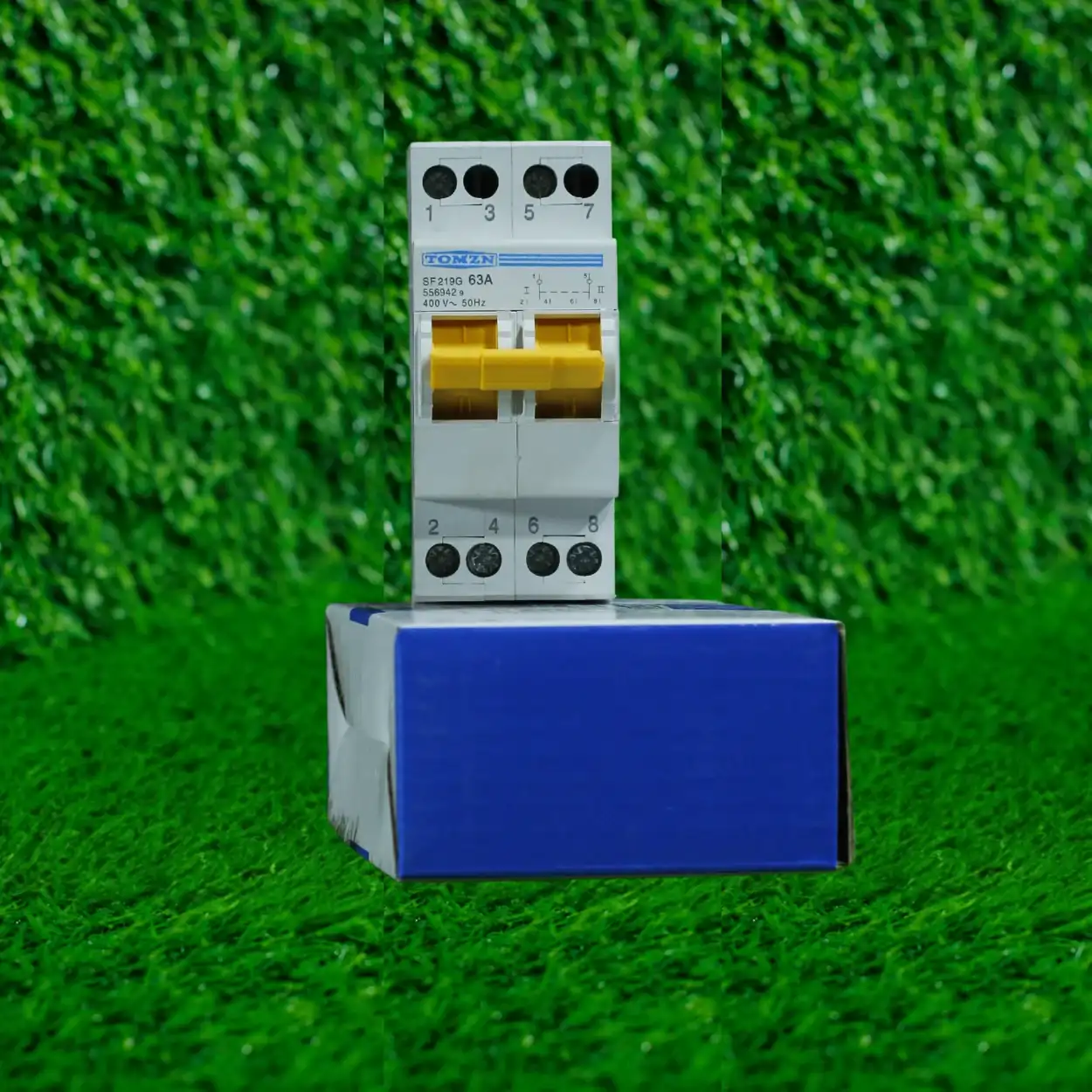
- UPS and inverter wiring: on a changeover, switch both live and neutral (2-pole devices). A mixed-up neutral between WAPDA and UPS circuits is a common reason an RCCB trips the moment load-shedding starts.
- Solar inverters and inverter ACs: their electronics can produce pulsating-DC leakage that a basic Type AC RCD may not detect. Choose Type A RCCBs/RCBOs where possible, and follow the inverter manual. Many grid-tie manuals specify the RCD type and a minimum trip current. For the DC side you need DC-rated devices, not these AC breakers: see our DC circuit breaker for solar guide.
- Low voltage and surges: none of these four devices protects against low or high voltage. Pair them with a voltage protector and an SPD.
- Monsoon nuisance trips: damp in outdoor fittings, old geyser elements and wet ceiling fans leak slowly. If the RCCB trips mostly in the rainy season, it is usually doing its job, so find the leaking circuit.
- Earthing: an RCCB still works without an earth pit, but a good earth makes it trip on a faulty appliance before someone touches it.
Safety notes
- Never “upgrade” an MCB to a higher rating to stop tripping on thin wire. That turns a breaker into a fire risk.
- Never install an RCCB as the only device on a circuit.
- Press the RCCB/RCBO T (test) button regularly. Many manufacturers suggest monthly. If it does not trip, replace it.
- Switch off the main and verify the circuit is dead with a tester before any DB work, or hire a licensed electrician.
- Buy genuine stock. Counterfeit breakers in the market look identical but may not trip at their rated values.
Buyer’s checklist: MCB, MCCB, RCCB or RCBO?
- ☐ Main switch rated above design current and within the incoming cable rating
- ☐ MCCB used where current exceeds about 100 A or the fault level is high
- ☐ Every final circuit has its own MCB matched to its wire and curve
- ☐ 30 mA protection on sockets, bathrooms, geyser, kitchen and outdoor circuits
- ☐ RCCB rating ≥ the breaker protecting it, with separate neutral bars
- ☐ Type A RCD where inverter ACs or solar inverters are connected
- ☐ 2P devices on single phase and 4P on three phase with neutral
- ☐ Breaking capacity (kA) suitable for your location
- ☐ Voltage protector and SPD added for Pakistani supply conditions
Browse genuine circuit breakers including MORA RCBOs, Mora 4P RCCBs and Schneider NSX MCCBs. For background on RCD types, see the ABB residual current devices technical guide and Doepke’s RCD selection note.
FAQ
Can I use an RCCB instead of an MCB?
No. An RCCB only detects earth leakage. It will not trip on overload or short circuit, so it must always have an MCB, MCCB or fuse protecting it. If you want one device that does both, use an RCBO.
Is RCBO better than RCCB + MCB?
Protection-wise they are similar. The RCBO’s advantage is that a leak trips only that one circuit. RCCB + MCBs is more economical for a group of circuits. Most homes use both approaches: an RCCB for general circuits and RCBOs for the geyser, bathroom and outdoor circuits.
When should I use an MCCB instead of an MCB?
Use an MCCB when the current exceeds about 100 to 125 A, when you need adjustable trip settings, or when the fault level needs higher breaking capacity. Typical cases are factory incomers, plazas, motor feeders, large solar AC combiners and poultry-shed main panels.
What mA RCCB is best for a home in Pakistan?
30 mA for protecting people. Use 100 mA or 300 mA only upstream for fire protection, or where an equipment manual specifies it. Choose Type A if inverter ACs or solar inverters are on the circuit.
Why does my RCCB trip when load-shedding starts or it rains?
The usual causes are a neutral shared between RCCB and non-RCCB circuits, a UPS changeover that switches only live, moisture in outdoor fittings, or an ageing geyser element. Test each circuit separately to find the leak instead of removing the RCCB.
Need the right breaker set for your home, factory or farm?
Send your sanctioned load or panel schedule and we will suggest a complete MCB, MCCB, RCCB and RCBO set from genuine brands, with wholesale supply for contractors, factories and poultry farms. WhatsApp HN Electric: 0329 1654950
