










MCB Size for Geyser & Electric Heater: Chart, Wire Size & Winter Load Check (Pakistan)

Short answer: work out the MCB size for a geyser or electric heater from the watts on its rating plate. Amps = watts ÷ 220, then pick the next standard MCB that is at least 1.25 times that current but no bigger than your wire can carry. In practice: a 1.5–2 kW storage geyser, fan heater or oil heater needs a 16A MCB on 2.5 mm² copper wire. A 3 kW geyser needs 20A on 4 mm². A 4.5 kW instant geyser needs 25A on 4 mm² (or 32A on 6 mm² for long runs). A 6 kW multi-point instant geyser needs 32A on 6 mm². Every geyser and immersion rod circuit should also be behind a 30mA RCCB or RCBO and properly earthed.
Gas pressure drops every winter in many Pakistani cities, so homes switch to electric geysers, fan heaters and immersion rods. Then the calls start: “the geyser MCB keeps tripping”, “the socket behind the heater melted”, “the main breaker goes off every evening”. Most of these come from picking a breaker by guesswork instead of from the plate rating and the wire. This guide gives you one chart for geysers and heaters, a 4-step method, two worked examples, and Pakistan notes on low voltage, load-shedding, UPS and solar.
Why the MCB Size for a Geyser Matters (and Why Online Charts Disagree)
An MCB protects the wire, not the appliance. Too small and it trips during long heating cycles; too big and the wire overheats before it trips. That is how sockets melt and wires burn inside walls.
Online charts say 10A, 16A, 20A, 25A or 32A for “a geyser” because they describe different heaters: a 6 kW instant geyser draws four times the current of a 1.5 kW storage geyser. So always start from the wattage on the plate, never the word “geyser” or the tank size.
- Storage geysers: 1.5–3 kW element; tank size changes heating time, not amps.
- Instant geysers: full element on when the tap opens, about 3 kW (single tap) to 6 kW (multi-point).
- Room heaters (fan, oil, halogen/infrared): 0.8–2.5 kW for hours, hard on weak sockets.
- Immersion rods: 1–2 kW in a bucket of water, so leakage protection matters most.
MCB Size for Geyser and Heater Chart (220V, Pakistan)
This chart reconciles the common loads in Pakistani homes. Currents are calculated at 220V. Wire sizes assume single-core copper (PVC) on a normal, fairly short plastered or surface run. Go one size up for long runs, wires bunched in one conduit or a hot roof slab.
| Appliance (plate rating) | Current at 220V | MCB | Copper wire | Must-have extras |
|---|---|---|---|---|
| Halogen / infrared heater 0.8–1.2 kW | 3.6–5.5 A | 16A socket circuit | 2.5 mm² (7/29) | Wall socket, not extension |
| Fan heater 2 kW | 9.1 A | 16A socket circuit | 2.5 mm² | Good 15/16A socket |
| Oil-filled heater 2–2.5 kW | 9.1–11.4 A | 16A socket circuit | 2.5 mm² | One heater per circuit |
| Immersion rod 1–2 kW | 4.5–9.1 A | 16A | 2.5 mm² | 30mA RCCB/RCBO |
| Storage geyser 1.5–2 kW | 6.8–9.1 A | 16A | 2.5 mm² | 30mA + earth wire to tank |
| Storage or instant geyser 3 kW | 13.6 A | 20A | 4 mm² (7/36) | 30mA + earth, own circuit |
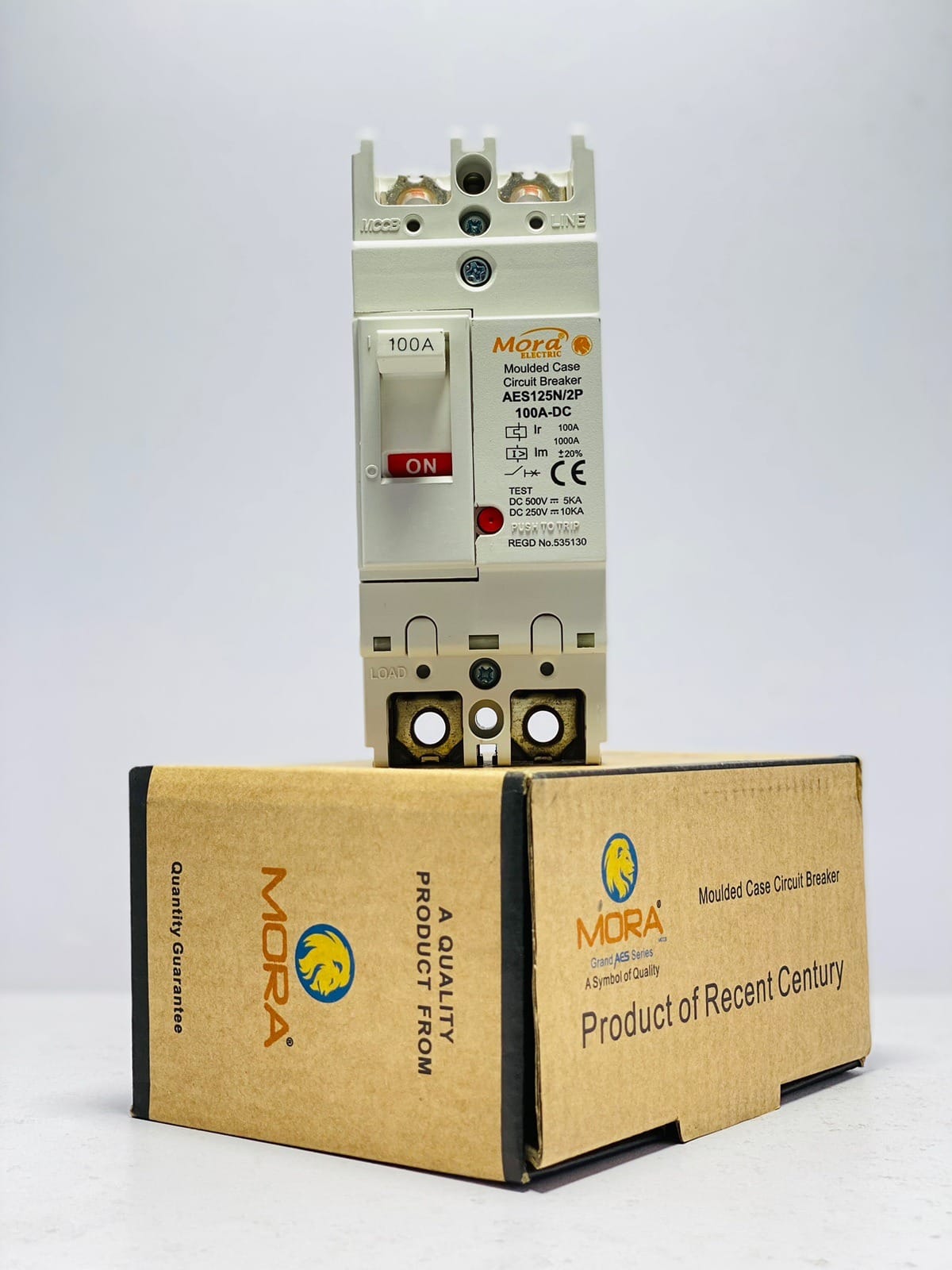
| Instant geyser 4.5 kW | 20.5 A | 25A (32A for long runs) | 4 mm² (6 mm² with 32A) | Own circuit, 2-pole MCB |
| Multi-point instant geyser 6 kW | 27.3 A | 32A | 6 mm² (7/44) | Own circuit, 2-pole MCB |
| Two 2 kW heaters on one circuit | 18.2 A | Trips a 16A | — | Split onto two circuits |
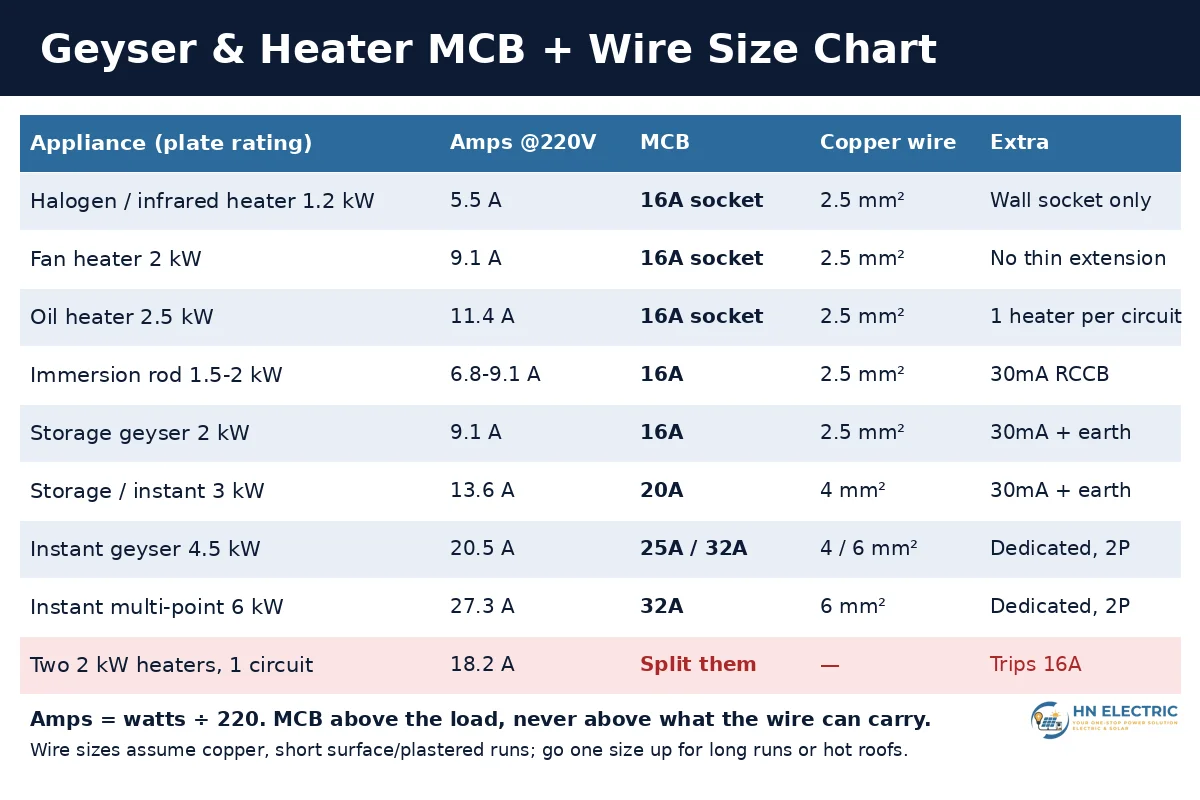
If an instant geyser has a power selector (e.g. 3/4.5 kW), size for the highest setting. For a 3 kW geyser very close to the DB, many electricians use 2.5 mm²; 4 mm² just adds margin for hot summers and crowded conduits.
How to Choose the MCB Size for a Geyser: 4-Step Method
- Read the plate. Find the wattage (W or kW) on the sticker or in the manual. If it gives two settings, use the higher one.
- Convert to amps. Amps = watts ÷ 220. Example: 3000 ÷ 220 = 13.6 A.
- Add the continuous-load margin. Heaters run for long periods, so keep the load at or below about 80% of the breaker rating. Multiply by 1.25 and round up to the next standard size (6, 10, 16, 20, 25, 32, 40A). 13.6 × 1.25 = 17 A, so use a 20A MCB.
- Check the wire. The MCB must never be rated above what the wire can carry. 20A goes on 4 mm² (or a short 2.5 mm² run approved by your electrician), never on 1.5 mm². If the wire in the wall is too thin, change the wire or cut the load. Never just fit a bigger breaker.
Which trip curve: B or C?
Geysers and heaters are resistive loads with no motor starting surge. A B-curve MCB trips instantly at 3–5 times its rating, so it clears a short circuit faster on long wire runs. A C-curve trips at 5–10 times its rating (see circuit breaker trip characteristics). C-curve is what most Pakistani shops stock and works well for home geyser circuits. D-curve is for motors, not geysers.
1-pole or 2-pole?
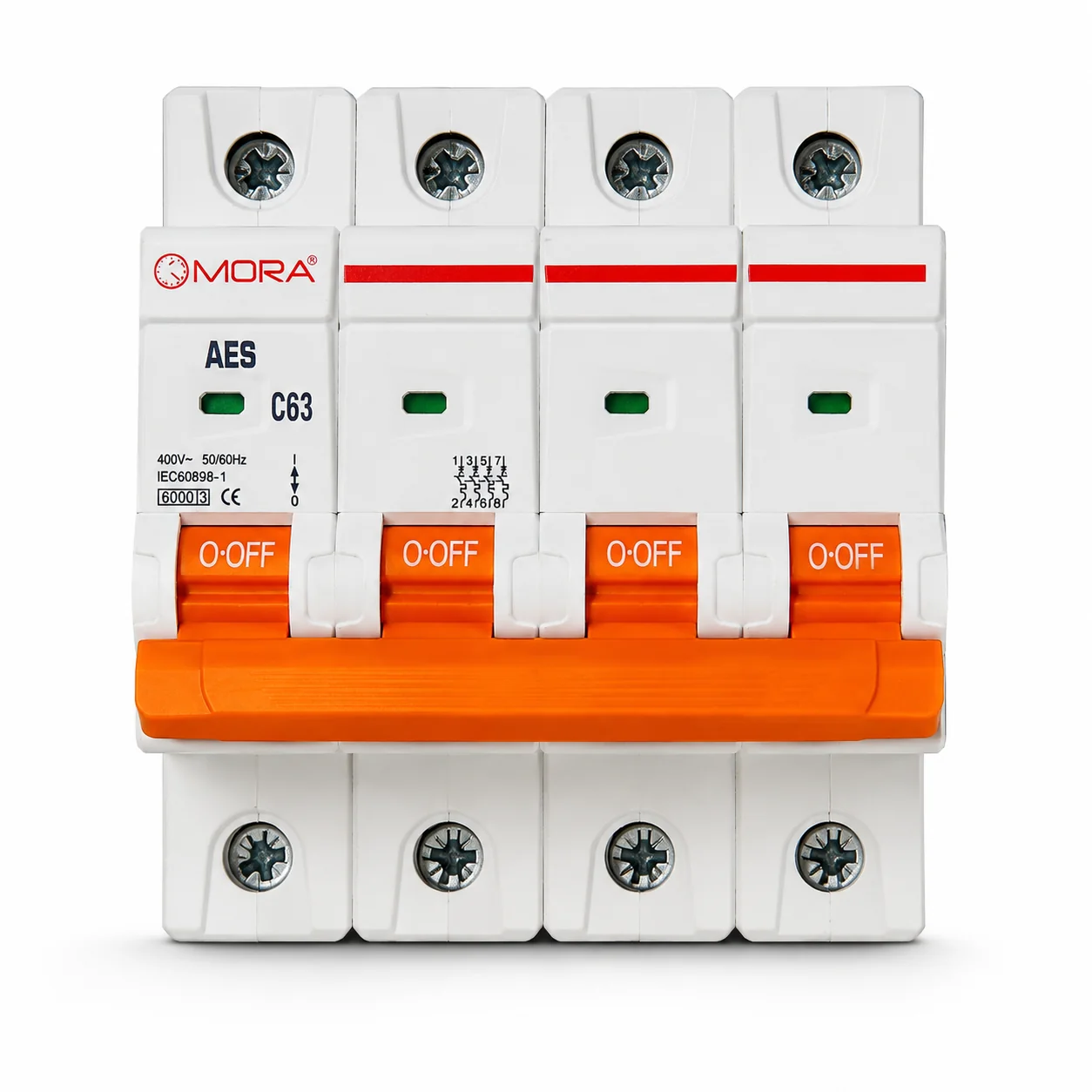
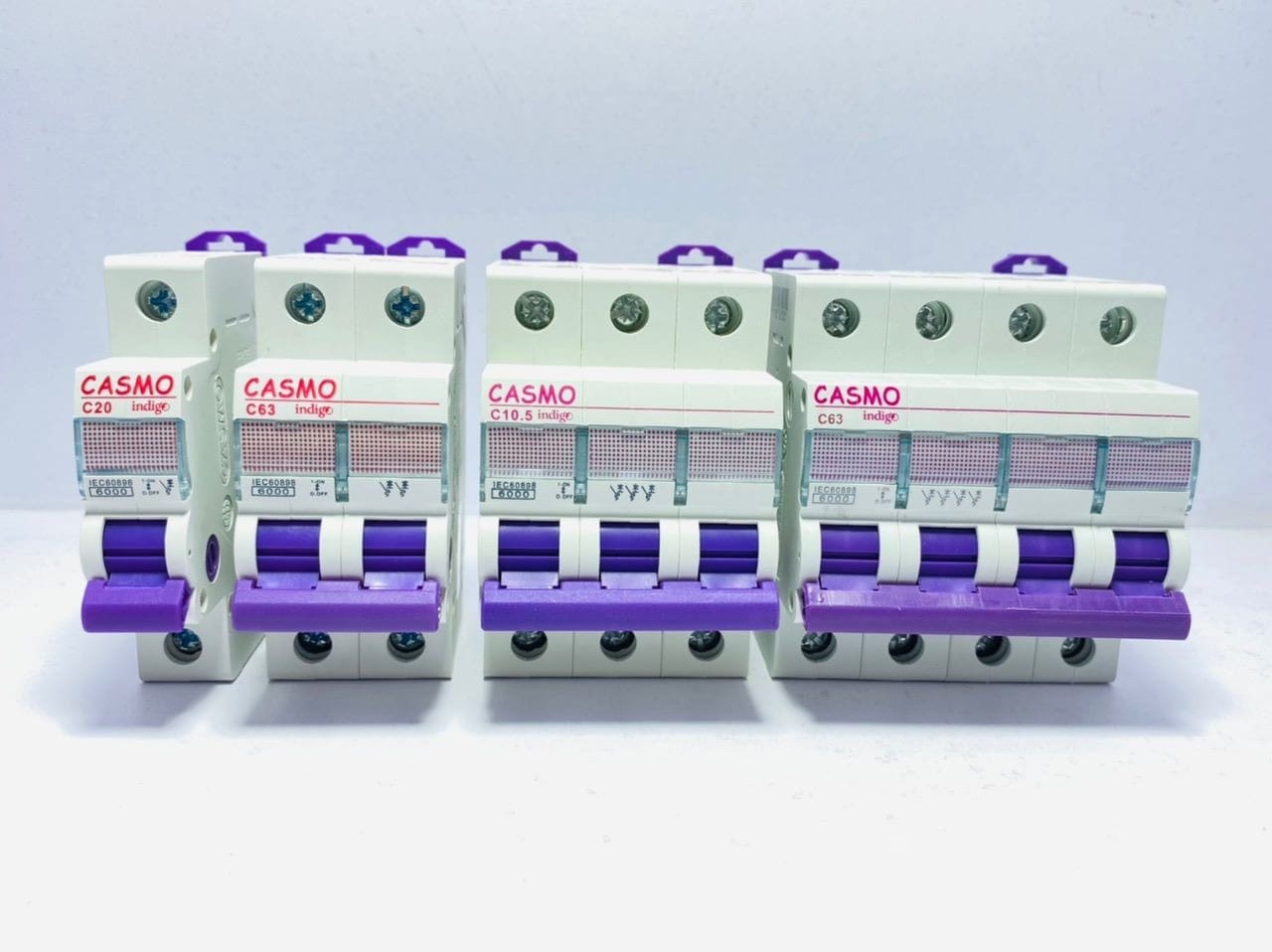
For a geyser in a bathroom, and for any instant geyser of 4.5 kW or more, a 2-pole MCB is the better choice. It switches off both phase and neutral, which matters in older houses where phase and neutral are often swapped. A C-type breaker range such as the CASMO INDIGO MCB (1P–4P) works here; pick the rating from the chart to match your wire.
Worked Example 1: Upgrading to a 3 kW Geyser on an Old Circuit
Ahmed in Lahore replaces an old 1.5 kW electric geyser with a new 3 kW storage geyser. The old circuit is 2.5 mm² wire on a 16A single-pole MCB, and there is no RCCB.
- Old load: 1500 ÷ 220 = 6.8 A, so a 16A breaker was fine.
- New load: 3000 ÷ 220 = 13.6 A. With the margin, 13.6 × 1.25 = 17 A, which needs a 20A MCB.
- The 16A breaker may hold, but with almost no margin; a loose terminal or hot DB box means warm wiring and odd trips.
- Fix: a 20A 2-pole MCB. Keep the existing 2.5 mm² only if the run is short and in good condition (check for brittle or darkened insulation); otherwise pull new 4 mm². Add a 30mA RCCB (or a 30mA RCBO for this circuit) and confirm the earth wire actually reaches the geyser body.
What he must not do: put a 32A MCB on the old 2.5 mm² wire “so it stops tripping”. That removes the wire’s protection completely.
Worked Example 2: The Winter Evening Load Check for the Whole House
Choosing each circuit’s MCB is only half the job. In winter, the main breaker is what usually trips, because everything gets switched on at the same time at 7 pm. Here is a typical 10-marla house on a single-phase connection:
| Load switched on together | Watts | Amps at 220V |
|---|---|---|
| Instant geyser (kitchen / bathroom) | 4500 | 20.5 |
| Storage electric geyser | 2000 | 9.1 |
| Two fan heaters (bedrooms) | 4000 | 18.2 |
| Immersion rod | 1500 | 6.8 |
| Lights, fridge, TV, router, fans | about 1200 | 5.5 |
| Total | about 13,200 | about 60 A |
At about 60 A, a 40A main will trip. Even a 63A main has almost no margin, and the meter-side wiring and your sanctioned load may be lower still. The fix is planning, not a bigger main:
- Stagger the big loads. Heat the storage geyser in the afternoon (on solar if you have it), and don’t run the instant geyser and both room heaters at the same moment.
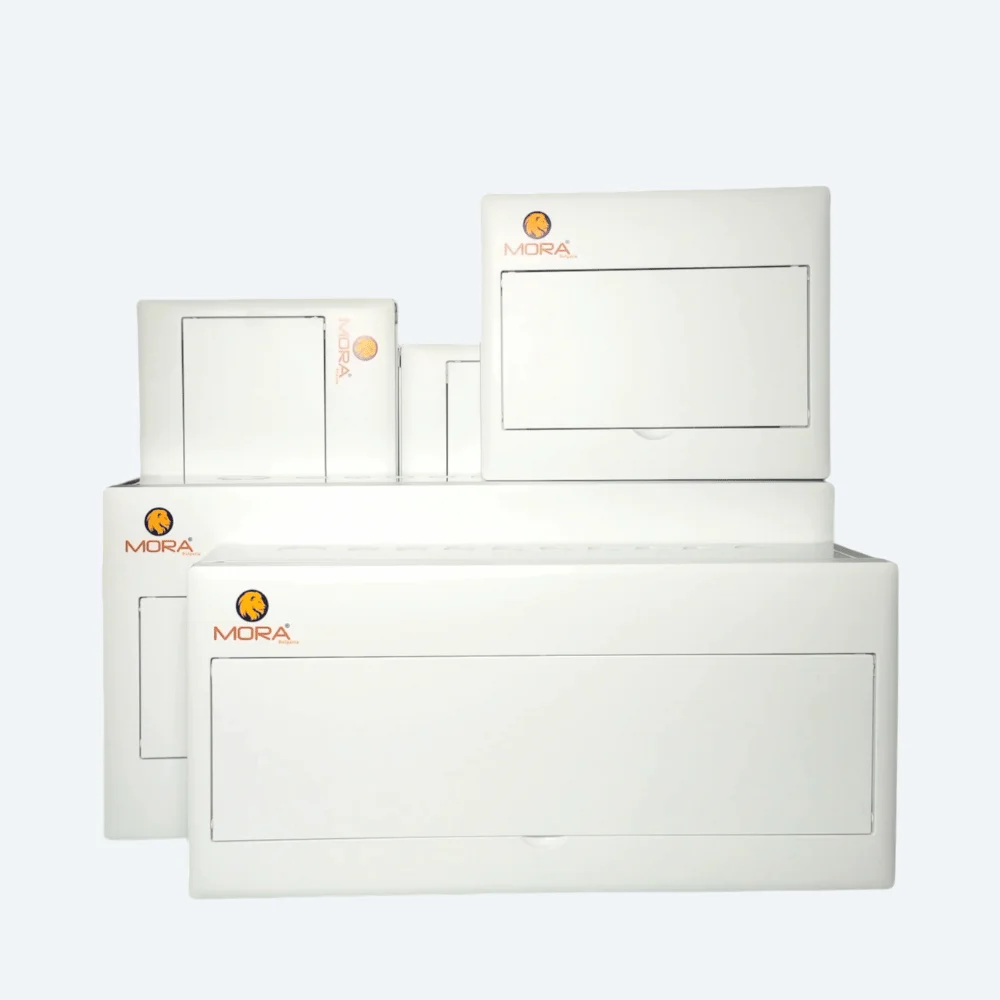
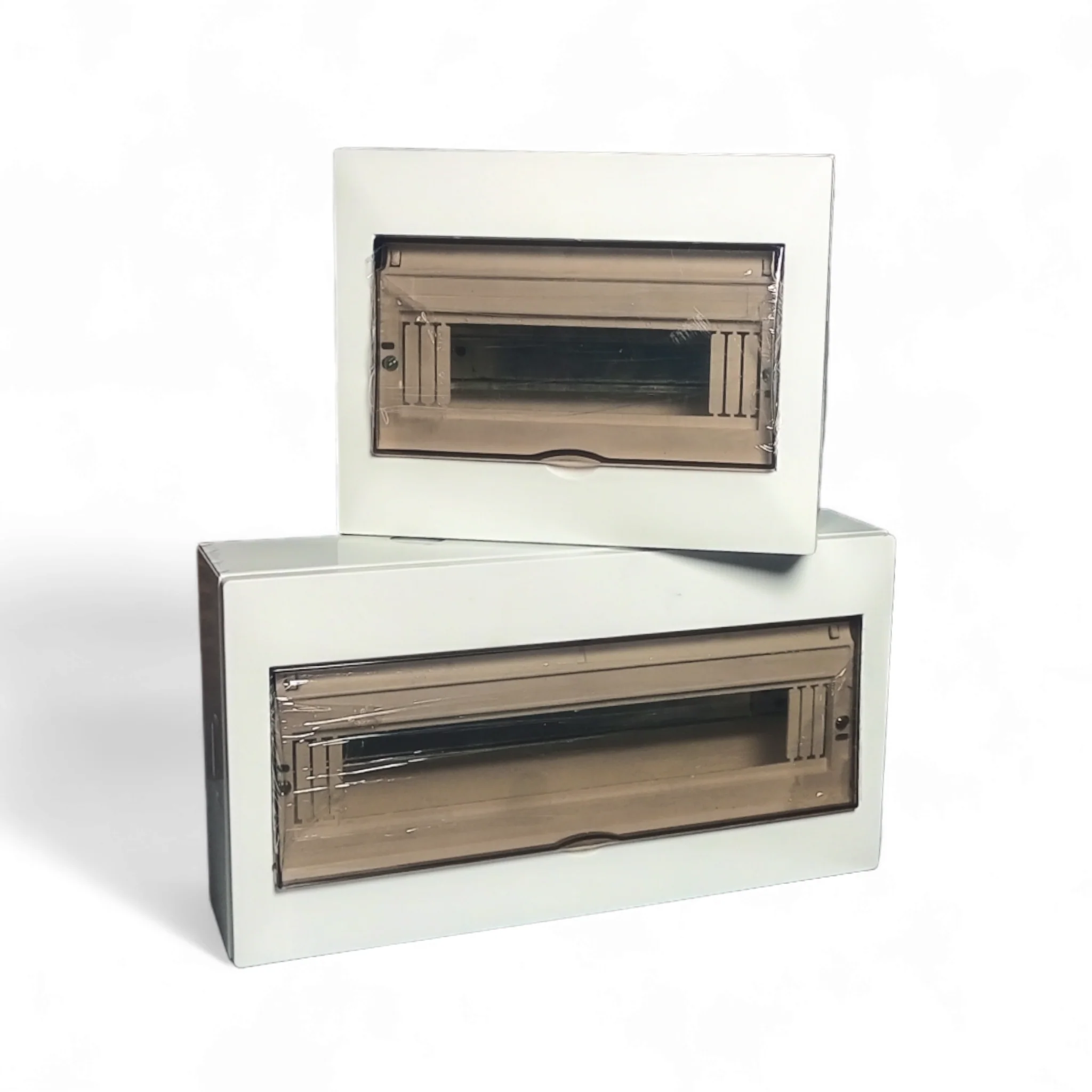
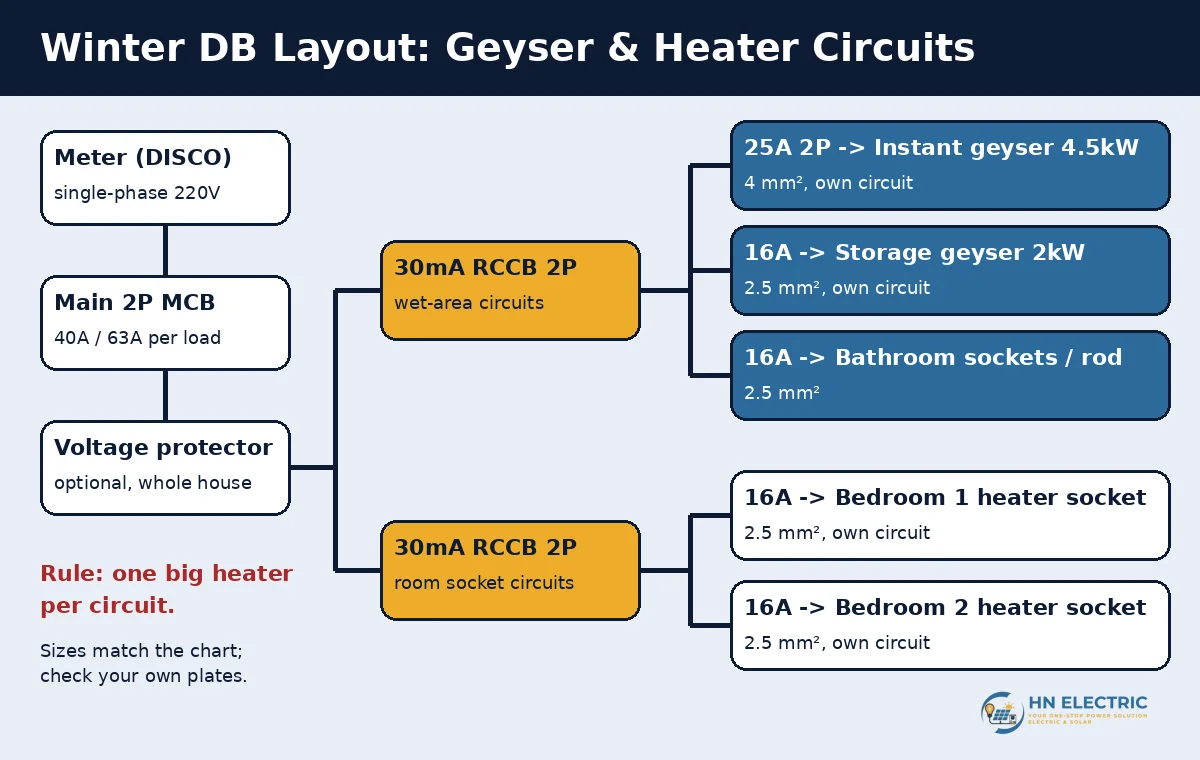
- One big heater per circuit, and each heater on a proper wall socket, as shown in the DB layout below.
- Check the sanctioned load on your electricity bill. If your real winter load is regularly far above it, talk to your DISCO (LESCO, IESCO, MEPCO and so on) about a load extension or a three-phase connection, rather than oversizing the main breaker.
Pakistan Factors: Low Voltage, Load-Shedding, UPS and Solar
Low voltage does not make a heater trip
Low voltage makes motors and compressors pull more current, but a heating element is a simple resistance: at lower voltage it draws less current and gives less heat. A 2000 W element (rated at 220V) running at 190V gives only about 1,490 W and draws about 7.9 A. At 240V the same element gives about 2,380 W and draws about 9.9 A. So a geyser trip during low voltage points to another cause: a shared circuit, loose terminal or faulty element.
Load-shedding restarts
When power returns after load-shedding, everything restarts together and can push the main breaker over its limit (see Worked Example 2). A voltage protector with a restart delay protects fridges and ACs, but it does not replace correct MCB sizing.
UPS and solar inverters
A normal home UPS (around 1 kVA) cannot run a 2 kW heater, so keep heaters off its output. With solar, heat the storage geyser in sunny hours (with net metering you use your own units instead of exporting them). On batteries at night, a 2 kW heater uses 2 kWh every hour and empties a home battery fast. Check the inverter’s continuous rating first.
Safety: Earth, RCCB and the Socket Behind the Heater
An MCB does not protect people from electric shock. It only reacts to overload and short circuits. In bathrooms, a leaking geyser element or a damp wall can make the tank or the water live. That is why a 30mA residual current device is essential on geyser, bathroom and immersion rod circuits (background: how residual-current devices work). Use one 30mA 2-pole RCCB ahead of the wet-area MCBs (for example the Mora 2P RCCB 63A; confirm the 30mA rating when ordering), or an RCBO on each circuit. Our guide on RCBO vs RCCB for geyser and bathroom explains which to choose.
- Earth wire to the geyser body: an RCCB needs a real earth path to work well. Use 3-core wiring and test the earth pit.
- No thin extension boards: a 2 kW heater draws about 9 A for hours and cheap boards melt at the plug. Use a good 15/16A wall socket.
- Immersion rods: use a plastic bucket, put the rod in the water before switching on, and switch off and unplug before touching the water. Bachon ko rod wali balti se door rakhein.
- Warm switch or socket = loose connection. Switch off at the MCB and get it tightened or replaced. Don’t wait for it to brown.
- Get all DB work done by a qualified electrician with the main switched off.
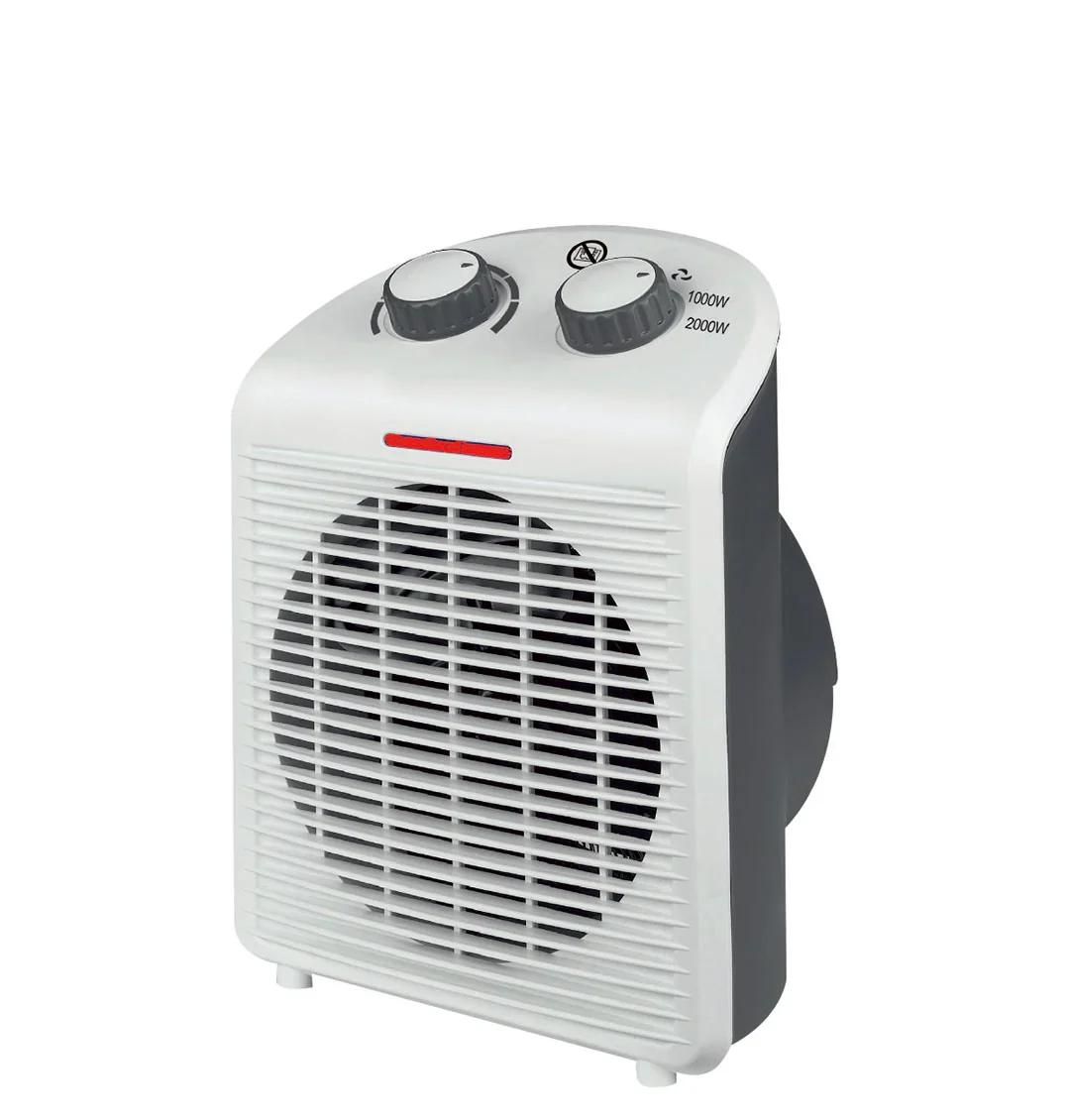
Buying a room heater this winter? A 1000/2000 W fan heater like the GNE GN-2127 fan heater fits comfortably on a 16A socket circuit, as long as it’s the only big heater on that circuit. See more models in our heaters collection.
Geyser and Heater Circuit Checklist
- ☐ Wattage read from the plate (highest setting) and converted to amps (÷ 220)
- ☐ MCB at least 1.25 × amps and no bigger than the wire can carry (16A on 2.5 mm², 20–25A on 4 mm², 32A on 6 mm²)
- ☐ B- or C-curve MCB (not D); 2-pole for bathroom and instant geysers
- ☐ Every geyser on its own circuit; one big heater per socket circuit
- ☐ 30mA RCCB or RCBO on geyser, bathroom and immersion-rod circuits
- ☐ Earth wire connected to the geyser body; earth pit tested
- ☐ Heaters on wall sockets, never on thin extension boards
- ☐ Winter evening total added up and compared with the main breaker and sanctioned load
- ☐ Heaters kept off UPS output; geyser heating moved to sunny hours if you have solar
Sizing an AC circuit too? Use our step-by-step guide which MCB for a 1.5 ton AC. The method is the same, but the curve and margin change because of the compressor.
FAQs: MCB Size for Geyser and Electric Heater
Which MCB is best for a geyser: 16A or 20A?
It depends on the element. Up to 2 kW (most storage geysers), use 16A on 2.5 mm² wire. For 3 kW, use 20A, ideally on 4 mm². For 4.5 kW instant geysers, use 25A on 4 mm² or 32A on 6 mm². Always check the plate first.
Can I fit a 32A MCB on my 2 kW geyser so it stops tripping?
No. A 2 kW geyser draws only about 9 A, so a 16A MCB should not trip from normal use. If it trips, something is wrong: a shared circuit, a loose terminal or a failing element. A 32A breaker on 2.5 mm² wire would let the wire overheat before it trips.
Why does my geyser trip the RCCB but not the MCB?
An RCCB trip means leakage to earth, usually a cracked or scaled element, water in the terminal box or damp wiring. An MCB trip means overload or short circuit. Never bypass the RCCB; get the element insulation-tested and replaced if needed.
Can I run an electric heater on a UPS or solar inverter?
Not on a normal home UPS: a 1–2 kW heater is too much for it. On a solar inverter, a heater or geyser can run during strong sunshine if the inverter’s continuous rating allows it. On batteries, a 2 kW heater uses 2 kWh every hour, so the backup won’t last long.
Do I need a separate MCB for each room heater?
You don’t need a separate MCB for each heater, but each big heater should be on a different socket circuit. One 2 kW heater on a 16A circuit is fine. Two 2 kW heaters together draw about 18 A and will trip a 16A breaker or overheat the socket.
Get Your Geyser and Heater Circuits Right This Winter
HN Electric supplies genuine MCBs, 2-pole breakers, RCCBs, RCBOs and voltage protectors across Pakistan. Send us a photo of your geyser or heater plate and your DB box on WhatsApp 0329 1654950, and we’ll tell you the right MCB, wire size and RCCB. Bas plate ki photo bhejein, hum sahi breaker bata denge.
