












Three-Phase Voltage & Overload Protection: Why It Can’t Wait

Why Three-Phase Businesses Need Automatic Voltage and Overload Protection
If you’re running a three-phase operation in Pakistan, you already know WAPDA’s supply isn’t stable. One moment you’re at 400V, the next you’re at 370V or pushing 420V. Most days you don’t think about it because your equipment tolerates the swing. But that tolerance has a limit, and when it breaks, you don’t just lose a circuit breaker or a capacitor. You lose the entire motor, the compressor, or the production run.
Three-phase protection means two separate things working together: voltage protection (keeping the supply within safe limits) and overload protection (stopping current before it destroys wiring or equipment). Most businesses, especially light commercial operations like workshops, textile units, or small manufacturing, get one or the other, but not both, properly sized. That’s the mistake I see repeatedly on site visits.
What Actually Fails Without Proper Protection
Voltage Swings Destroy Motors Faster Than You Think
I worked on a poultry farm near Lahore two years ago where the farmer was losing motors every six months. His electrician had installed a basic circuit breaker setup but no voltage protection. When WAPDA supply dropped to 360V (or lower during load-shedding), the motor would try to pull extra current to maintain torque. That current draw, over repeated cycles, cooked the winding insulation. By the time the breaker tripped on overload, the motor was already damaged beyond rewinding.
Over-voltage is equally destructive, just slower. When WAPDA voltage climbs to 430V or higher (common in areas near distribution centers), transformer losses inside the motor increase exponentially. The winding temperature rises by 5-10 degrees Celsius for every 5-10V overvoltage. That sounds small until you realize motor insulation degrades twice as fast for every 10 degrees of extra temperature.
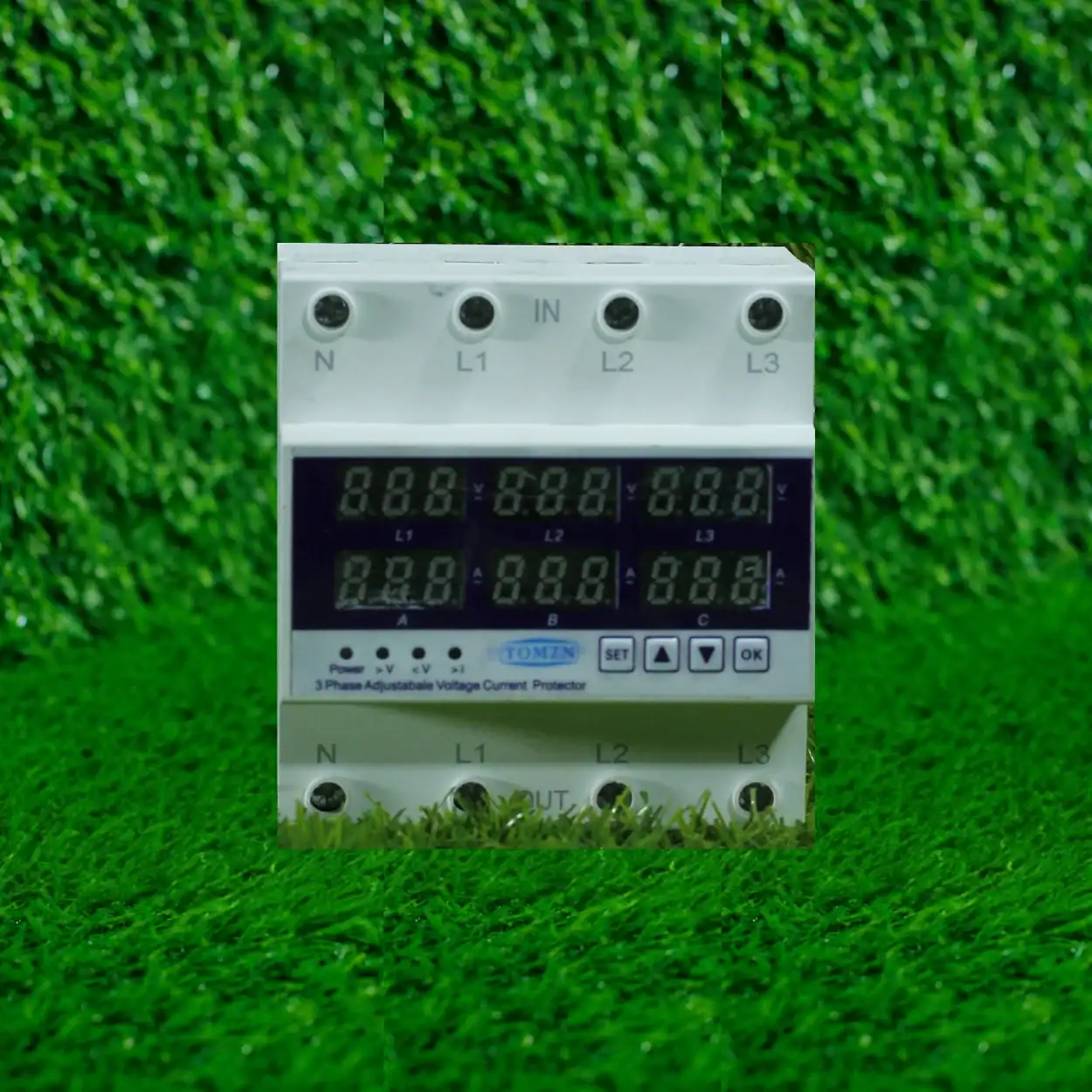
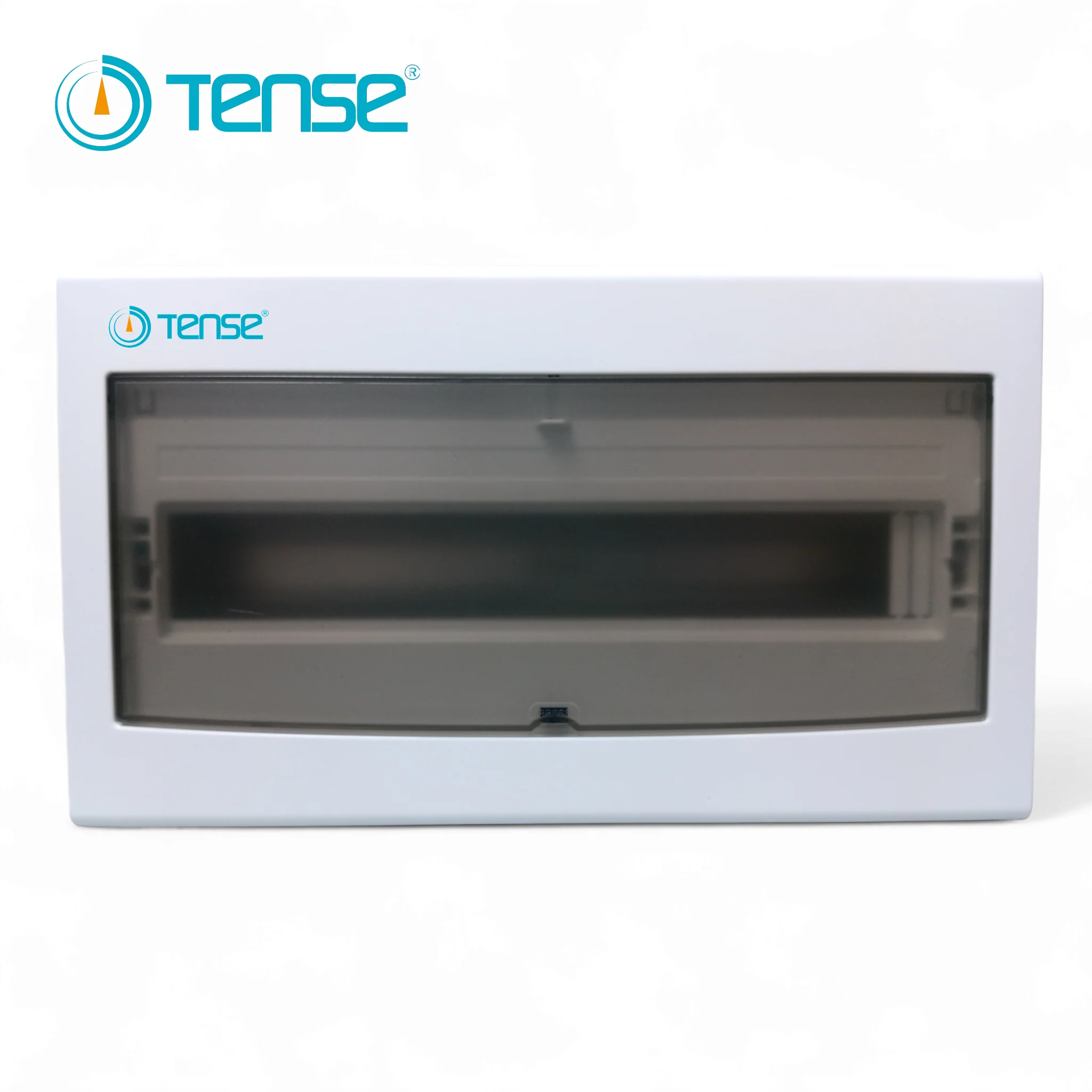
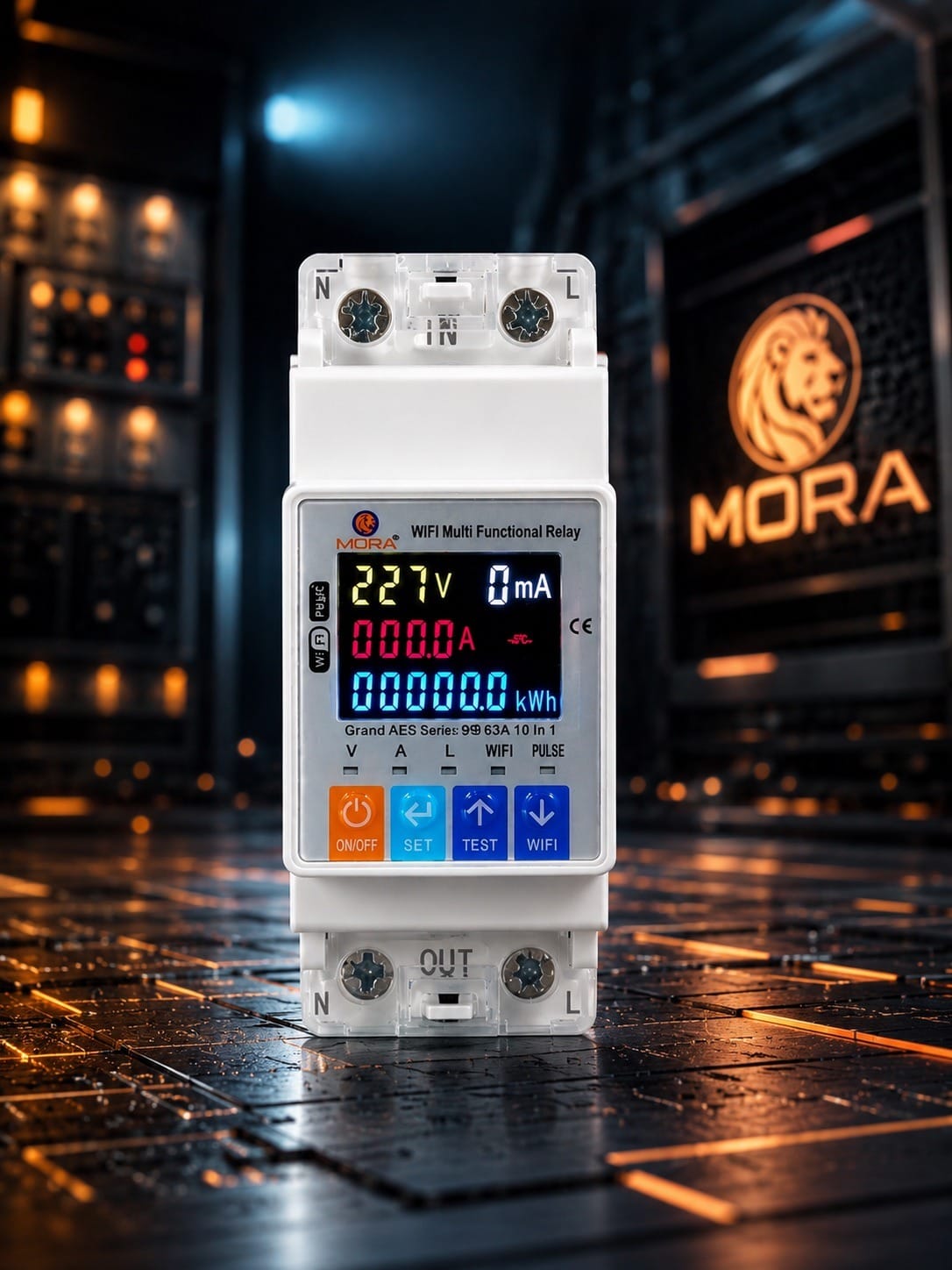
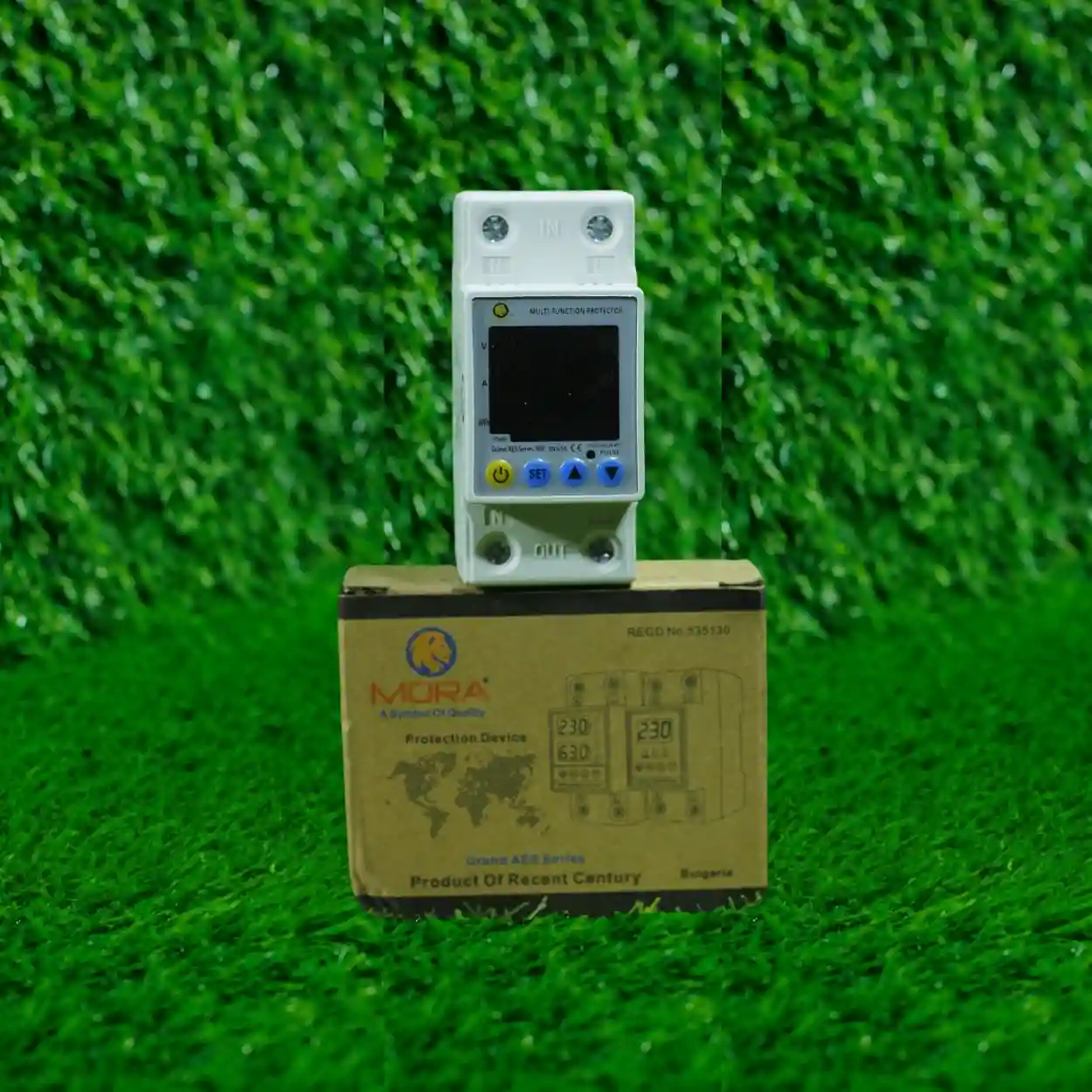
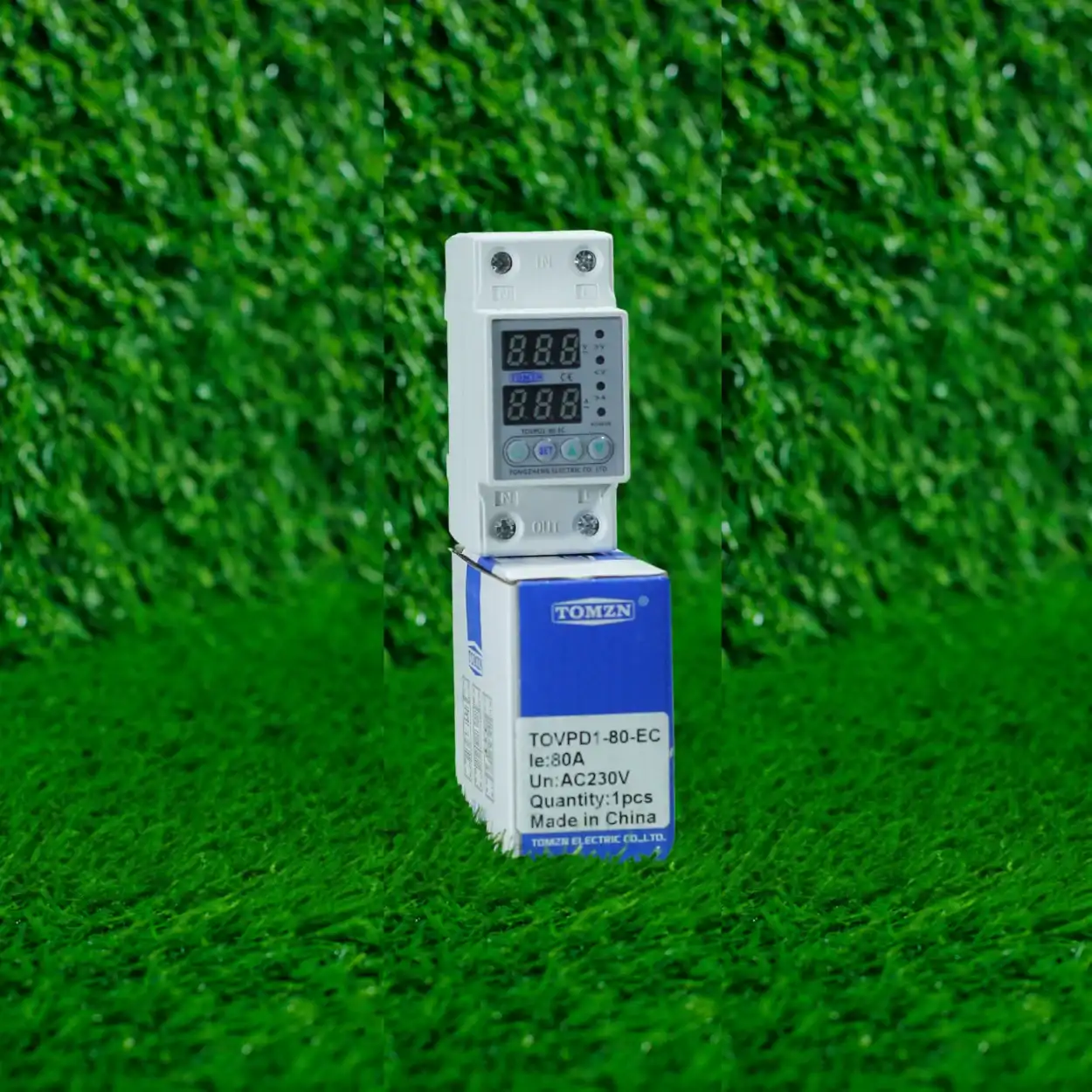
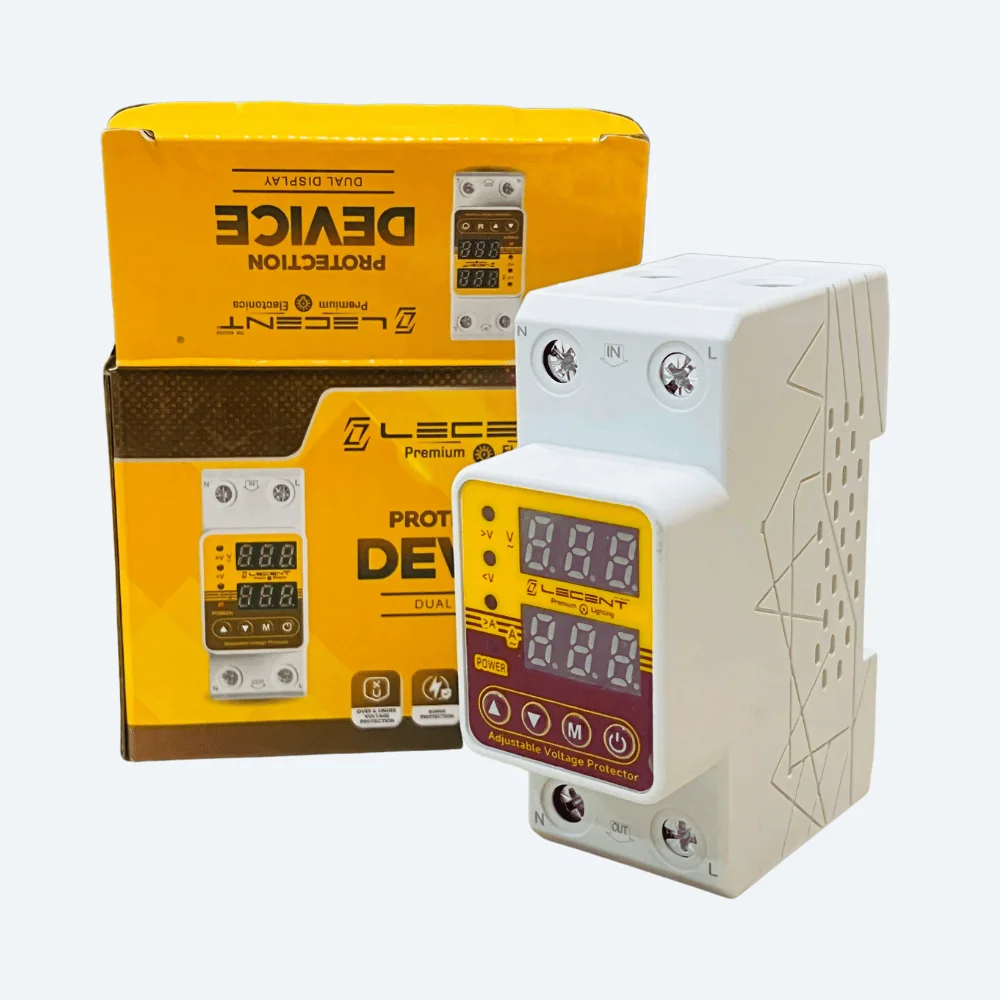
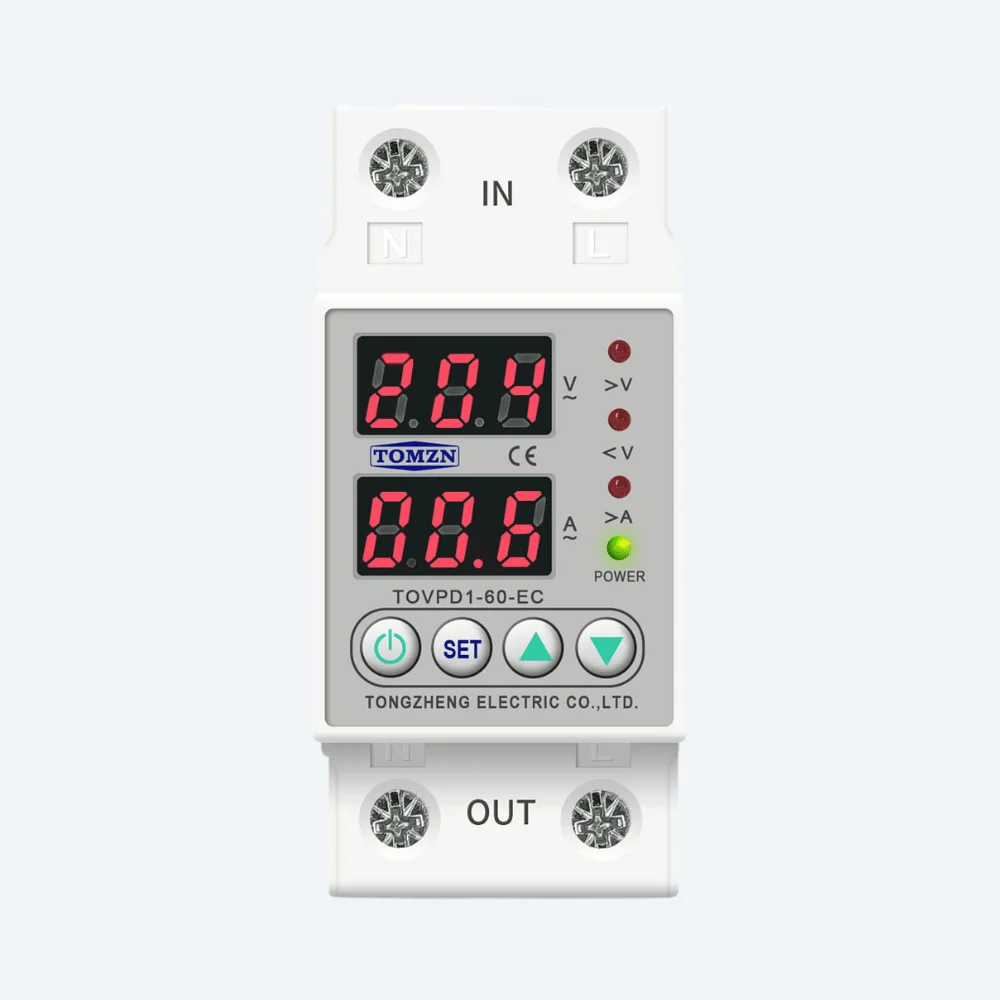
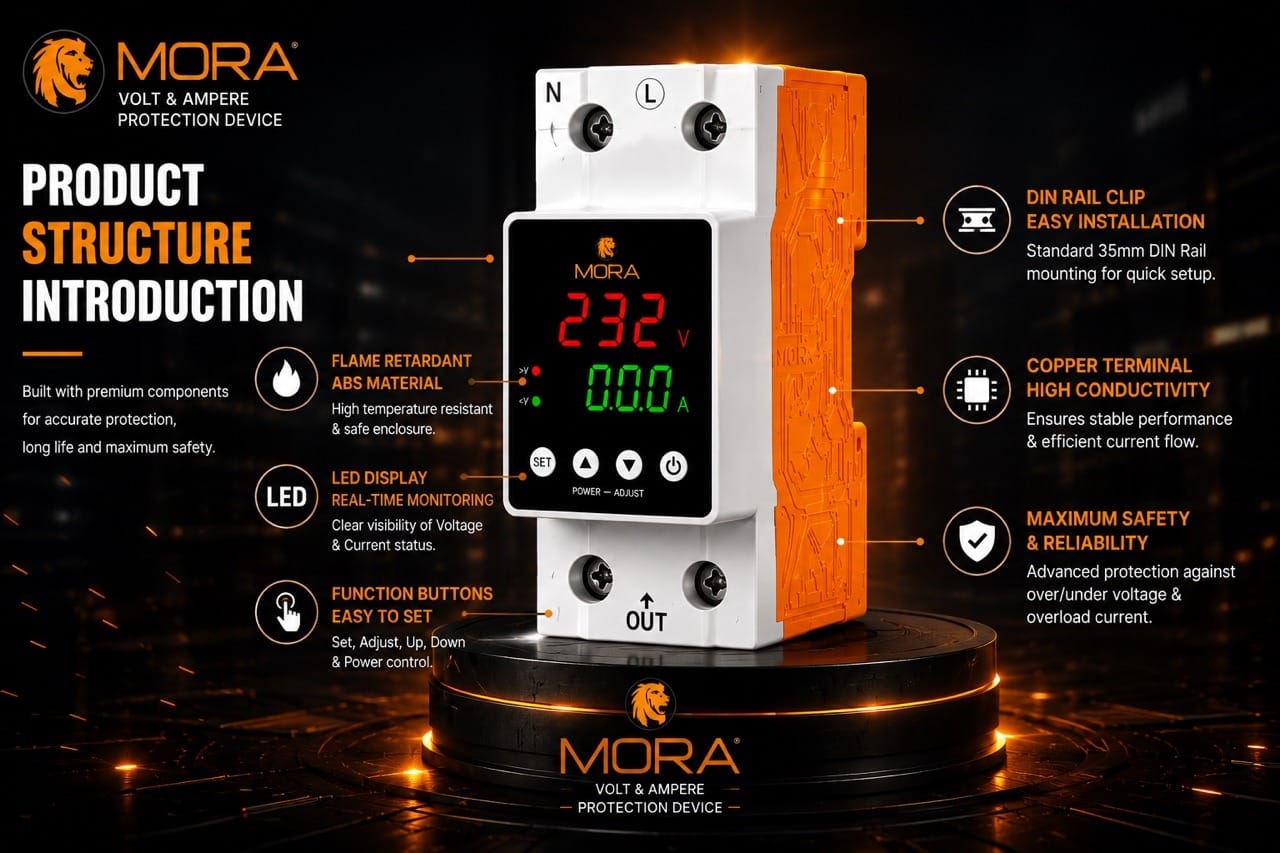
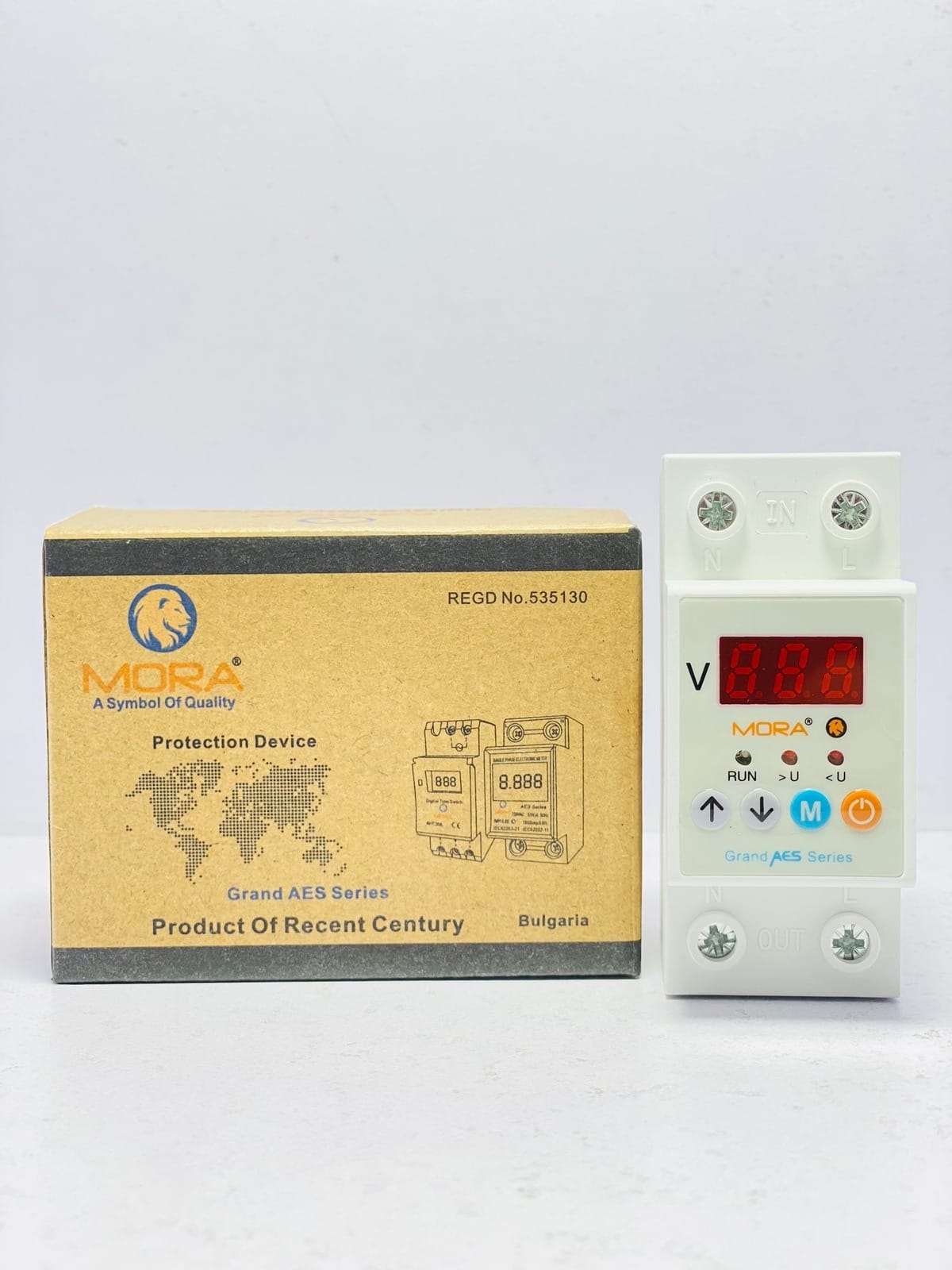
A proper three-phase voltage protector doesn’t just trip on fault. It sits on your distribution board and continuously monitors all three phases. If any phase drifts above 430V or below 360V for more than a few seconds, it trips the main contactor and disconnects the load. You lose a few seconds of production, not a 15,000 PKR motor.
Overload Without Phase Monitoring Wastes Your Time and Money
Standard MCCBs (Molded Case Circuit Breakers) have thermal overload relays built in, and they work fine for minor overloads. But they respond based on temperature rise, which is slow. By the time a thermal relay trips on a sustained 150% load, the motor’s winding temperature has already climbed dangerously high. You get one trip, maybe two, before the insulation is damaged permanently.
Worse, if one phase of a three-phase motor draws significantly more current than the others (which happens when the supply has phase imbalance, common in areas with poor earthing or unbalanced distribution from DISCO feeders), a standard overload relay won’t catch it because it responds to overall current, not phase-by-phase current. That imbalance gradually burns out the motor coil on the loaded phase.
Nuisance Tripping Costs More Than You Realize
I’ve been called to sites where the ATS was cycling on and off every few minutes because someone installed an overly sensitive voltage protector rated for 380-420V on a supply that routinely swings between 370V and 430V. The business lost half a day’s production, the generator fuel bill went up, and the equipment controller got confused. They actually disconnected the voltage protector after a week because it was more trouble than the voltage swings.
The fix isn’t a cheaper protector. It’s one correctly spec’d to your actual supply range. In Lahore and most of Punjab, you need a three-phase protector that tolerates 360-440V continuously, with a 2-3 second delay before tripping, so momentary fluctuations don’t trigger false alarms. The difference between a single-phase and three-phase protector is critical here: a single-phase protector will miss phase imbalance and earth faults on the other phases entirely.
How to Size and Spec Three-Phase Protection Correctly
Start With Actual Load, Not Nameplate Rating
The first mistake: looking at motor nameplates and adding them up. A 5HP motor nameplate says it draws roughly 8-10 amps per phase. Five of them on a distribution board, that’s 40-50 amps, so you install a 63A MCCB and think you’re done. Wrong. You need to know how many motors actually run simultaneously, what their starting current looks like, and what your utility supply stability is like at your site.
In real operation, two motors might run all day (peak load 20A), but during startup, all five start within a few seconds of each other. Starting current on a 5HP motor without a soft starter can reach 5x nameplate (40-50A per motor for a few seconds). Your 63A breaker doesn’t trip because the surge is brief, but a voltage protector will see the supply voltage sag to 340V during the surge and trip if its lower threshold is set to 350V. That’s frustrating, but it’s also catching something real: your supply infrastructure is too weak for simultaneous starts.
The correct approach is to calculate the diversity factor (the ratio of simultaneous running load to total installed load), then add 30% margin for starting surges. If your actual simultaneous load is 35A and starting surge might be 50A, size your main MCCB to 60A (or the next standard size up), and set your voltage protector’s thresholds to match your supply reality, with a 2-3 second delay built in.
Three-Phase Imbalance Matters More Than You Think
Here’s something many installation guides skip: on a 400V three-phase supply, if one phase reads 410V while the others are at 400V, that’s only a 2.5% imbalance. Your protection shouldn’t trip on that. But if one phase reads 420V and another reads 380V, that’s a 10% imbalance between phases, and that absolutely will damage three-phase motors over time.
A proper three-phase voltage protector monitors phase-to-neutral voltage on all three phases independently, not just line-to-line voltage. It should trip if any single phase goes out of specification, OR if the voltage difference between any two phases exceeds a threshold (typically 5-10%). This catches earthing faults and DISCO distribution problems that a single-phase protector would miss entirely.
Choose an Overload Strategy That Matches Your Operation
You have three main options for handling overload on three-phase circuits:
- MCCB thermal overload relay alone: Cheapest, responds to overall current rise. Misses phase imbalance. Slow to trip. Good only for stable, single-load circuits with minimal starting surge.
- MCCB with external electronic overload relay: More expensive, responds to phase-by-phase current, can detect phase imbalance. Adjustable trip time and sensitivity. Standard choice for motor circuits where load is variable.
- MCCB plus soft starter or variable frequency drive (VFD): Most expensive, but eliminates starting surge entirely and allows load ramping. Best for multi-motor sites or where production quality depends on smooth acceleration.
For a typical workshop or small manufacturing unit with 2-4 three-phase motors, option 2 (MCCB plus external overload relay) strikes the right balance. You catch phase imbalance, you can adjust sensitivity to your site, and you’re not paying VFD money unless you actually need soft-start capability.
Protection Configuration for Three-Phase Stability
Here’s how the protection stack should look on a three-phase distribution board in Pakistan:
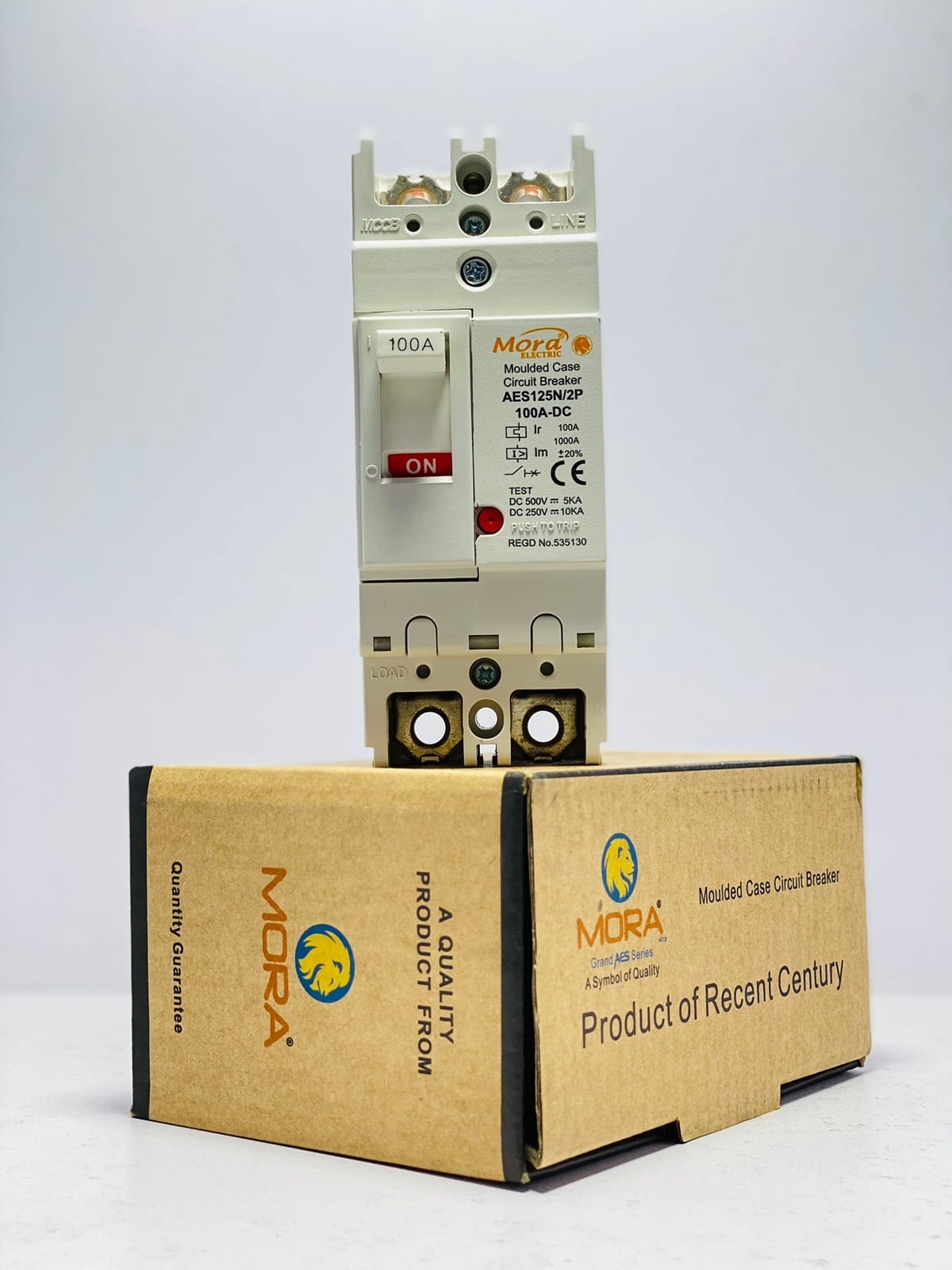
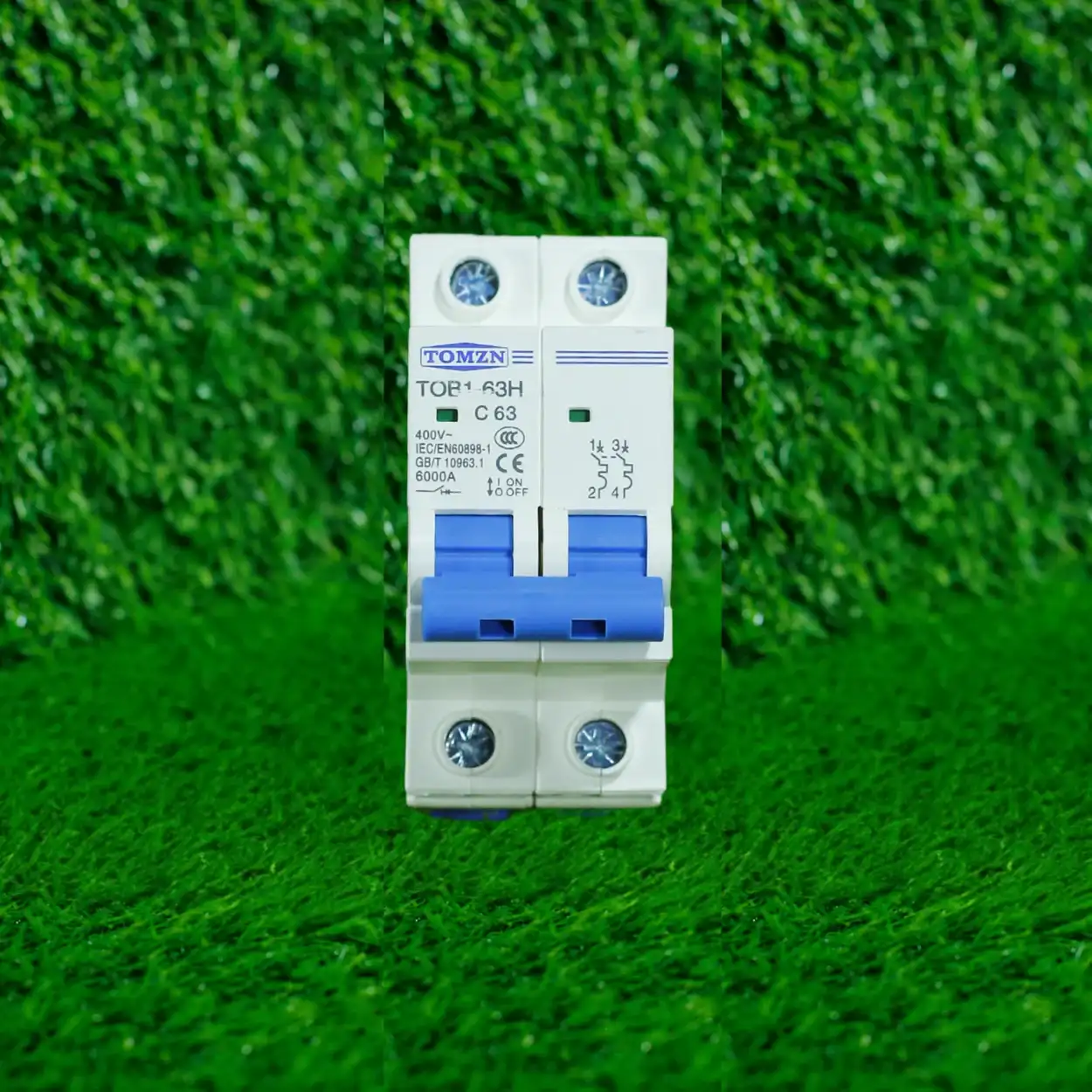
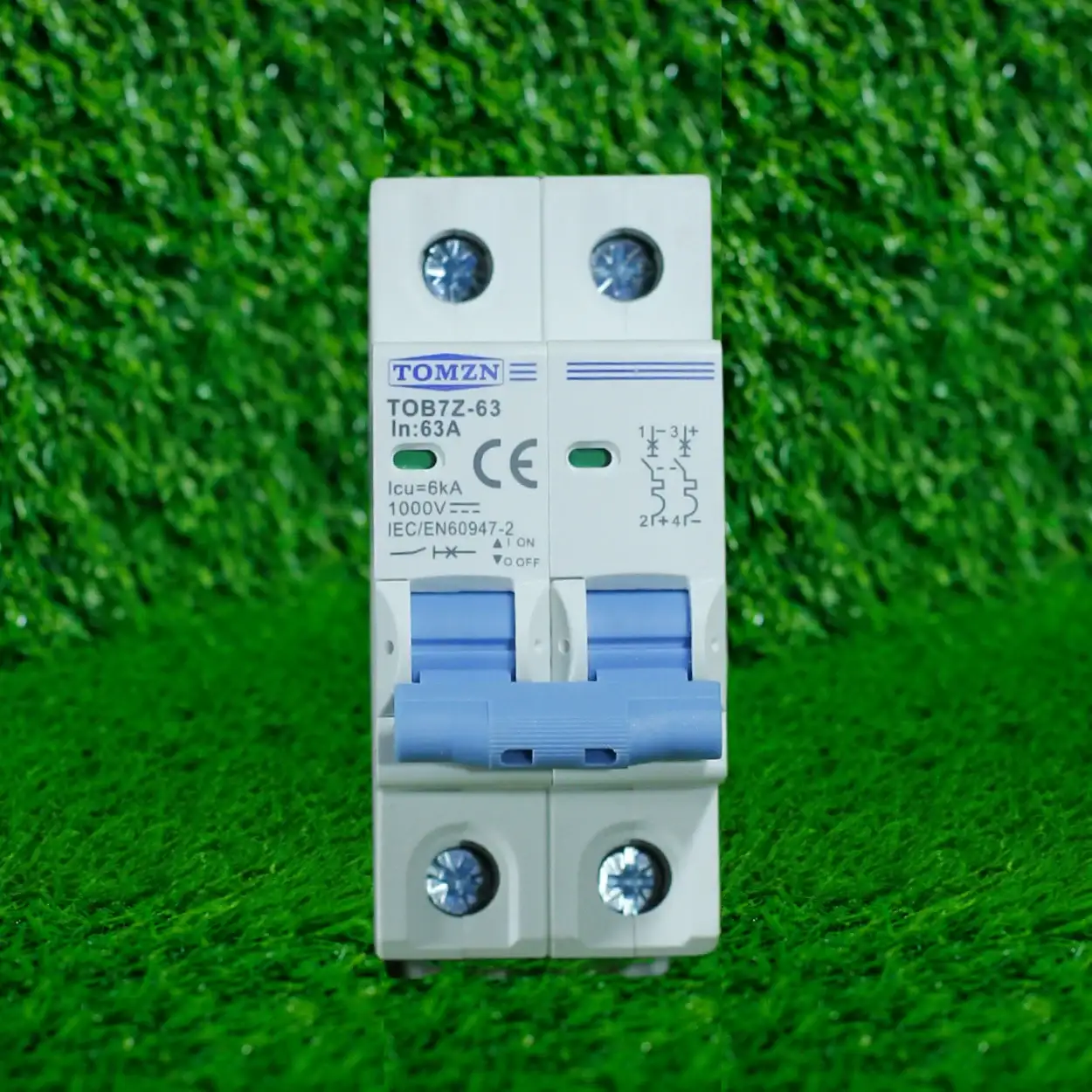
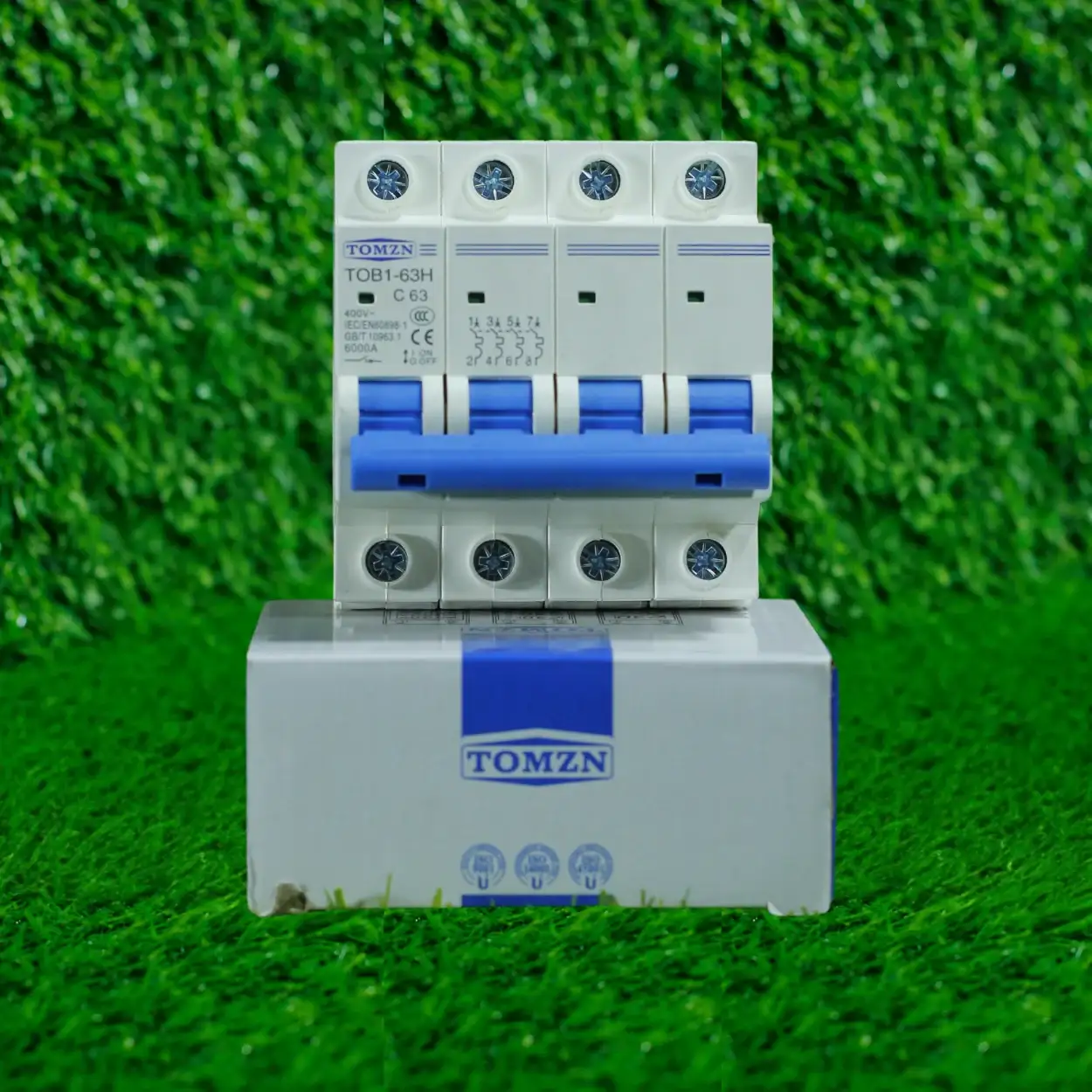
- Main incoming MCCB or air circuit breaker (ACB): Usually 63A-125A depending on your sanctioned load. This is your line protection, sized to break fault current safely, not to protect motors.
- Three-phase voltage protector relay: Sits right after the main breaker, monitors all three phases, controls a magnetic contactor that disconnects the load if voltage goes out of spec. Response delay 2-3 seconds, adjustable thresholds (typically 360-440V range).
- Individual motor feeders: Each motor gets its own MCCB (sized to motor FLA plus 25% margin) with either thermal overload (for continuous duty, stable load) or electronic overload relay (for variable load or where phase imbalance detection matters).
- Earthing: This can’t be skipped. A proper earthing system with earth rod and earth bus reduces phase imbalance and makes your voltage protector actually reliable. If earthing is poor, voltage swings worse and false trips increase.
On sites where I’ve implemented this stack correctly, nuisance trips vanish and equipment lifespan jumps 3-5 years. The cost of the voltage protector and external overload relays (roughly 15,000-25,000 PKR total) pays back in under two years through avoided motor replacements.
Common Spec Mistakes and How to Avoid Them
Don’t install a three-phase voltage protector rated for 380-420V if your DISCO supply in your area actually runs 360-440V. Check with neighbors or your utility; they can tell you the real range. A protector that’s too tight will trip constantly. One that’s too loose won’t protect anything. You need to match the spec to your actual environment.
Don’t rely on a single MCCB to protect three motors unless you’re willing to risk them all shutting down if one motor overloads. Individual feeders with individual protection are more reliable and let you troubleshoot faster.
Don’t assume your earthing is good just because the site was installed ten years ago. Earthing resistance degrades over time, especially in areas with seasonal flooding or high salt in soil (common near Lahore). Test it every two years with a megger. Poor earthing makes voltage swings worse and voltage protectors less reliable.
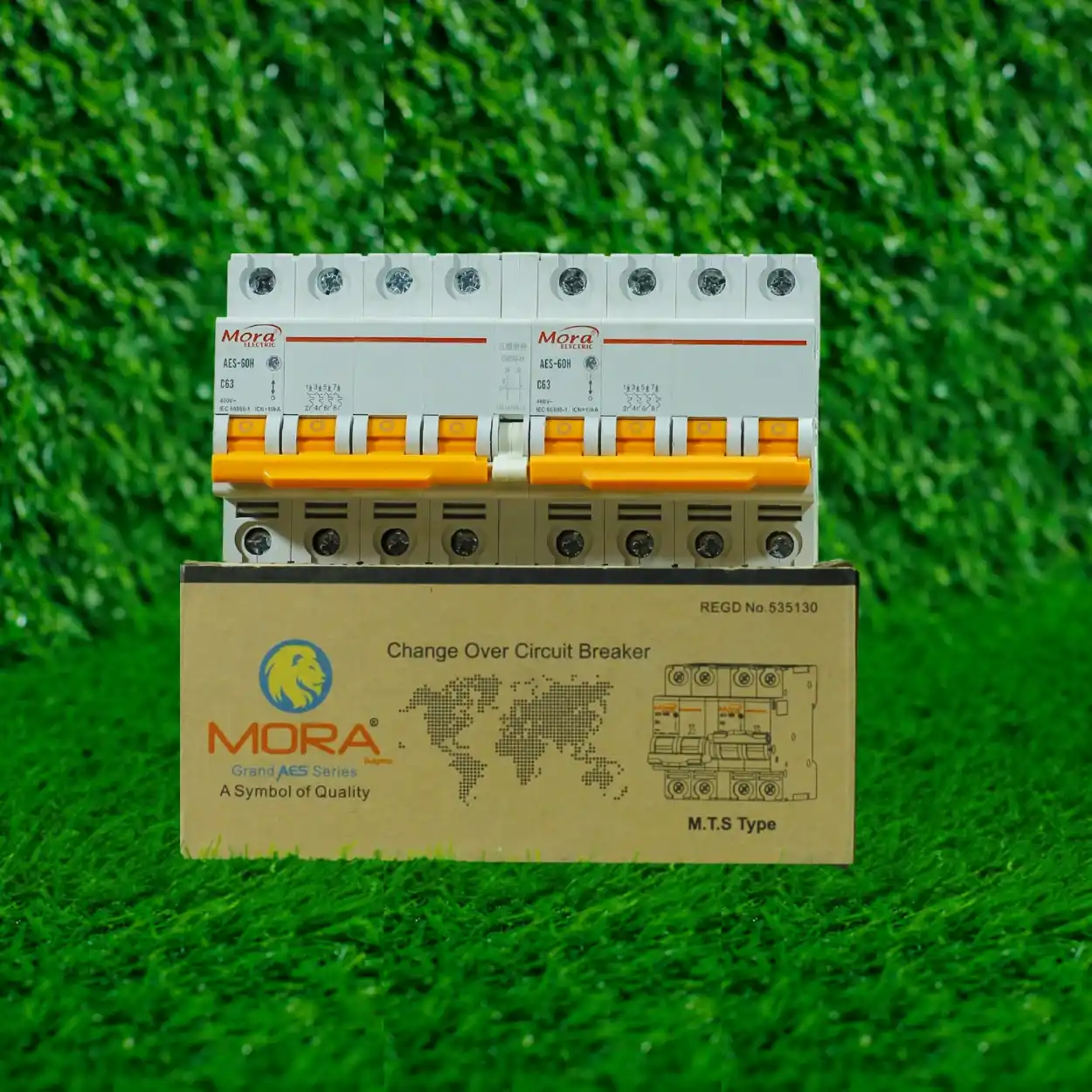
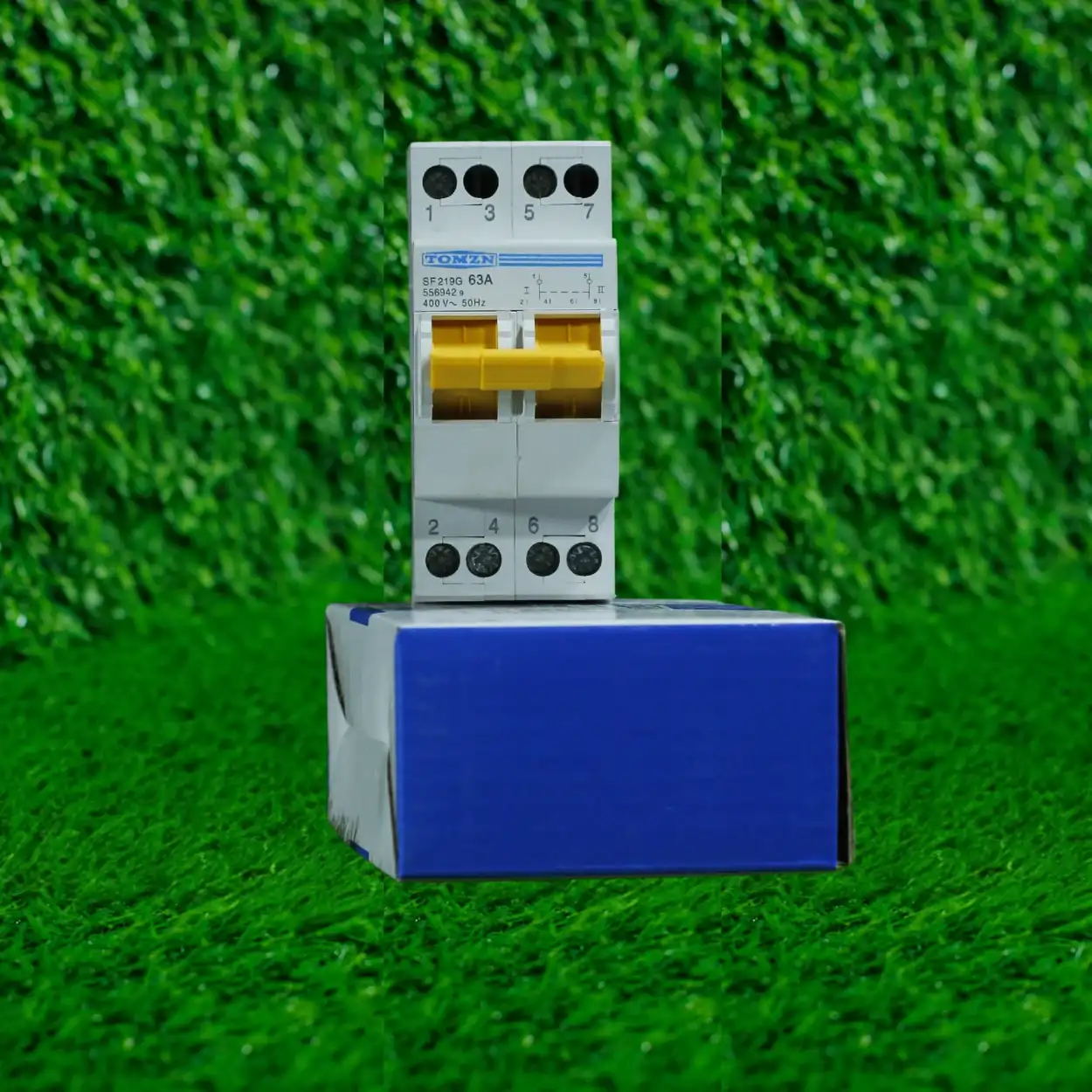
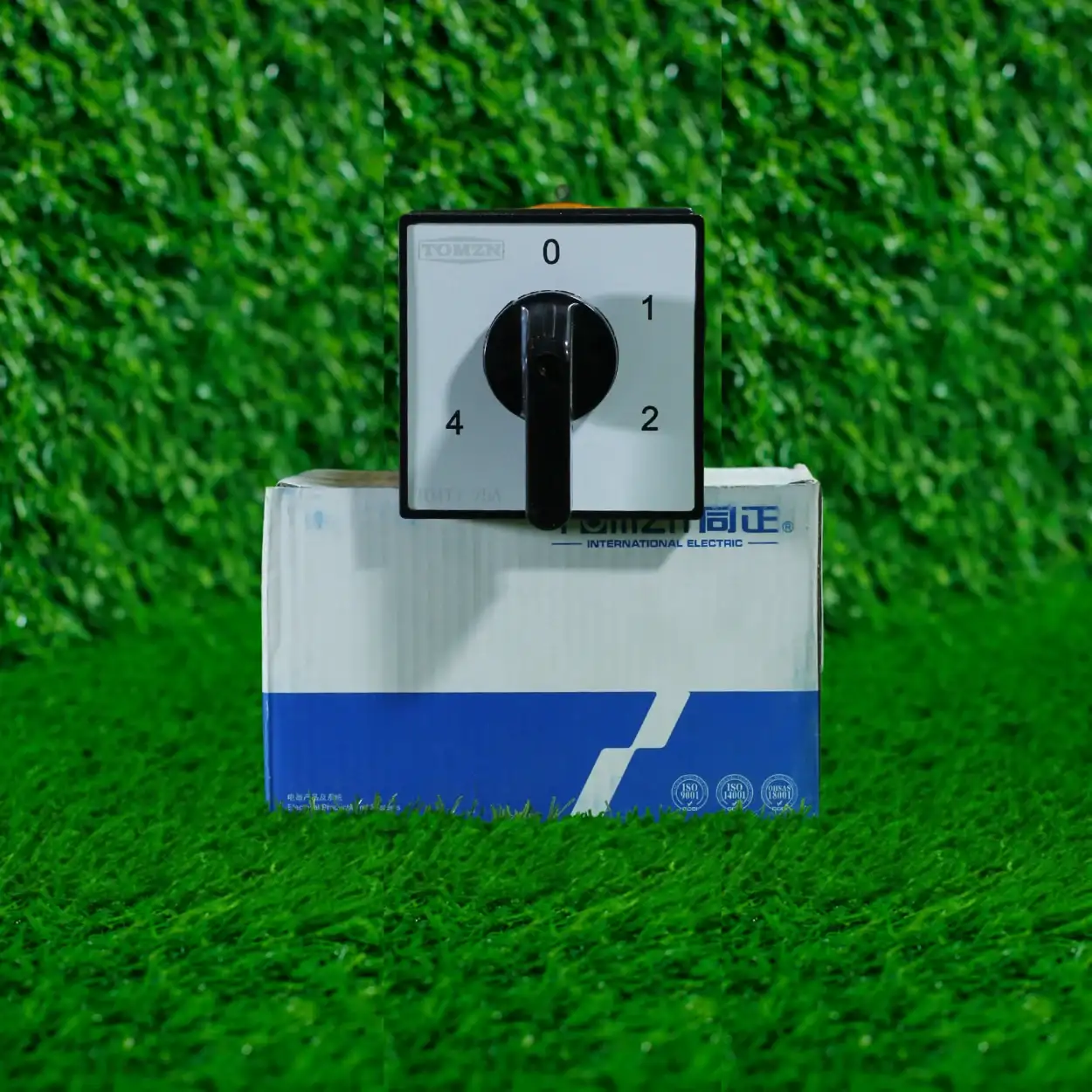
If you’re buying an ATS or changeover switch to handle generator backup during load-shedding, make sure it’s rated for the full three-phase load you’ll be transferring. A manual ATS can be cheaper, but you need someone to operate it. An automatic ATS with voltage sensing is better if you want to avoid production stops, but it needs to be spec’d carefully so it doesn’t transfer constantly on WAPDA fluctuations. Your voltage protector and your ATS need to work together, not against each other.
What to Ask Your Supplier or Installer
Before you sign off on a three-phase protection setup, ask these questions:
- What voltage range does this protector handle, and is it adjustable? Is that range suitable for my area’s actual supply?
- Does it detect phase imbalance, or only phase loss?
- What’s the response time and delay setting, and can I adjust it on-site?
- Is the overload protection thermal-only, or can it detect phase imbalance and unbalanced current draw?
- If I have a generator ATS, will the voltage protector trip during transfer, or is there a bypass mode?
- What’s the breaking capacity of the MCCB, and is it rated for your area’s short-circuit contribution from WAPDA?
If a supplier can’t answer these clearly, find someone else. A good technician will ask you about your actual load, your supply history, your earthing condition, and whether you have backup generation. They won’t just quote a standard 63A MCCB and a 50-rupee circuit breaker.
Proper three-phase protection isn’t an optional add-on. It’s the difference between equipment that lasts five years and equipment that lasts fifteen. In a business where downtime costs thousands in lost production or spoiled goods, the investment pays for itself quickly.