










Smart Protection Switches: Control & Monitor Your Supply


What a Smart Protection Switch Actually Does
A smart protection switch sits between your WAPDA supply (or generator) and your home or business wiring. Its job is threefold: detect electrical faults, cut power when something goes wrong, and let you see what’s happening in your circuit from your phone or control panel.
This is different from a basic circuit breaker, which only trips on overcurrent. A smart switch monitors voltage swings (which happen constantly on Pakistani DISCO supply), tracks overload patterns, detects earth faults, and logs all of it so you can see trends over time. On jobs where I’ve installed these for small factories or larger homes, the difference is obvious within the first week of load-shedding cycles.
In Pakistan’s context, where WAPDA supply routinely swings between 180V and 250V on a single-phase 220V nominal line, and where most people are running generator backup or solar inverters alongside grid supply, a smart switch gives you real control instead of just hoping your old panel survives until next month.
How Smart Switches Monitor Your Electrical System
Real-Time Voltage and Current Tracking
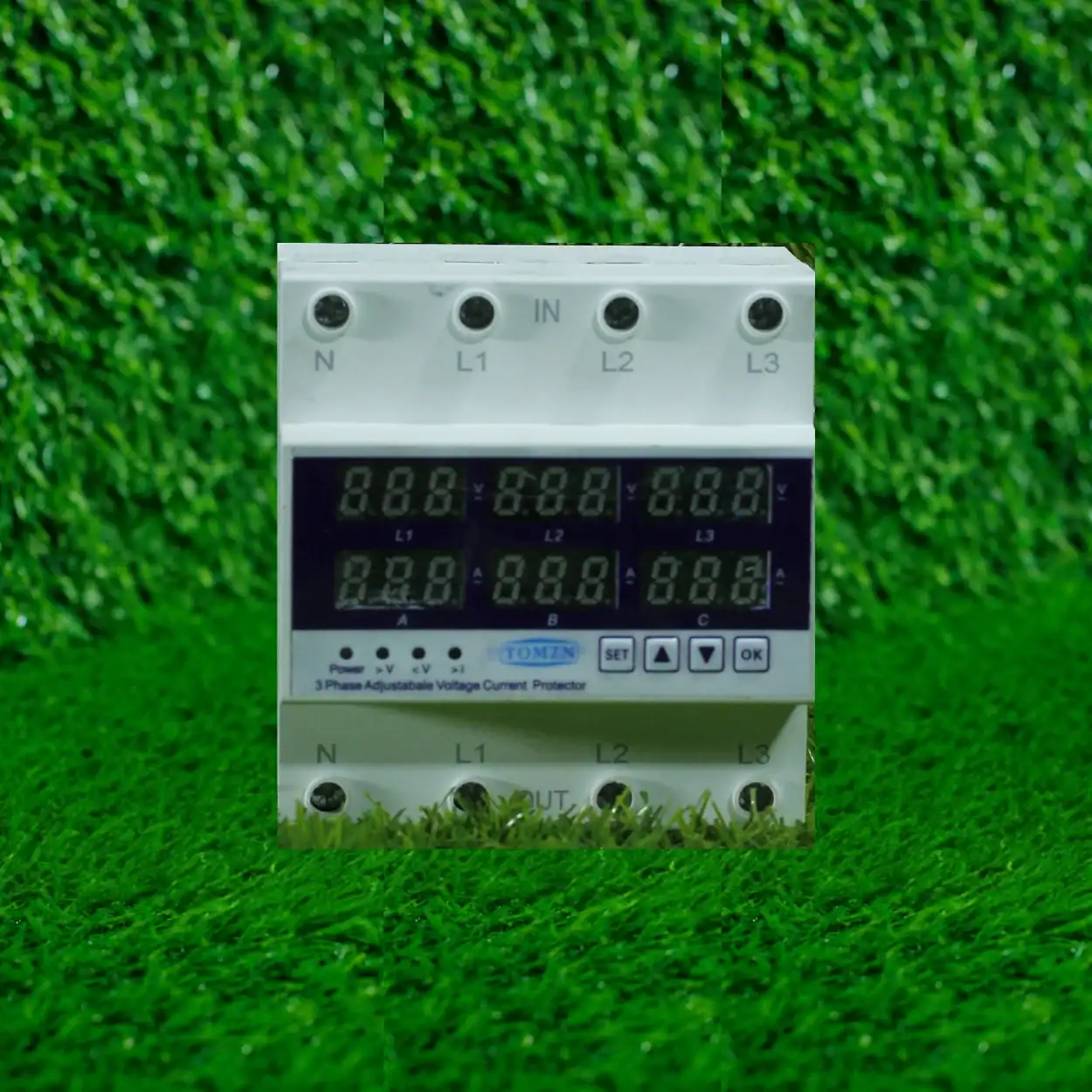
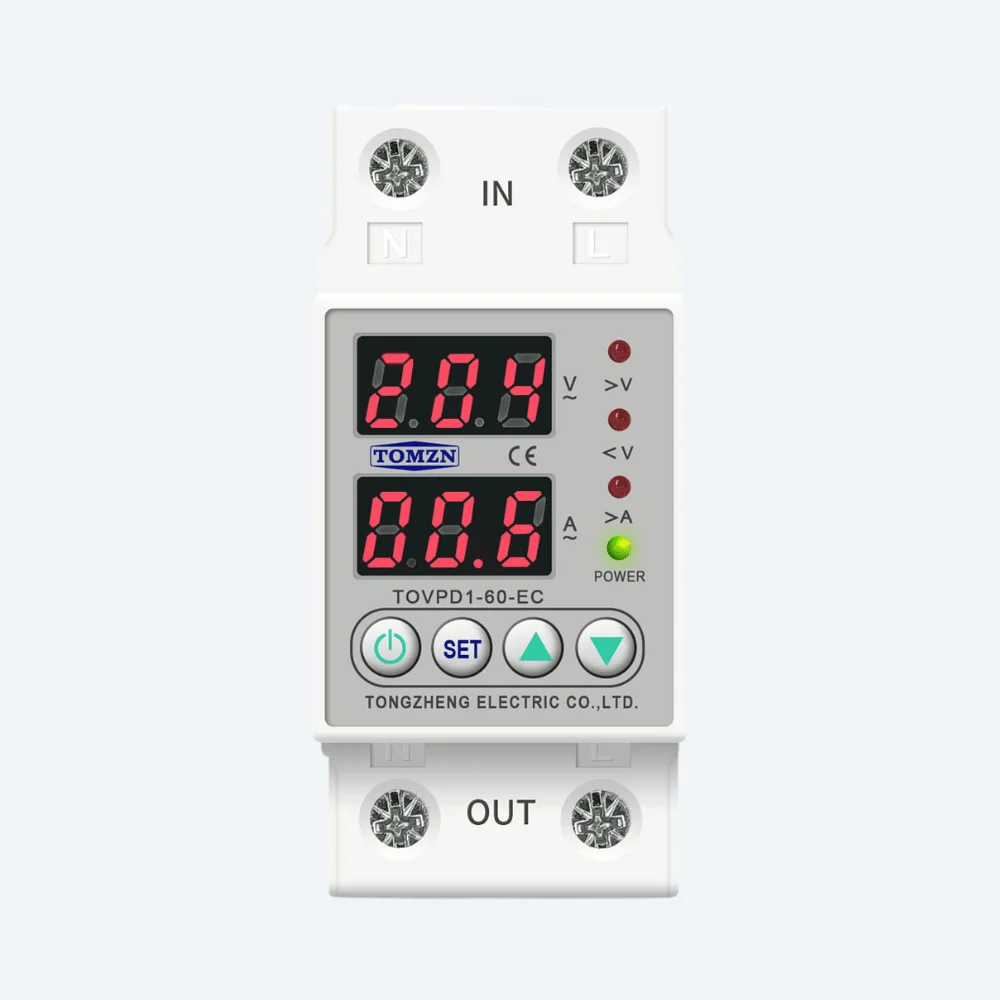
The switch has voltage and current sensors built in. It measures the live supply voltage continuously and compares it against safe operating limits. If voltage drops below about 180V or climbs above 250V on single-phase, the switch flags it or trips depending on your settings. Current sensing works the same way: if you draw more amps than the breaker rating allows, it trips the mechanism.
What makes this smart is the data logging. Instead of just tripping when a limit is crossed, it records when each event happened, how long it lasted, and what the values were. Over weeks or months, this tells you whether your supply is genuinely unstable (worth calling LESCO or K-Electric about) or whether the problem is inside your own installation.
Earth Fault Detection
Most smart protection switches include an RCD (residual current device) function, either integrated or as a companion module. This detects when live current is leaking to earth through a fault. A person touching a live wire, water damage in your distribution box, or a worn cable inside an appliance will trigger this within milliseconds. On a farm job I did near Kasur, we caught a fault in the water pump wiring before anyone got hurt, because the RCD on the smart switch tripped before the person made contact.
The RCD part is mandatory in any modern installation, and a smart switch that combines RCD sensitivity with remote monitoring gives you both safety and visibility.
Thermal and Time-Delayed Response
Cheaper breakers trip instantly on any overload. A smart switch lets you set the trip curve and delay. This matters because inrush current (the spike when a motor or compressor starts) is legitimate; you don’t want the switch nuisance-tripping every time the fridge compressor kicks in. The switch can be set to tolerate brief spikes but trip if the overload persists for more than a few seconds.
Control Features: What You Can Actually Do
Depending on the model, you’ll have several control options:
- Manual on/off toggle on the switch itself (always works, even if WiFi is down)
- Remote control via mobile app over WiFi or GSM (most modern units offer this now)
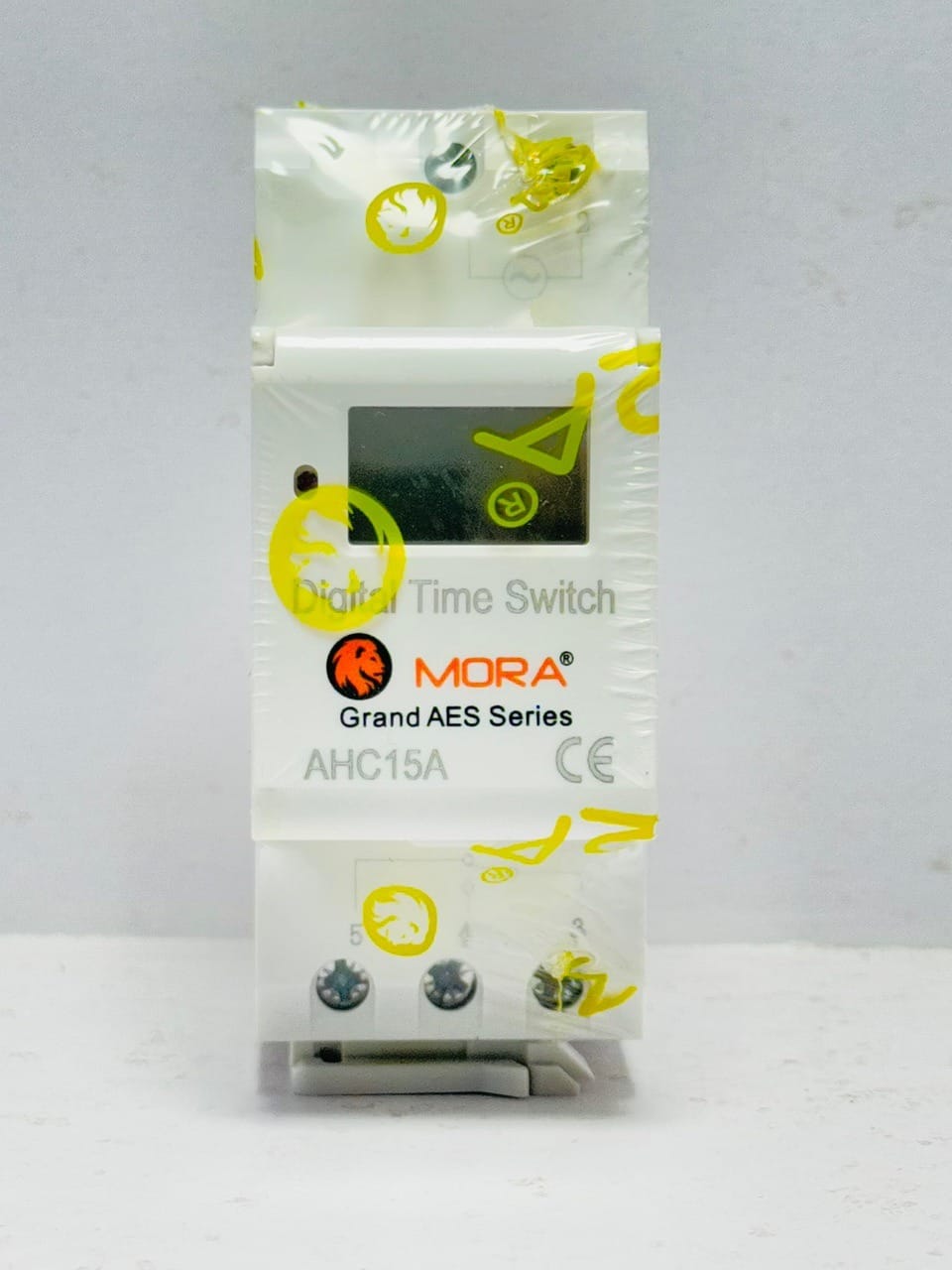
- Programmable schedules (turn off between certain hours, useful for commercial load management)
- Overload curtailment (intelligently shed non-essential loads if current climbs toward the breaker limit, instead of tripping the main supply)
- Alerts and notifications sent to your phone when faults occur
The most practical feature I’ve seen customers use is the load-shedding schedule. During summer, when power cuts are predictable, you can pre-program the switch to shut off non-essential circuits (like water heater or AC in secondary rooms) at specific times, so when the grid cuts, your essential loads stay fed by your backup generator without straining it.
Why Smart Switches Matter in Pakistan’s Power Environment
Our supply is volatile. WAPDA and DISCO feeders experience voltage sag during peak hours, voltage rise during off-peak, and harmonic distortion from hundreds of unregulated loads on the same feeder. A regular MCB or MCCB doesn’t log this; it just sits there. A smart switch gives you evidence.
I’ve used this data to convince customers to invest in a voltage stabilizer or upgrade their earthing, because the switch showed that 60% of their tripping events were due to voltage dips, not overload. Without that data, they would have kept buying larger and larger breakers, which doesn’t solve the real problem.
For businesses running critical equipment (clinics, small workshops, server rooms), a smart switch tied to a backup inverter or generator controller means you can automate switchover. The moment grid voltage drops to a critical level, the switch signals the ATS to switch to backup, all logged and scheduled without manual intervention.
Choosing the Right Smart Protection Switch for Your Needs
Single-Phase vs Three-Phase
Most residential and small commercial sites in Lahore run single-phase 220V. A single-phase smart switch handles this and is affordable. Three-phase switches are for factories, large commercial buildings, or agriculture sites running 380-400V supply. They monitor all three phases and can detect phase imbalance, which is common in poorly maintained DISCO feeders.
Ampere Rating
Your switch ampere rating must match your main breaker size. A typical home might be 40A or 63A; a small business 80A or 100A. Never undersizing because the switch is smart doesn’t change the rule: the breaker must be rated for your circuit’s breaking capacity and your supply’s fault level. If you’re unsure, ask your DISCO for your available fault level when you apply for a new connection.
WiFi vs Wired Control
WiFi-enabled switches are more convenient but require stable internet. In Lahore, most areas have decent coverage, but if you’re in an area with poor signal, a wired option or a hybrid switch that works both ways is worth the extra cost. Some units include GSM as backup, so they can send alerts via SMS even if WiFi fails.
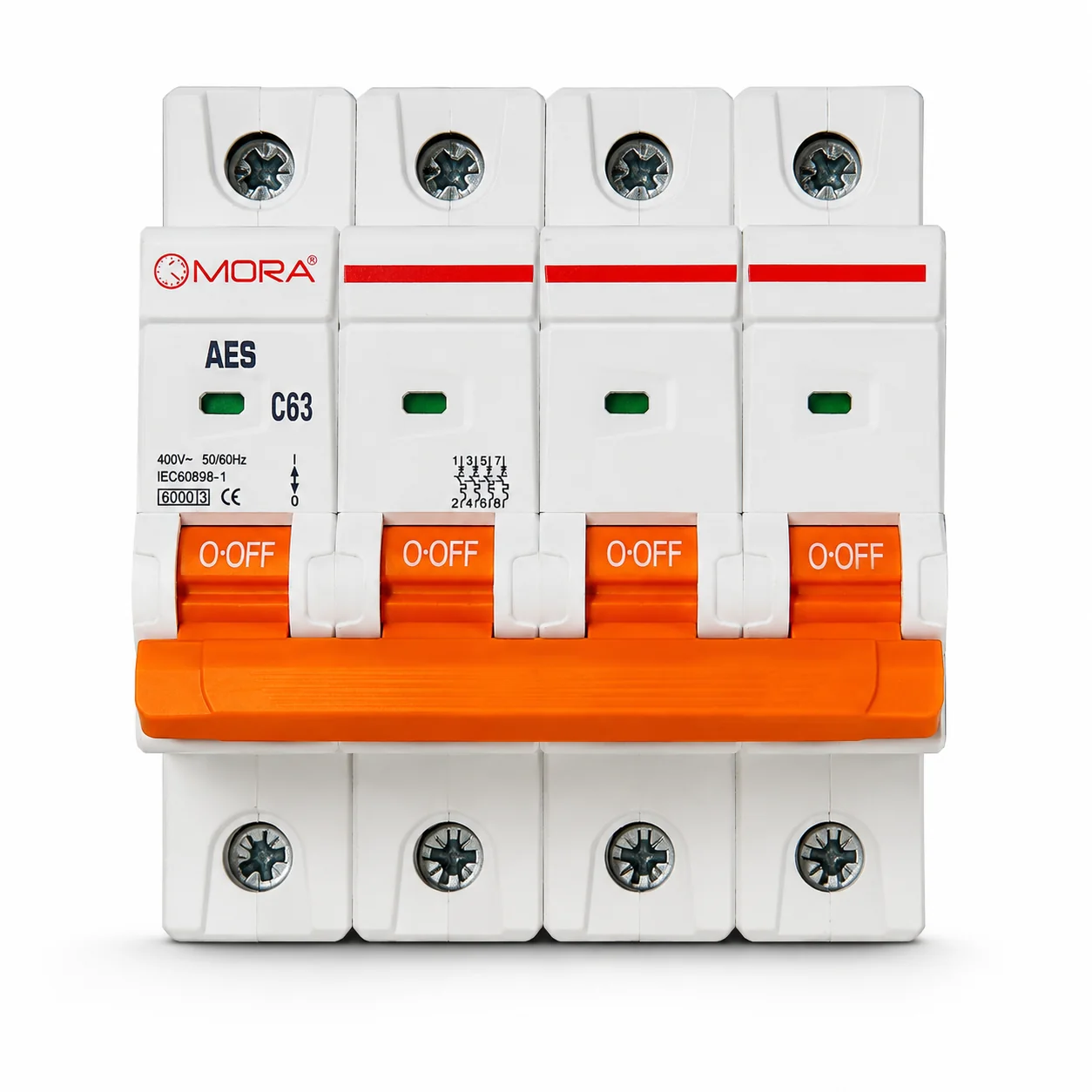
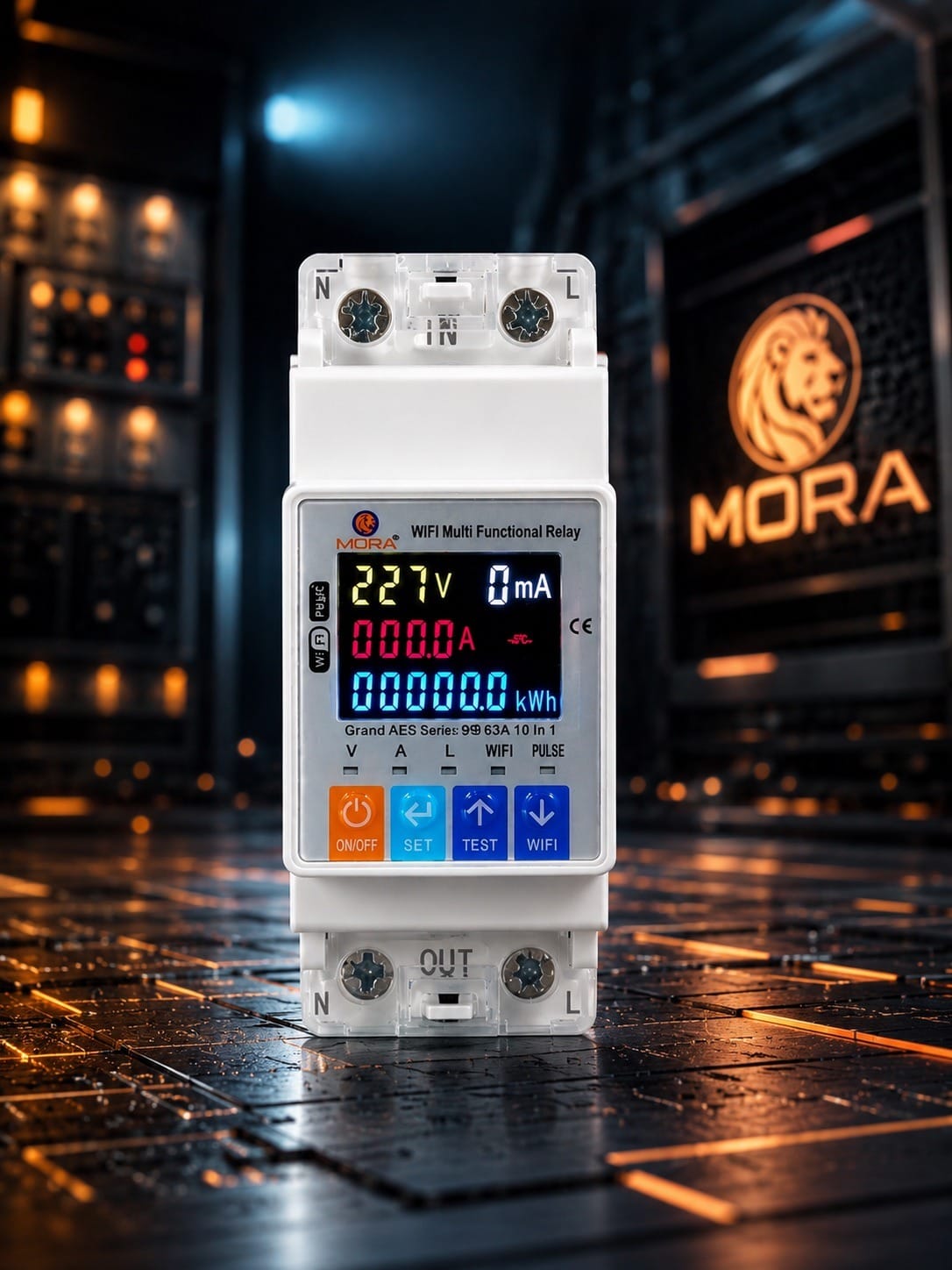
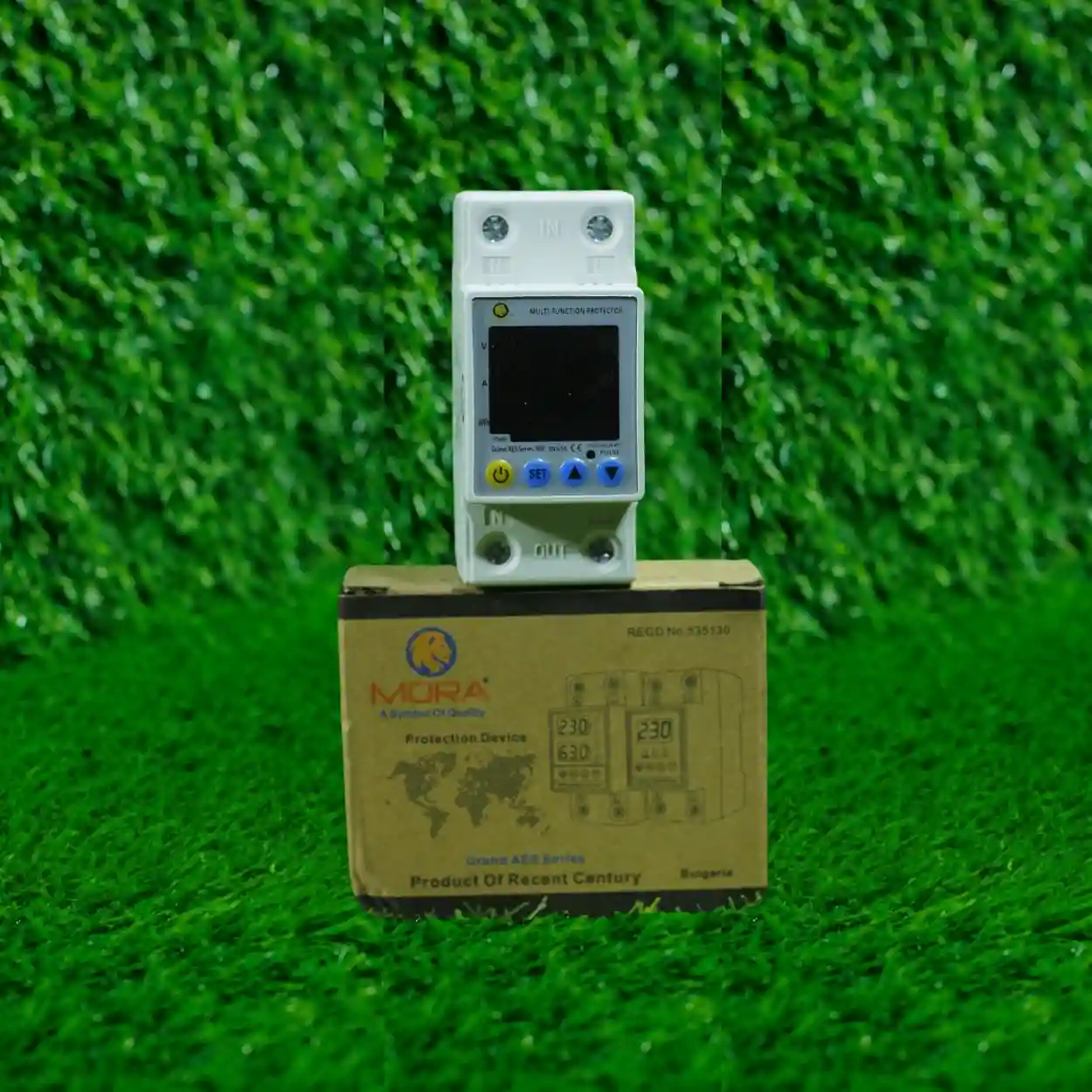
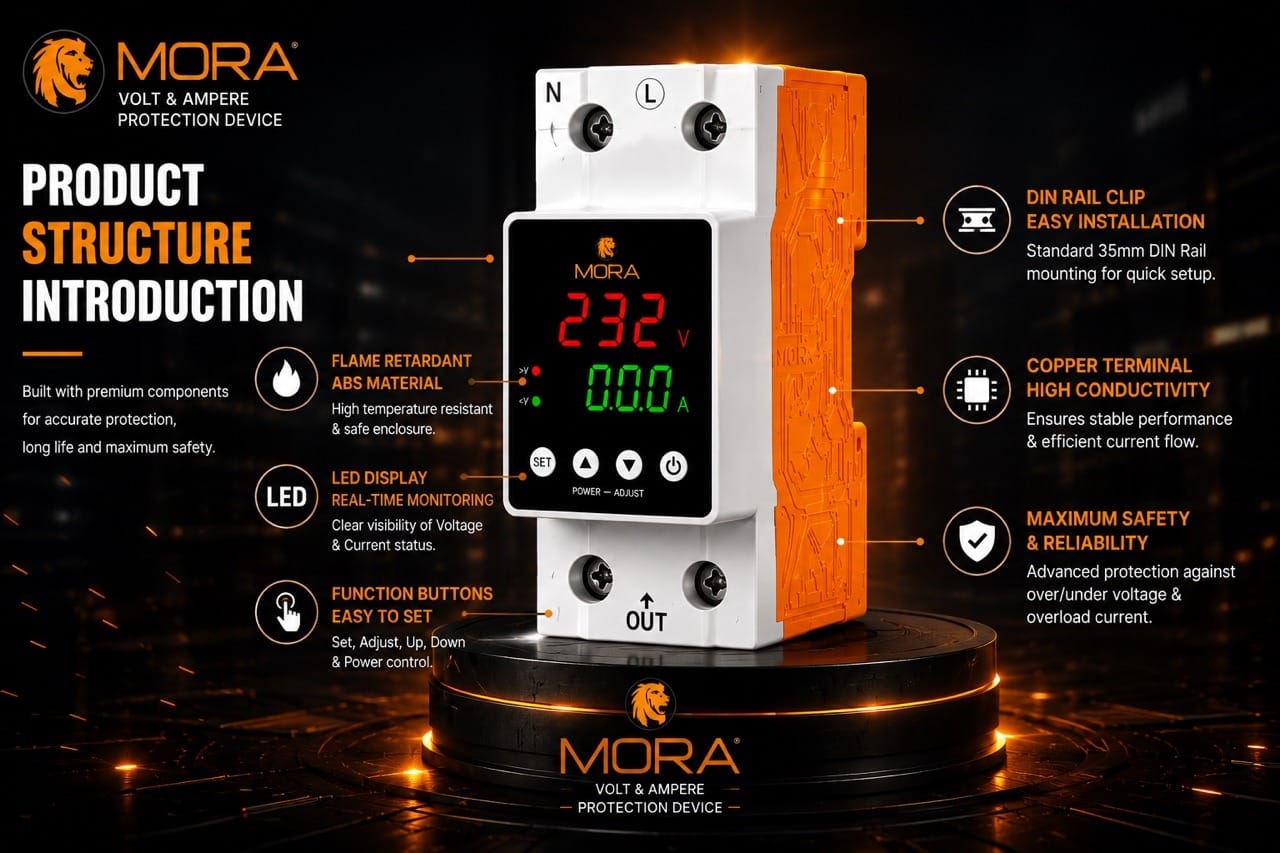
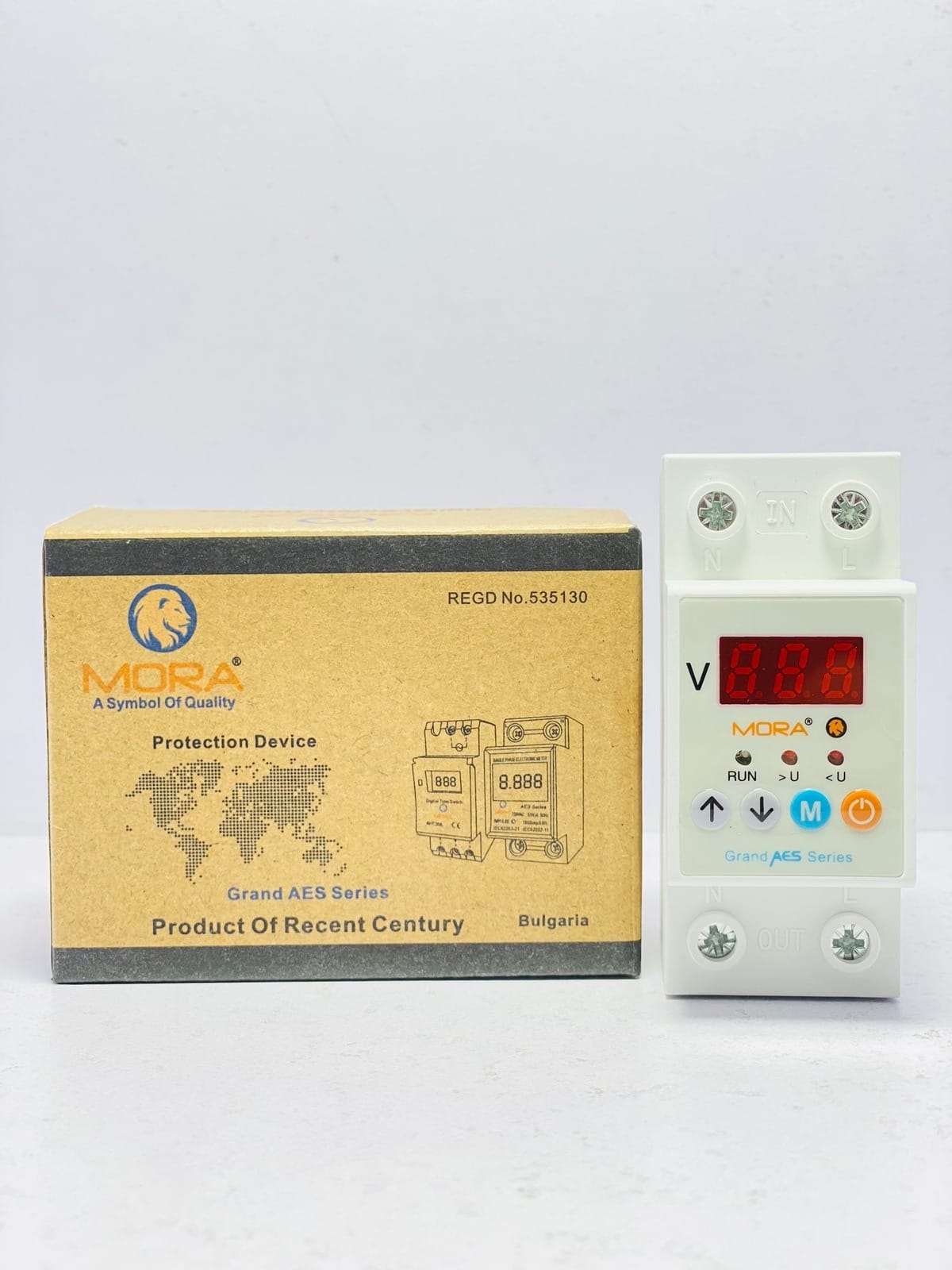
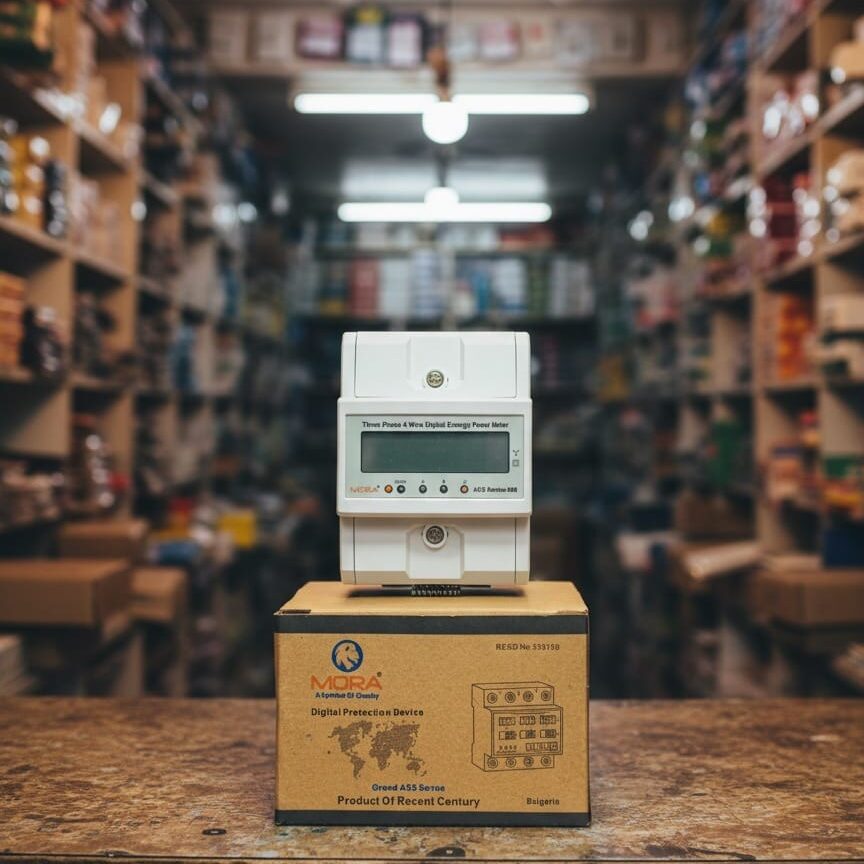
The MORA Bulgaria 10-in-1 Smart WiFi Protector is a good example of what’s available now: programmable up to 63A, WiFi-enabled, monitors voltage and current, and logs faults. It’s designed for the Pakistani market’s voltage range.
Integration with Backup Systems
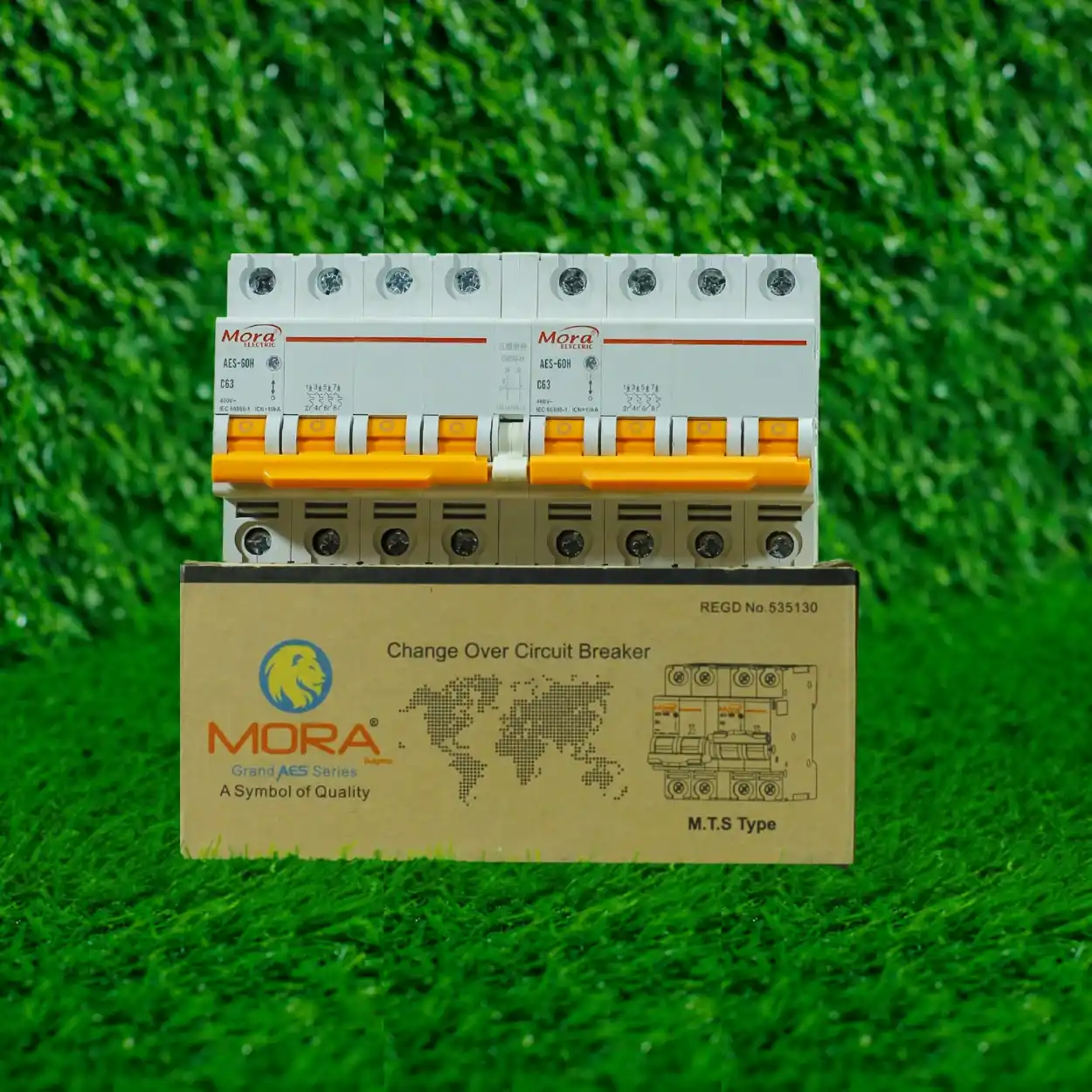
If you have an ATS (Automatic Transfer Switch) for generator or solar backup, a smart main switch should coordinate with it. The switch tells the ATS when grid voltage drops out, the ATS switches to backup, and the whole sequence is logged. This avoids dead time and prevents both supplies from running at once, which can damage equipment.
Installation and Setup
A smart protection switch must be installed by a qualified electrician. The wiring, earthing, and neutral connections are exactly as strict as for a regular main breaker. Poor earthing will cause nuisance tripping and defeat the protection. I’ve seen installations where the earth rod is just a corroded piece of steel driven 30cm into dry soil; no wonder the RCD won’t settle.
Once wired correctly, setup is usually simple: power on, connect to WiFi via app, set your trip parameters, and run a test trip to confirm the remote control works. Most units come with presets suitable for homes and small businesses; you’ll rarely need to customize unless you have unusual loads.
Common Mistakes That Lead to Nuisance Tripping
Poor earthing is the biggest culprit. The RCD function compares the current going out on the live wire to the current returning on the neutral. If earth leakage is high due to old cables or wet conditions, the switch sees phantom leakage and trips. Before blaming the switch, check your earth resistance with a proper meter. On agricultural sites, especially in irrigated areas, earth resistance can be excellent during the growing season and terrible in summer when soil dries out.
The second issue is setting the trip sensitivity too tight. An RCD set to trip at 10mA (highly sensitive) will catch genuine faults faster but may nuisance-trip if there’s any slight insulation wear in old wiring. A setting of 30mA is safer for most installations, unless you have special requirements like a workshop with water exposure.
Third: using a cheap, low-quality clone. The Pakistani market is flooded with counterfeits, especially of popular international brands. If a MORA-branded switch costs 70% less than the genuine price, it probably isn’t MORA inside. Buy from a trusted supplier with genuine stock. On the HN Electric site, you can verify authenticity and get proper warranty support.
Monitoring Data and Preventive Maintenance
The real value of a smart switch emerges after a few weeks of operation. Check the logged data monthly. If you see a pattern of 210V sags every afternoon between 4 and 7 PM, that’s load-shedding time on your feeder; you now know when to start your backup or shift non-essential loads. If you see random spikes in current consumption at 2 AM, you might have a faulty compressor or water heater that’s drawing excess current at low-supply-voltage times.
This isn’t about obsessive monitoring. It’s about catching degradation early. A pump motor drawing 5% more current every month is wearing out; a wise business fixes it at routine maintenance time, not at 11 PM when the pump fails during a critical job.
What to Ask Your Electrician or Supplier
When buying a smart switch, ask these questions:
- Does it have genuine after-sales support and warranty in Pakistan?
- What’s the trip curve (Type B, C, D), and is it suitable for your loads?
- What’s the RCD sensitivity (30mA, 100mA, adjustable)?
- Does it log data locally (on the device) or only to the cloud (which fails if internet drops)?
- Can it integrate with your existing ATS or solar inverter?
- What’s the IP rating (dust and moisture protection for outdoor or harsh installations)?
The right smart protection switch turns your electrical system from a black box into something you can actually understand and manage. In Pakistan’s unpredictable supply environment, that’s worth the investment.