










2-Pole DC MCB vs DC MCCB: Which One?

Understanding DC Protection Devices for Solar Systems
When designing a solar power system, selecting the right protective equipment is one of the most critical decisions you’ll make. Two devices that often cause confusion are the 2-pole DC MCB (Miniature Circuit Breaker) and the DC MCCB (Molded Case Circuit Breaker). Both serve important roles in solar installations, but they operate differently and suit different applications. Understanding their distinctions will help you build a safer, more reliable system.
Solar systems generate direct current (DC) electricity, which behaves differently from the alternating current (AC) found in traditional grid power. This difference is why standard AC breakers cannot be used—DC current is more difficult to interrupt safely, requiring specialized equipment. Whether you’re installing a small rooftop system or a larger commercial array, choosing between a 2-pole DC MCB and a DC MCCB depends on your system’s voltage, current capacity, and specific protection needs.
2-Pole DC MCB vs DC MCCB: Key Differences Explained
Before deciding which device your solar system needs, you need to understand how these two breakers differ in their design, capacity, and application.
What is a 2-Pole DC MCB?
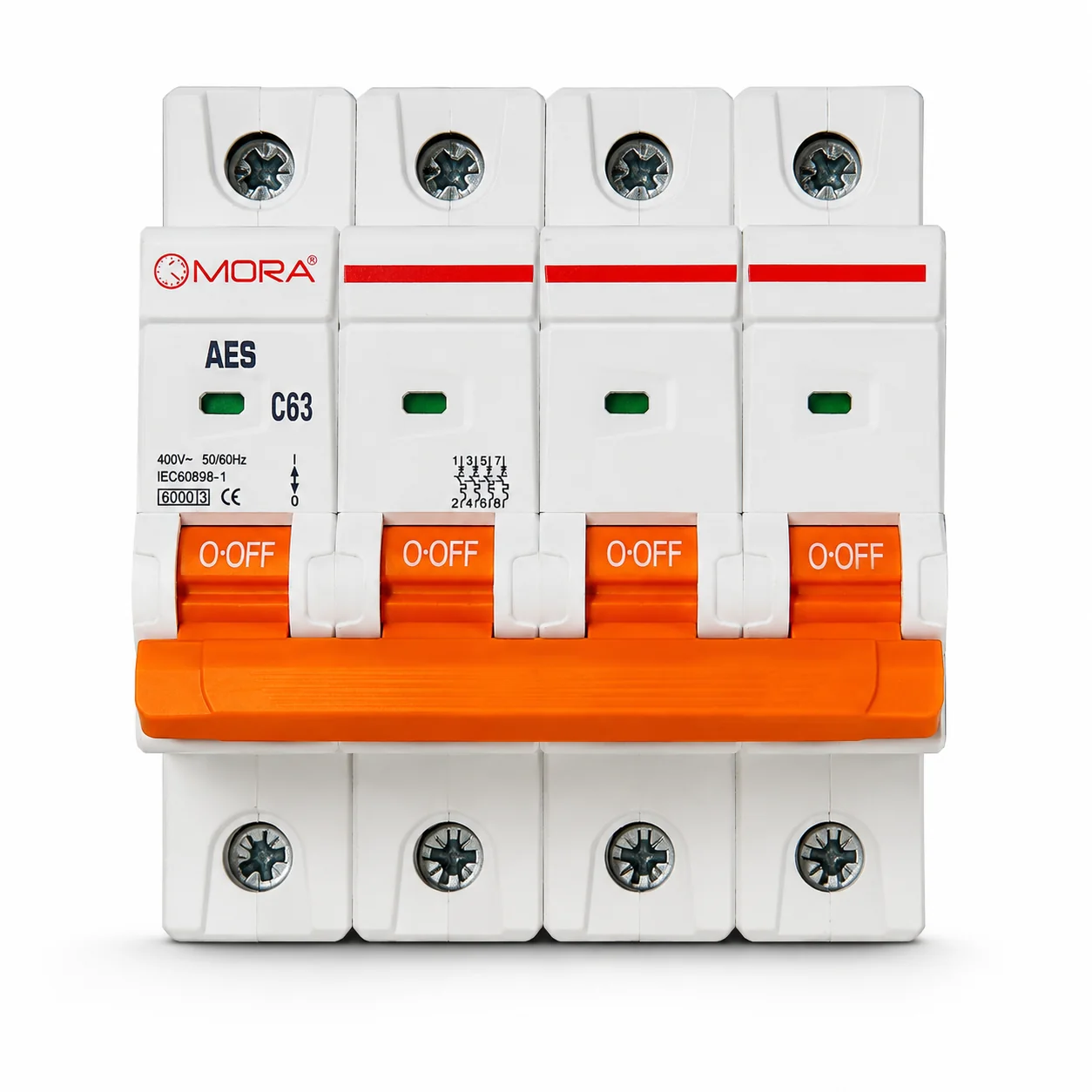
A 2-pole DC MCB is a miniature circuit breaker specifically designed for direct current applications. The “2-pole” designation means it can simultaneously break two circuits, making it suitable for systems where you need to disconnect both the positive and negative conductors at once. This is exactly what most residential and small commercial solar systems require.
Key characteristics of a 2-pole DC MCB:
- Compact size and simple installation
- Rated for lower current capacities, typically up to 125A or 250A
- Suitable for DC voltages up to 1000V
- Fast response time to overcurrent conditions
- Cost-effective for small to medium installations
- Easier to reset after a trip
The 2-pole DC MCB works by using a bimetallic strip and electromagnetic coil. When current exceeds the rated value, the bimetallic strip heats up and bends, or the electromagnetic coil activates, both causing the contacts to separate and interrupt the circuit. This thermal and magnetic mechanism provides reliable protection against overloads and short circuits.
What is a DC MCCB?
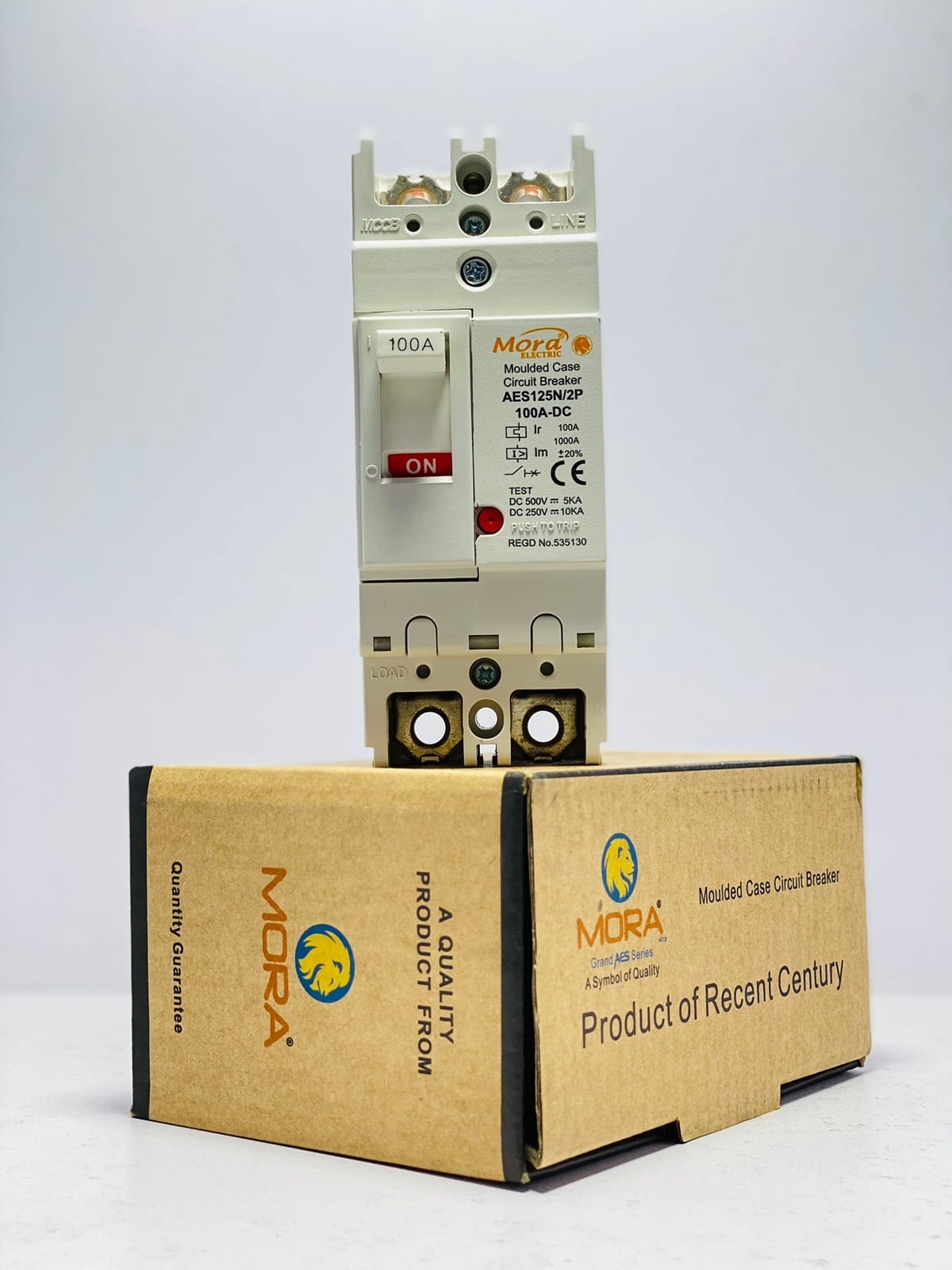
A DC MCCB is a molded case circuit breaker adapted for DC applications. While originally designed for AC systems, modern DC MCCBs incorporate special mechanisms to handle the unique challenges of interrupting DC current. They are designed for higher current capacities and larger installations.
Key characteristics of a DC MCCB:
- Larger, more robust construction
- Rated for higher current capacities, typically from 250A upwards to several thousand amperes
- Better arc extinction technology for DC applications
- Greater durability and lifespan under heavy use
- More complex adjustment and maintenance
- Higher cost than MCBs
- Suitable for industrial-scale solar installations
The critical difference with a DC MCCB is its ability to safely extinguish the DC arc that forms when contacts separate. DC arcs are notoriously difficult to suppress compared to AC arcs, which naturally extinguish every half-cycle. MCCBs use advanced arc-chute designs with metallic or ceramic materials to cool and deionize the arc, allowing safe interruption of high currents.
Arc Interruption: The Game-Changer
Perhaps the most important technical difference between these devices is how they handle arc interruption. When a circuit carrying current is suddenly opened, an electrical arc forms between the separating contacts. In AC systems, this arc naturally extinguishes every half-cycle (50 or 60 times per second). In DC systems, there is no natural extinction point—the arc persists and can cause severe damage to the breaker contacts and surrounding equipment.
A 2-pole DC MCB handles this through a simple arc-chute design suitable for lower currents. A DC MCCB, however, uses advanced technology including magnetic fields, arc-splitting chambers, and specialized materials to force the arc to extinguish quickly. This makes the MCCB the only safe choice for high-current DC applications.
Current and Voltage Ratings
The rated capacity of each device directly determines where it can be safely used:
2-Pole DC MCB typical ratings:
- Current: 6A, 10A, 16A, 20A, 25A, 32A, 40A, 50A, 63A, 80A, 100A, 125A
- Voltage: Up to 1000V DC
- Best for systems under 250A
DC MCCB typical ratings:
- Current: 250A, 400A, 630A, 800A, 1000A and higher
- Voltage: Up to 1500V DC (depending on model)
- Required for systems exceeding 250A
Cost Considerations
A 2-pole DC MCB typically costs between $50 to $200, depending on the brand and current rating. A DC MCCB, on the other hand, can range from $300 to over $2000. This significant price difference means that using an MCCB in a small residential system would be wasteful, while using an MCB in a large commercial system would be dangerous.
Choosing the Right Device for Your Solar System
Residential and Small Commercial Solar Systems
Most rooftop solar installations for homes and small businesses should use a 2-pole DC MCB. Here’s why:
- Typical residential systems produce 50A to 150A at the DC side
- System voltages are usually 48V, 96V, or 384V DC
- The compact size fits easily into standard distribution boxes
- Lower cost aligns with residential budgets
- Easier troubleshooting and reset procedures
For a standard 5kW to 10kW residential solar array with battery storage, a 2-pole DC MCB rated at 100A or 125A provides adequate protection and is the industry standard choice. When properly sized according to your system’s maximum short-circuit current and continuous operating current, it offers reliable and safe protection.
Large-Scale and Industrial Solar Installations
Ground-mounted solar farms, utility-scale installations, or industrial systems with multiple arrays should use a DC MCCB. These scenarios typically involve:
- Multiple string inverters or centralized inverters handling high currents
- Current capacities exceeding 250A
- Higher system voltages (600V to 1500V DC)
- Greater risk and consequence of failure
- Requirement for advanced monitoring and control
Industrial installations demand the superior arc interruption and durability that only an MCCB can provide. The higher cost is justified by the protection of expensive equipment and increased system reliability.
How to Calculate Your System’s Requirements
To determine which device you need, follow these steps:
Step 1: Find your array’s maximum short-circuit current. This is the total current your solar panels can produce under full sunlight. Check your panel specifications and multiply by the number of panels in your string or array.
Step 2: Apply safety factors. Most standards require the breaker to be sized at 125% of the maximum continuous current. So if your array produces 100A, size your breaker for at least 125A.
Step 3: Check your DC voltage. Most residential systems are 48V or 96V (well within MCB limits). Some commercial systems use 600V or higher (which may require an MCCB).
Step 4: Select the appropriate breaker. If your calculated current is under 250A and voltage under 1000V, a 2-pole DC MCB is appropriate. If either exceeds these values, you need a DC MCCB.
Real-World Example
Consider a typical residential installation: a 10kW solar system with 25 × 400W panels connected in a 2-string configuration through a 48V battery bank. Each string produces a maximum short-circuit current of about 15A. After applying the 125% safety factor, you’d need a 19A-rated breaker per string. A 2-pole DC MCB rated at 20A or 25A is perfectly adequate, cost-effective, and widely available from electrical suppliers. For detailed guidance on sizing all components of your system, consult our complete solar system installation guide.
Standards and Certifications to Look For
Ensure any breaker you purchase meets recognized standards:
- IEC 60947-2: International standard for low-voltage switchgear and control gear
- UL 1077: Standard for supplementary protectors (MCBs)
- UL 489: Standard for molded case circuit breakers
- EN 60898-1: European standard for circuit breakers for AC
- EN 61009-1: European standard for RCDs (residual current devices)
Always purchase breakers specifically rated for DC applications from reputable manufacturers. Using an AC-only breaker in a DC solar system is both unsafe and ineffective.
Installation Best Practices
Regardless of which device you choose, proper installation is crucial:
- Always disconnect the system before installing or replacing any breaker
- Use appropriately sized conductors that match the breaker rating
- Mount breakers in a dry, well-ventilated enclosure
- Ensure proper grounding and bonding of all equipment
- Label all circuits clearly for safety and future maintenance
- Test the breaker after installation to confirm proper operation
Maintenance and Troubleshooting
A 2-pole DC MCB should trip occasionally (usually every few years in a well-designed system) only during genuine fault conditions. If it trips frequently, investigate the cause—it may indicate oversized or defective equipment. To reset, simply switch the breaker back to the ON position after addressing the fault.
A DC MCCB requires more professional maintenance. If it trips, don’t immediately reset it. Have a qualified technician inspect the system to identify why such a large fault current occurred. The contacts may be damaged and require replacement.
Conclusion: Making Your Decision
Choosing between a 2-pole DC MCB and a DC MCCB is straightforward once you understand your system’s specifications. For the vast majority of residential and small commercial solar installations in Pakistan, a 2-pole DC MCB is the correct choice. It’s cost-effective, reliable, and purpose-built for typical solar system currents and voltages. Only systems exceeding 250A or operating at very high voltages require an MCCB.
The critical point is ensuring that whatever device you select is specifically designed for DC applications. This specialized equipment is your system’s first line of defense against overcurrent and fault conditions. Don’t compromise on safety by using unsuitable or undersized protection—it’s one of the most important investments in your solar installation.
When you’re ready to purchase quality electrical components for your system, explore our extensive selection of brands and products to find DC-rated protective equipment that meets your exact requirements. Professional installation and proper component selection ensure your solar system operates safely and reliably for decades to come.
Related products at HN Electric
- Mora 2P DC 1000V Solar MCB
- Tomzn 2P DC 1000V Solar Mini Circuit Breaker
- Mora 125A 2P DC MCCB Breaker
- MORA 2P 250A DC MCCB Price in Pakistan
- Mora 2P 125A DC Circuit Breaker
Browse the full range: Circuit Breakers