
Soft Starter vs Star Delta: Which to Use for Tubewell, Fans & Motors (Pakistan)


Short answer: choose a star-delta starter when the motor is meant to run in delta at 400 V, all six winding ends are in the terminal box, and the load starts light — a typical Punjab tubewell, a centrifugal pump or an unloaded poultry-shed fan. Starting current and starting torque both fall to about one-third of a direct-on-line (DOL) start. Choose a soft starter when you need a smooth, adjustable ramp, a controlled stop (to limit water hammer), or the motor only has three supply leads. Neither device changes speed once the motor is up: if you need that, you want a variable-frequency drive (VFD), not a gentler start.
This is a decision guide, not another wiring walkthrough. For the three-contactor circuit, timer and interlocks, see our star delta starter wiring diagram. The table, five-check method and 15 HP tubewell example below include the Pakistan issues that decide the job: LESCO/WAPDA voltage dip, load-shedding restarts, evening low voltage and generator backup.
Soft Starter vs Star Delta: What Actually Changes
A three-phase induction motor at standstill draws a large inrush, commonly about six to eight times its full-load current (FLC), because there is not yet any back-EMF to oppose the supply. On a long rural feeder, or on a generator after load-shedding, that inrush can sag the voltage, drop neighbouring contactors and stress couplings and pipes.
A star-delta starter uses winding geometry. The motor must be designed to run in delta at 400 V and must have six terminals. It first connects the windings in star, so each winding sees the line voltage divided by √3 — about 230 V instead of 400 V. Line current and torque both fall to about one-third of their DOL values. After a timer (set so the motor has nearly reached full speed), the star contactor opens and the delta contactor closes. The hardware is three magnetic contactors, an overload relay and a timer, under IEC 60947-4-1.
A soft starter uses electronics. Thyristors on each phase ramp the voltage up smoothly, so current and torque rise continuously instead of in a step. There is no open-transition gap and no star-to-delta spike. Most industrial units then close a bypass contactor so the semiconductors are not carrying run current all day. Many also offer a soft-stop ramp, which a star-delta panel cannot do: it simply drops out and the motor coasts. Soft starters are covered by IEC 60947-4-2 and normally need only three supply leads at the motor. See also this motor controller overview.
Both leave the motor at full mains speed (50 Hz) once the start is over. A VFD varies frequency as well as voltage so it can run the motor slower. If the only problem is the start or the stop, a VFD is more than you need.

Soft Starter vs Star Delta Starter: Comparison Table
| Decision factor | Star-delta starter | Soft starter |
|---|---|---|
| How it starts | Star connection first, then switches to delta to run | Thyristors ramp the applied voltage up smoothly |
| Starting current | About one-third of DOL (often around 2–3 × FLC while in star) | Adjustable; commonly set around 2–4 × FLC to match the load |
| Starting torque | Fixed at about one-third of DOL torque | Follows the ramp; raise initial voltage or current limit if more breakaway torque is needed |
| Current profile | Two steps, plus an open-transition spike when star opens and delta closes | Continuous ramp; no star-to-delta spike |
| Soft stop | No — the motor coasts when the contactors drop out | Yes, on most industrial units — useful against water hammer |
| Motor connection | Needs six winding ends and a motor rated to run in delta at 400 V | Standard three-wire connection; works on motors that cannot be wired star-delta |
| Typical good fit in Pakistan | Tubewells and unloaded fans or compressors on a fixed-speed duty | Pipe hammer, belt drives that jerk, weak feeders, or frequent starts after load-shedding |

How to Choose: A Five-Check Method
- Read the nameplate and open the terminal box. A motor marked 400 V delta, or 400/690 V (delta / star), can run in delta on Pakistan’s 400 V supply. Six ends are required for star-delta. Three leads only? Use a soft starter, DOL (if the motor is small enough) or a VFD.
- Write down the full-load current. Size contactors on utilisation category AC-3 to at least this current, with sensible margin — not from horsepower folklore. An LC1D18 (18 A AC-3) suits smaller motors; an LC1D32 (32 A AC-3) is a common choice around a 15 HP nameplate, but the amps on the plate are what matter.
- Ask what the load is doing at standstill. A centrifugal pump or fan starts light: load torque is low at zero speed and rises roughly with the square of speed, so about one-third motor torque is often enough. A loaded conveyor, crusher or high-inertia machine that must break away under load will stall or crawl in star. If it is still well below speed when the timer fires, delta hits it almost like a DOL start — the spike you were trying to avoid.
- Ask how it must stop. If a long rising main slams when the pump is switched off, or a belt jerks, you need controlled deceleration. Star-delta cannot provide it. A soft starter with a soft-stop ramp can.
- Look at the supply, not just the motor. A weak LESCO or other DISCO feeder, evening low voltage, or a generator after load-shedding all make the star-to-delta transition more painful. If lights already dip at changeover, a soft starter’s current limit is the cleaner fix. If you also need speed control, go straight to a VFD.
Worked Example: 15 HP Tubewell on a LESCO Feeder
Imran runs a 15 HP (11 kW) submersible tubewell outside Sheikhupura. The nameplate reads 400/690 V, 50 Hz, 11 kW, FLC 21 A, and the terminal box has six winding ends. The centrifugal pump starts against a relatively light head and picks up load as flow builds. He does not need to vary speed once it is running.
- Expected DOL inrush (for comparison): 6–8 × 21 A ≈ 126–168 A — a large bite on a rural LT feeder.
- Star-delta while in star: about one-third of that inrush, roughly 42–56 A, with about one-third of DOL torque. For this pump that is usually enough to accelerate.
- Sizing from the plate: main and delta contactors must be AC-3 rated for at least 21 A; the star contactor is often one frame smaller. Set the overload to 21 A. Set the timer so changeover happens when speed is close to normal — not after two seconds “because that is what the last panel used”.
- Verdict: star-delta is the correct choice if the timer is set properly and the six-terminal 400 V delta condition is met.
- When he should move to a soft starter: the rising main bangs on shutdown; neighbours’ lights flicker at changeover; or evening voltage is already low and the pump no longer reaches speed in star, so the timer slams it into delta. A soft starter can raise the current limit just enough to accelerate on a weak night, and add a soft stop to protect the pipework.
The same logic applies to poultry-shed exhaust fans that start unloaded. A contactor panel (DOL on smaller fans, star-delta on larger ones) is what most farms already run — see our exhaust fan control panel guide. Move to a soft starter if belts slip or snap on start, or if a large impeller is still well below speed when the timer fires.
Pakistan-Specific Reasons the “Usual” Choice Fails
Evening low voltage makes star-delta weaker than the textbook
Torque falls with the square of voltage. Star-delta already gives only about one-third of DOL torque. If a DISCO feeder is sitting at, say, 360 V instead of 400 V, available start torque in star is about (360/400)² × ⅓ ≈ 27% of rated DOL torque, not 33%. The pump or fan may never reach the speed the timer assumes, and changeover then looks like a half-speed DOL start. This is a Pakistan evening problem, not a defect in the contactors. A soft starter’s current limit can be raised to get through that window; a star-delta panel cannot invent extra torque.
Load-shedding means far more starts
Every restoration is another start, so couplings, belts and contactor tips see more cycles than on a continuous supply. A generator is also weaker than the grid: the same motor that starts cleanly on WAPDA may sag the genset at the star-to-delta instant. Plan the start for the weaker of the two sources.
Water hammer on long tubewell and overhead mains
A sudden stop lets the water column reverse and bang the non-return valve and riser. Star-delta has no answer for this. A soft-stop ramp lowers torque over several seconds and is one of the clearest reasons to specify a soft starter on a high-head pump.
What You Actually Fit in the Panel
A star-delta starter is a kit every panel builder here already knows: main, delta and (usually smaller) star contactors, an overload, a timer, start/stop buttons and interlocks so star and delta can never close together — that would be a dead short. HN Electric stocks Schneider TeSys LC1D magnetic contactors in the common AC-3 frames, including the LC1D18 and LC1D32. Full power and control wiring is in the star-delta wiring diagram.
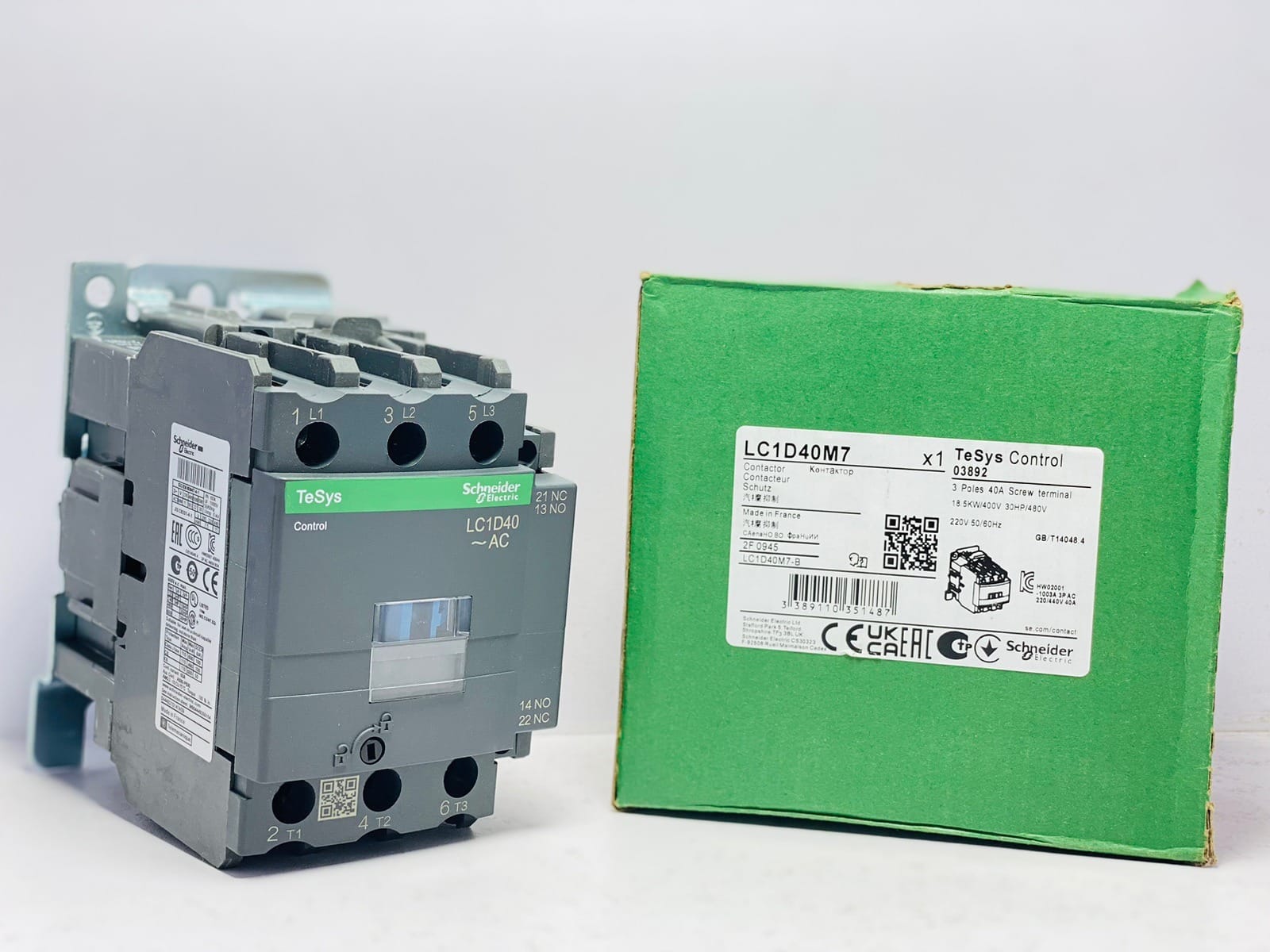
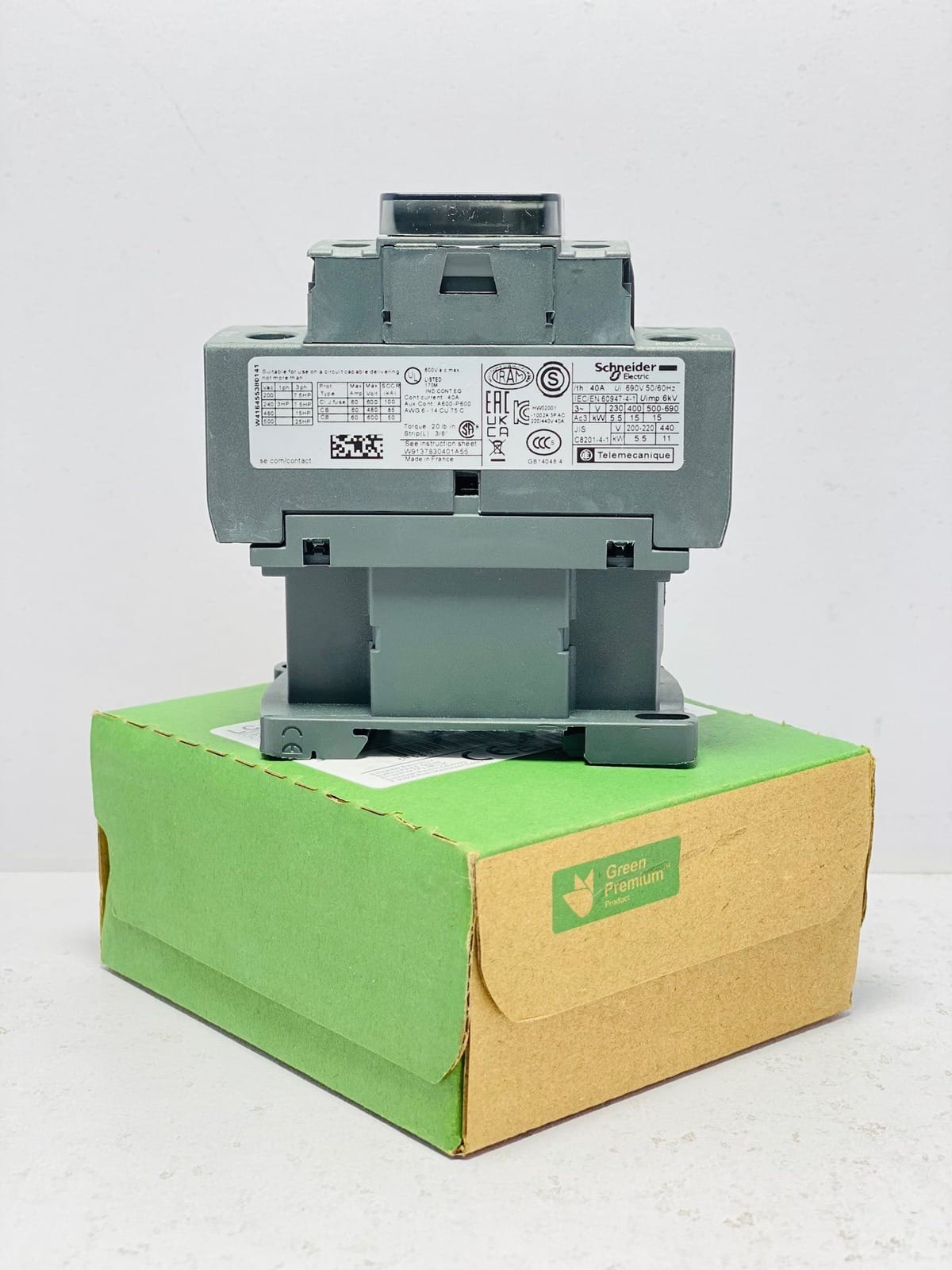
A soft starter is a single power unit plus upstream short-circuit protection (usually an MCCB), control wiring and, on a well-specified unit, a bypass contactor. Size it from the motor FLC and the starting duty, following the maker’s tables — not by copying a neighbour’s panel. Send a nameplate photo on WhatsApp and we will talk through whether a star-delta contactor kit is enough or whether the duty needs a soft starter or a VFD.
Safety Notes for Either Starter
- Isolate and lock off before opening a starter or the motor terminal box. Confirm dead with a proving tester.
- Never defeat the star–delta interlock or bridge an overload “just to get the pump running”. A star and delta contactor closed together short the supply. An overloaded motor without a working overload will cook its windings.
- Use AC-3 rated contactors for motor starting. A resistive (AC-1) rating is not enough for making and breaking motor current.
- Match the overload to the nameplate current and to the way the motor is connected in run (delta on a star-delta starter).
- One starting method at a time — do not put a soft starter and a star-delta kit in series, and do not put either in series with a VFD. Have a qualified electrician commission the timer or ramp and test a start under the real load, including on generator supply if that is how the site runs after load-shedding.
Quick Checklist: Soft Starter vs Star Delta
- ☐ Nameplate read: kW/HP, FLC, voltage, delta or star marking
- ☐ Terminal box checked: six ends for star-delta, or only three leads
- ☐ Load starts light (pump/fan/unloaded compressor) or needs breakaway torque
- ☐ Soft stop required for water hammer or belt/pipe shock? If yes, not star-delta
- ☐ Speed control needed? If yes, specify a VFD
- ☐ Supply checked: rural feeder, evening low voltage, generator backup, frequent load-shedding starts
- ☐ Contactors sized AC-3 to nameplate FLC; overload set to the plate; interlocks intact
- ☐ Timer or ramp set on a real loaded start, not guessed
FAQ: Soft Starter vs Star Delta
Is a soft starter better than star delta?
It is smoother, not automatically “better”. A soft starter wins on adjustable torque, no transition spike, three-wire motors and a soft stop. Star-delta wins on a six-terminal 400 V delta motor that starts light, when you want a simple contactor panel.
Can I use a star-delta starter on any three-phase motor?
No. The motor must run in delta at your line voltage and must have all six winding ends available. A 400 V star-only motor, or one with only three leads, needs DOL (if small), a soft starter or a VFD.
Soft starter vs VFD vs star delta — do I ever need both?
No. Pick one method. A VFD already starts gently, typically near 1–2 × FLC, and then controls speed. Do not put a soft starter or star-delta kit in front of a VFD. Use star-delta or a soft starter for full mains speed; use a VFD when you must vary speed.
Which is better for a tubewell motor in Pakistan?
For a fixed-speed centrifugal tubewell with a six-terminal 400 V delta motor and a light start, star-delta is still the usual, correct choice. Move to a soft starter if the column hammers on shutdown, the changeover dips a weak feeder, or low evening voltage stops the pump reaching speed in star. To slow the pump on purpose, use a VFD.
Star delta se soft starter behtar hai? (When is a soft starter the better pick?)
Jab start ya stop smooth chahiye — pipe hammer, belt jerk, ya kamzor line — tab soft starter behtar hai. Agar chhe terminals hain, load halka start hota hai (typical tubewell ya fan) aur speed change nahi karni, to star-delta theek hai. Speed control ke liye VFD len; soft starter running speed nahi badalta.
Need Help Choosing the Starter for Your Motor?
Send a photo of the motor nameplate and terminal box on WhatsApp, plus what the motor drives and whether it also runs on a generator. We will tell you whether a star-delta contactor kit is enough or whether the duty points to a soft starter or a VFD, and we can supply the original contactors for the panel. WhatsApp HN Electric: 0329 1654950.
